






















Service Hotline
News

News
Samsung Electro-Mechanics and Qualcomm Collaborate on 2.1D Advanced Packaging
2026-09-17
46
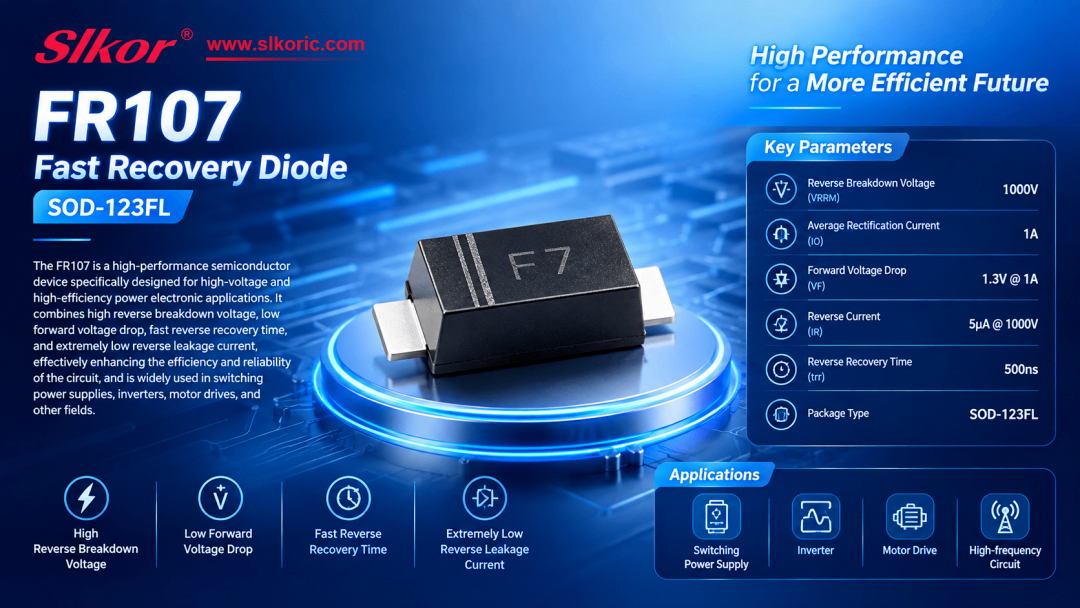
Slkor FR107 at a Big Discount—Welcome to Inquire About Pricing
International Tech News:
Institutions estimate that the global silicon wafer supply-demand gap will expand from about 8% at the end of 2026 to 15% in 2027 and 24% in 2028.
Samsung Electro-Mechanics and Qualcomm are jointly developing organic bridge technology for 2.1D packaging to connect multiple semiconductor chips within a single package.
TDK plans to invest 40 billion yen in two Japanese plants over the next three years to expand production equipment for thin-film inductors used to stabilize current.
Japanese chemical manufacturer Resonac has successfully developed a 300 mm (12-inch) silicon carbide (SiC) single-crystal substrate.
Dutch company Axelera has released its second-generation AI chip "Europa," which can be used in selected Dell and Supermicro products.
Hanmi Semiconductor has signed an equipment purchase order with Elon Musk’s TerraFab project and will supply advanced packaging equipment for AI system-on-chip production.
Domestic Tech News:
South Korean media reported that China’s wafer fab equipment localization rate rose to 35% in 2025, up 10 percentage points from 2024, and is forecast to rise further in 2026.
Chipmore Technology’s RMB 2.454 billion Suzhou advanced packaging project has been launched, focusing on heterogeneous integration packaging of optical chips and electrical chips.
Slkor (www.slkoric.com) has launched a comprehensive upgrade of its three directly operated stores in Huaqiangbei, refreshing both its brand image and service experience.
The G6 full-size inkjet printing equipment for printed displays independently developed by Guochuangke has been introduced into the mass production line of a leading panel manufacturer.
Winbond Electronics plans to acquire 100% equity of Infineon’s NOR Flash and F-RAM businesses for US$1.12 billion.
Hong Kong, China, released the First Five-Year Plan for Economic and Social Development of the Hong Kong Special Administrative Region (2026–2030), which will comprehensively advance the "AI+" initiative.
Disclaimer: The information presented above was compiled from publically available web sources and does not necessarily reflect our company's beliefs or positions. If you believe any of the content infringes on your rights or you have any issues, please contact us and we will respond swiftly.
Kinghelm/Slkor Executives Song Shiqiang and Qiu Huilin Visit Tencent Penguin Island
2026-09-16
117
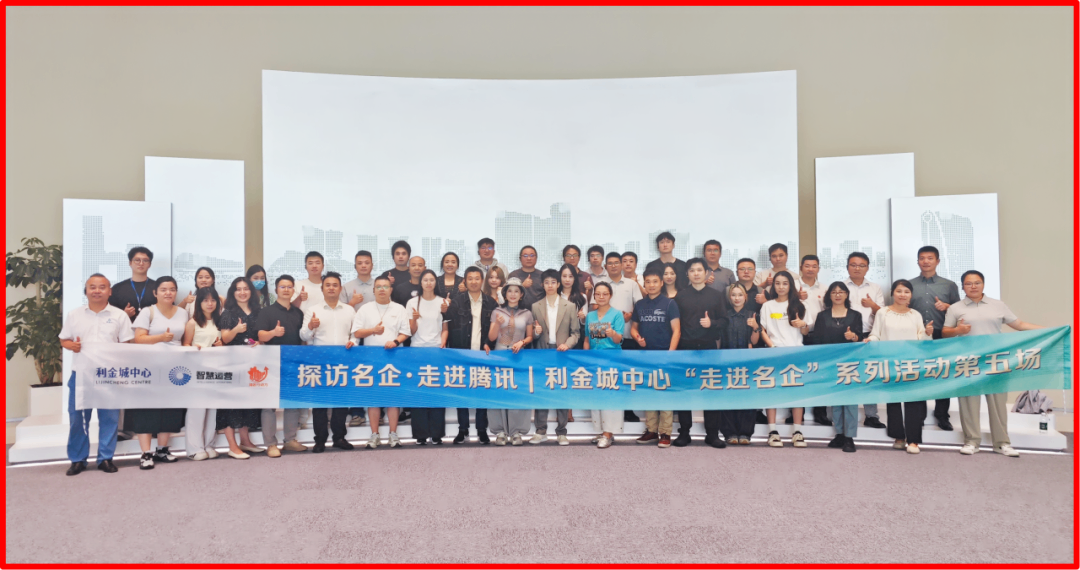
On the afternoon of September 15, Song Shiqiang and Qiu Huilin of Kinghelm and Slkor attended the event
International Tech News:
Counterpoint data shows Samsung’s HBM share rebounded by 12 percentage points quarter-on-quarter to 33%.
Apple has accepted Samsung Electronics’ memory chip quotes for Q1 2027: DRAM at nearly $2.0/Gb and NAND at nearly $0.33/Gb, up 30% to 0% compared with Q3 2026.
Global 300mm wafer fab equipment spending will jump to $133 billion in 2026, setting a record high (2024: $100.6 billion).
The expansion of AI computing power is being transmitted step by step from the chip side to equipment, optical interconnect, and other segments, and the strong momentum of the equipment sector has been validated by data.
Executives from Kinghelm (www.kinghelm.net)/Slkor (www.slkoric.com) attended the "Lijincheng Center Enterprises Visit Tencent Penguin Island" event; Song Shiqiang and Qiu Huilin were present!
Samsung’s Cheonan plant is shifting Exynos packaging capacity to HBM and scaling down its in-house mobile phone chip business.
Domestic Tech News:
The "15th Five-Year Plan for the Development of the Electronic Information Manufacturing Industry" was released, identifying edge AI chips, EDA/IP, and advanced process nodes as key areas to tackle.
The 300mm SOI wafer capacity of Xin’ao Xinyi under National Silicon Industry Group will reach about 400,000 wafers/year by the end of 2026, and silicon photonics SOI wafers will be shipped in volume in 2027.
The Institute of Semiconductors, Chinese Academy of Sciences, has developed a new type of "ferroelectric tunnel junction" that uses angstrom-level tiny slips between atomic layers to achieve an ultrahigh on/off ratio, with more than 100 billion repeated switching cycles.
Yunyinggu Technology Co., Ltd. has established two controlled subsidiaries, namely Shuqing Zhiyun (Shanghai) Technology Co., Ltd. and Xinqing Zhiyun (Shanghai) Technology Co., Ltd., and plans to develop two new businesses: optical interconnect and UCIe IP.
Siwei Technology has completed its first round of equity financing, raising a total of nearly RMB 200 million. It is a company focused on the R&D and manufacturing of mid-to-high-end pressure chips and sensor-grade products.
Xinlai Zhirong Semiconductor Technology (Shanghai) Co., Ltd. has officially launched its A-share IPO process.
Kinghelm Switch Series
Disclaimer: The information presented above was compiled from publically available web sources and does not necessarily reflect our company's beliefs or positions. If you believe any of the content infringes on your rights or you have any issues, please contact us and we will respond swiftly.

Kinghelm Releases "A Comprehensive Summary of the Optical Communication Upstream and Downstream Industry Chain and Analysis of Domestic and Foreign Manufacturers (Part 2)"
2026-09-15
200
Kinghelm General Manager Song Shiqiang at 2026 Shanghai Munich Electronics Show W5.317
In 2026, Kinghelm (www.kinghelm.net) officially entered the optical communication field. General Manager Mr. Song Shiqiang emphasized: "Optical communication covers the entire industry chain of optical chips, optical components, optical modules, optical fibers and cables, and system equipment. It is a core rigid-demand track for major projects such as 5G/6G data centers and the East-to-West Computing Resource Transfer Project. The characteristics of dual-driven technology iteration and market demand are very obvious, because its core demand has rapidly shifted from traditional operator public network construction to emerging scenarios such as AI data center interconnection, industrial optical private networks, and automotive optical interconnection, deeply bound with new demands such as computing power networks and AI large models. Advanced packaging and silicon photonics integration technologies have become core breakthrough directions. In 2026, China has listed high-end optoelectronic chips, CPO co-packaged optics, all-optical switching and other core technologies as key research directions. The space for domestic substitution in optical communication is broad. Kinghelm (www.kinghelm.com.cn), as a technology original manufacturer and an important participant in 'domestic substitution,' enters the optical communication field to open up new development tracks. It will aim at the 'heart' of the optical communication industry chain, which is the core key link of domestic substitution, covering transmitter/receiver chips and indium phosphide-based high-speed laser chips."
Kinghelm Chief Engineer Mr. Qin Xianghong at work
In view of this, Kinghelm Chief Engineer Qin Xianghong, combining years of deep industry research experience and drawing on the research achievements of existing industry pioneers and peers, follows the five main lines of the optical communication industry chain—optical chips, optical components, optical modules, optical fibers and cables, and transmission equipment—and has summarized and compiled the "Comprehensive Summary of the Entire Optical Communication Industry Chain and Analysis of Domestic and International Manufacturers." It will be developed from four aspects: 1. Overview of Optical Communication - Basic Principles; 2. Optical Communication Industry Chain - Analysis of Upstream, Midstream, and Downstream Industry Chains; 3. Key Companies in China's Optical Communication Industry Chain; 4. Outlook for the Optical Communication Industry. This initiative aims to promote information communication, resource sharing, and knowledge co-construction across the entire upstream, midstream, and downstream optical communication industry chain, achieve industry chain optimization, integration, and collaborative innovation, and thereby enhance the global industrial discourse power of Chinese enterprises.
Kinghelm "Comprehensive Summary of the Entire Optical Communication Industry Chain and Analysis of Domestic and International Manufacturers"
Continued from Kinghelm Chief Engineer Qin Xianghong—"A Comprehensive Summary of the Optical Communication Upstream and Downstream Industry Chain and Analysis of Domestic and Foreign Manufacturers (Part 1)":
III. Key Companies in China's Optical Communication Industry Chain
(I) Optical Chips and Electrical Chips
Optical chip application scenarios
Optical chips, scientifically known as optoelectronic chips or photonic integrated circuits (PICs), use semiconductor processes to integrate functions such as light emission, reception, modulation, multiplexing/demultiplexing, and amplification on a single chip. By function, they are divided into: laser chips (electrical → optical: VCSEL/DFB/EML), detector chips (optical → electrical: PIN/APD), modulator chips (signal loading), and PLC chips (passive optical circuits). Major manufacturers include Lumentum, Broadcom, Mitsubishi Electric, Sumitomo Electric, Coherent, Yuanjie Technology, Changguang Huaxin, Shijia Photons, Accelink Technologies, HGTECH, Hisense Broadband, Huawei HiSilicon, AAOI, etc.
China's Yuanjie Technology ranks among the top global laser chip market players
Yuanjie Technology:A leading optical chip supplier in China with collaborative expansion in both the "telecom market + datacom market." The company's main products are optical chips, including 2.5G, 10G, 25G, 50G, 100G, 200G and higher-speed DFB and EML laser series products, as well as 50mW, 70mW, 100mW, 150mW and other high-power silicon photonics light source products. The company's performance has improved rapidly, with net profit of 51.385 million yuan in the first three quarters of 2025, a year-on-year increase of 627.62%.
Changguang Huaxin:Focused on the R&D, design, and manufacturing of semiconductor laser chips. It is one of the few companies that develops and mass-produces high-power semiconductor laser chips. It has built an IDM full-process platform covering chip design, epitaxial growth, wafer processing (lithography), cleavage/coating, packaging and testing, and fiber coupling. Today, Changguang Huaxin has built China's only and the world's second 6-inch GaAs high-power semiconductor laser chip production line, occupying an advantageous competitive position in the industry track.
Shijia Photons:A leading optoelectronic core chip supplier in China. The company masters key technologies for independent chips, breaking through from a single PLC optical splitter chip to passive chips and active chips, and further expanding from wafer manufacturing and chip processing to packaging and testing. It now possesses a full-process capability from design to manufacturing, and from testing to packaging, basically forming a complete optical chip industry chain.
Application scenarios of DSP chips in electrical chips
Electrical chips are mainly imported from overseas, including four core chips: DSP, CDR, Driver, and TIA. Major manufacturers include Marvell, Credo, Broadcom, Huawei HiSilicon, Chaoran Semiconductor, Youxun Shares, etc.
Youxun Shares:A leading enterprise in China's optical communication front-end transceiver electrical chip field. The company clearly positions its business as an electrical chip company. Its products (such as laser drivers, transimpedance amplifiers, etc.) need to be used in conjunction with optical chips and are the "nerve center" for achieving optoelectronic signal conversion in optical modules. In terms of electrical chip business development, Youxun Shares can provide full-application-scenario, full-series optical communication electrical chip solutions, and ranks first in China and second in the world in market share for products at 10Gbps and below. Currently, the company's 25G PON electrical chips have achieved batch delivery, 50G PON electrical chips have entered the sample testing stage, and it is focusing on R&D of electrical chip products for cutting-edge fields such as 400G-800G data centers and FMCW LiDAR, in order to seize market opportunities brought by AI computing power and autonomous driving.
(II) Optical Components
Optical components are the product and core content of optical device packaging
Optical components include ceramic sleeves/ferrules, optical transceiver interface components, etc. Major manufacturers include T&S Communications, AFR Optics, T&S Communication, Tengjing Technology, etc.
AFR Optics:With a series of high-performance optical devices such as optical isolators, dense fiber array connectors, MEMS VOA optical switches, polarization beam splitters/combiners, couplers, wavelength division multiplexers, and lithium niobate modulators, it has successfully entered the global market. Its products are exported to more than 40 countries and regions and are widely used in core upstream fields of the industry chain such as fiber lasers, optical communications, and data centers.
Tengjing Technology:A high-tech enterprise specializing in the R&D, production and sales of various precision optical components, fiber optic devices and optical test instruments. Its products are mainly applied in fields such as optical communication, fiber laser, scientific research, biomedicine and semiconductor equipment. The company has made in-depth layout in the cutting-edge field of AI computing power optical interconnection, and has become an important supplier of key devices for OCS optical switches.
(III) Optical Devices
Optical devices: Evolving toward higher speeds and lower power consumption
According to whether a power source is needed, optical devices are divided into active devices and passive devices. Active optical devices mainly include laser chips (such as FP, DFB, VCSEL), detector chips (such as PIN, APD), optical amplifiers, optical modulators (such as DML, EML chips), and optical transceiver sub-modules (TOSA, ROSA, BOSA), etc. Passive optical devices mainly include optical isolators, optical connectors, optical switches, optical splitters/couplers, wavelength division multiplexers (WDM/AWG), optical attenuators, FA fiber arrays, etc. Major manufacturers include T&S Communications, Accelink Technologies, HGTECH, T&S Communication, Broadex Technologies, Coherent, Lumentum, etc.
T&S Communications:The company's main products consist of two major segments: active optical devices and passive optical devices. Active devices mainly include high-speed optical engines, TO-CAN/BOX packaged devices and other core components of optical modules. Passive devices cover ceramic sleeves, fiber array units (FAU), isolators, and connectors, etc. From 2020 to 2024, T&S Communications' revenue compound annual growth rate was close to 40%, and net profit grew by nearly 50% annually. The key lies in focusing on the core link of optical devices. In the first half of 2025, T&S Communications' active optical device business experienced explosive growth, achieving revenue of 1.566 billion yuan, a year-on-year increase of 90.98%.
T&S Communication:Focused on the R&D, production, and sales of passive optical devices. Core products include MPO/MTP high-density fiber connectors, MT/ceramic ferrules, flexible fiber routing boards, wavelength division multiplexing devices, etc. Products are mainly used in AI computing power data centers, cloud computing clusters, and telecom transmission networks, with a small layout in optical sensing business. The company's main business is centered on datacom high-density optical interconnection products, with the vast majority of revenue coming from the optical device business. Relying on self-developed and self-produced MT ferrules, it achieves vertical integration of key components. Products are indirectly supplied to overseas leading cloud vendors and AI computing clusters through cabling manufacturers. Export business accounts for a relatively high proportion of revenue, making it a relatively focused passive optical connection enterprise in the A-share market.
Broadex Technologies:Main business is the R&D, production, and sales of integrated optoelectronic devices in the optical communication field. Main products include PLC optical splitters, PON optical modules, fiber arrays, dense wavelength division multiplexing devices, wireless bearer network optical transceiver modules, data center optical transceiver modules, active optical cables (AOC), and high-speed copper cables (DAC, ACC). The company currently provides high-quality optical signal power and wavelength management devices and high-speed optoelectronic transceiver modules for the globally rapidly developing optical fiber communication networks and Internet Data Center (IDC) markets. Among them, optical splitters and dense wavelength division multiplexing (DWDM) devices occupy leading global market shares.
(IV) Optical Modules
Optical modules play a core role
Optical modules are composed of optical devices, optical interfaces, and functional circuits. They play a core role in enabling high-speed, high-reliability, and low-latency data transmission in increasingly complex datacom and telecom networks, and are widely used in telecommunications, internet, radio and television, aerospace, and other fields. Chinese enterprises occupy world dominance in the global optical module manufacturing and packaging link.
Zhongji Innolight:The company currently ranks first in global optical module market share. Its products are widely used in cloud computing data centers, data communications, 5G wireless networks, telecom transmission and fixed network access, etc., and it is committed to promoting the development of optical modules toward high speed, miniaturization, low power consumption, and low cost. Currently, the company's product portfolio covers 200G to 1.6T high-speed optical modules, as well as 5G fronthaul/midhaul/backhaul optical modules, transmission network optical modules, and FTTX optical devices and other overall solutions. In the second half of 2025, while 800G optical modules significantly increased in volume, more customers began deploying 1.6T products. It is expected that 1.6T optical module shipments will usher in significant volume growth in 2026.
Eoptolink:The company's products mainly serve data centers, AI computing clusters, 5G/6G telecom networks, and other fields. In optical module technology, the company covers traditional pluggable optical modules, linear drive (LPO), near-package optics (NPO), and co-packaged optics (CPO) and other advanced interconnect forms, and possesses core technologies and capabilities such as optical engines. Its product system includes 400G, 800G, and 1.6T high-speed optical modules based on various solutions such as VCSEL/EML, silicon photonics, and thin-film lithium niobate, as well as 400G/800G ZR/ZR+ coherent optical modules and 800G/400G optical modules based on LPO solutions. With leading technology and products, the company has entered the supply chain systems of major global cloud computing vendors (such as Amazon, Meta, etc.) and communication equipment vendors, and is one of the core suppliers in the optical communication industry.
Accelink Technologies:The company boasts vertical integration capabilities covering optical chips, devices, modules and subsystems. In the optical module business, its products cover all scenarios of transmission, data and access. In the first three quarters of 2025, it achieved an operating revenue of 532 billion yuan, representing a year-on-year increase of 58.65%. According to market rankings, Accelink Technologies ranked 5th among global optical module manufacturers and 4th in the market share of data communication optical modules in 2024. At present, the company has realized mass delivery of 800G optical modules, and is actively deploying next-generation technologies such as 1.6T silicon optical modules and CPO (co-packaged optics) to consolidate its high-growth advantages in the AI data center sector.
V) Optical Fibers and Cables
Core leaders in optical fibers and cables: YOFC, Hengtong Optic-Electric, ZTT, FiberHome, Yongding Shares
The value of the optical fiber and cable industry chain presents a pyramid structure. The upstream (optical fiber preform) has the highest technical barriers, the midstream (fiber drawing/cable assembly) is the manufacturing core, and the downstream is application services. Major manufacturers include YOFC, Hengtong Optic-Electric, ZTT, FiberHome, Yongding Shares, Tongding Interconnection, Tefa Information, Kingsignal, Huamai Technology, Shijia Photons, Orient Cable, etc.
YOFC:A globally leading provider of optical fiber preforms, optical fibers, optical cables, and comprehensive solutions. It mainly produces and sells various standard specifications of optical fiber preforms, optical fibers, and optical cables widely used in the communication industry, as well as various optical modules, specialty fibers, active optical cables, submarine cables, and RF coaxial cables, accessories, and other products based on customer needs.
Hengtong Optic-Electric:Strong market application competitiveness in specialty fiber products such as ultra-low-loss fiber, laser fiber, multimode fiber, and marine fiber. Globally, only a few manufacturers possess independent intellectual property rights for optical fiber preform manufacturing. The new-generation green optical fiber preform developed by its subsidiary Hengtong Photoconduction effectively broke through multiple key technical bottlenecks, filled domestic gaps, led the direction of China's optical fiber preform technology, and promoted the industry's green and environmental transformation and upgrading.
ZTT:The company provides infrastructure services such as cables, components, devices, and antennas for network construction from multiple dimensions of cloud, pipe, and terminal. Products include various preforms, optical fibers, optical cables, ODN, antennas and RF cable types, active terminals, optical transceivers, data centers, high-performance raw materials, and other products, as well as engineering consulting, design, construction, and integration services.\
(VI) Core Equipment - Optical Circuit Switch (OCS)
OCS (Optical Circuit Switch) is a core device that routes purely by optical signals. It does not need to convert optical signals into electrical signals and then back again; it can directly let optical signals find the correct path. Its working principle is very much like adjusting a set of parallel mirrors—when a mirror rotates by an angle, the reflected light shifts accordingly, precisely controlling the direction of the optical signal. This technology solves the delay and high energy consumption problems caused by signal conversion. Its theoretical efficiency is 1000 times that of traditional electrical switches, while power consumption is only one-tenth. It is particularly practical for ultra-large-scale data centers with high electricity cost proportions and has become the preferred choice for next-generation data center networks.
Currently, leading domestic OCS complete machine and integration enterprises are as follows:
IV. Outlook for the Optical Communication Industry
Summary of the five major links in the optical communication industry chain
The optical communication industry is standing at a historic inflection point of AI computing power explosion and digital infrastructure upgrading. It is comprehensively evolving from a traditional "communication pipe" to the "nervous system" of the AI computing power era. The next five years (2026-2030) will be a "golden development period" for the optical communication industry. The industry will present four core trends: "demand explosion, technology iteration, pattern reconstruction, and domestic substitution." At the same time, the structural contradiction of shortage of upstream core materials is also relatively prominent. In August 2026, the Ministry of Industry and Information Technology issued the "14th Five-Year Plan for the Development of the Information and Communication Industry," proposing to strengthen R&D of ultra-high-speed large-capacity optical transmission, optical access, and submarine cable optical communication technologies, accelerate R&D and application of new fiber technologies such as hollow-core fiber, and carry out research on industry-integrated application technologies such as automotive optical communication and industrial control optical networks. Promote R&D of large-capacity and high-bandwidth optical communication equipment, focus on building 1.6Tb/s optical transmission systems, 200G-PON optical access systems, hollow-core fiber optic cables and other ultra-large-capacity all-optical bearer products, and accelerate R&D of 100G and above high-speed inter-satellite and satellite-ground optical communication equipment.
The Ministry of Industry and Information Technology has issued the 14th Five-Year Plan for the Development of the Information and Communication Industry.
(I) Demand Explosion: AI Computing Power + Network Bandwidth Demand
AI computing power demand becomes the core engine: The explosive growth of AI large models is driving the explosive growth of GPU clusters and ultra-large-scale data centers (IDCs). AI optical modules (such as 800G and 1.6T) have become the main demand force. The AI optical communication market space is expected to maintain a compound annual growth rate of more than 40%, and is expected to exceed US$90 billion by 2030.
Upstream core links are in short supply: Supply and demand are mismatched in core links such as optical chips and indium phosphide substrates. The global supply-demand gap for EML optical chips required for optical modules exceeds 30%.
Long expansion cycles: Optical fiber preform technology has high barriers, and the expansion cycle is as long as 18 to 24 months. The short-term supply shortage pattern is difficult to reverse.
Network bandwidth demand is growing: The digital economy and AI are driving a surge in global data traffic, creating increasing demand for network bandwidth. The optical transmission equipment market will grow steadily. According to Omdia data, the global market size in 2024 was US$16.7 billion, and it is expected to grow by 4.2% annually from 2024 to 2029, reaching US$20.5 billion by 2029.
The global optical transmission equipment market will reach US$20.5 billion by 2029.
(II) Technology Iteration: CPO + Silicon Photonics Integration + Automotive Optical Communication + Hollow-Core Fiber Technology
Continuous rate iteration: Optical modules are accelerating from 800G to 1.6T and 3.2T rates. CPO (co-packaged optics) technology entered the stage of large-scale mass production in August 2026.
Silicon photonics integration breakthrough: Silicon photonics integration technology has become the key to breaking through the performance bottleneck of traditional optical chips. China's first 8-inch silicon photonic chip mass production line is expected to be completed within 2026.
Emerging scenarios landing: Automotive optical communication is rising with the development of L3 autonomous driving. The global automotive optical fiber network market is expected to reach US$3.13 billion in 2026.
Frontier material positioning: Next-generation transmission media such as hollow-core fiber are gradually achieving industrialization. Latency is reduced by nearly half compared with traditional optical fiber, making it a new high ground for technological competition.
(III) Pattern Reconstruction
Differentiation between datacom and telecom demand: The growth rate of the datacom market (intra-data center interconnection and inter-data center interconnection) far exceeds that of the telecom market (5G/6G bearer networks and fixed network upgrades). Demand for optical interconnection in data centers is growing exponentially, and fiber usage per rack is soaring. The industry is shifting from "oversupply" to a "fiber famine."
Fiber volume and price rise together: In 2026, the global fiber supply-demand gap rate is about 16.4%. Prices of high-end specialty fibers have risen sharply, and the industry has entered a seller's market where goods are hard to obtain.
Market scale expansion: In 2026, the global optical module market size is expected to reach 201.6 billion yuan, and China's optical module market size will reach 56.4 billion yuan.
Application scenarios continue to broaden: Industry boundaries are extending to emerging fields such as satellite internet (low-orbit satellites), quantum communication, and integrated sensing, communication, and computing, opening up new incremental space for optical communication.
(IV) Domestic Substitution
Optical fiber preform field: Leading enterprises such as Hengtong Optic-Electric and YOFC continue to expand production. Cross-border player Han's Laser has also entered the hollow-core fiber direction with 2.52 billion yuan.
Optical chip and optical module field: Source Photonics, a subsidiary of Dongshan Precision, is investing 8.1 billion yuan to expand optical chip and optical module capacity. Shijia Photons plans to raise 2.8 billion yuan through a private placement for high-speed optical chip development.
Upstream materials field: Xiandao Technology Group is investing 12 billion yuan to build an indium phosphide substrate industrialization base.
Domestic substitution rate needs improvement: Optical chips at 10G and below have achieved domestic substitution, but the domestic substitution rate for high-speed active optical chips at 25G and above is still relatively low.
In summary, the future prospects of optical communication are broad, with a trillion-yuan market that can penetrate every aspect of development, covering AI, data, industry, healthcare, and more. Application scenarios such as data centers, telecom networks, data center interconnection, industrial internet, intelligent driving, quantum communication, smart grids, satellite communication, fiber sensing, and aerospace all rely on optical communication to achieve high-speed and stable data transmission and are drivers of demand growth. A rough estimate is as follows:
Statement: The above images and materials are partly sourced from the internet, solely for promoting industry exchange and development, not for commercial purposes. If there is any infringement, please contact us.
Kinghelm Releases "A Comprehensive Summary of the Optical Communication Upstream and Downstream Industry Chain and Analysis of Domestic and Foreign Manufacturers (Part 1)"
2026-09-15
207
Kinghelm General Manager Song Shiqiang at 2026 Shanghai Munich Electronics Show W5.317
In 2026, Kinghelm (www.kinghelm.net) officially entered the optical communication field. General Manager Mr. Song Shiqiang emphasized: "Optical communication covers the entire industry chain of optical chips, optical devices, optical modules, optical fibers and cables, and system equipment. It is a core rigid-demand track for major projects such as 5G/6G data centers and the East Data West Computing project. The dual-wheel drive of technological iteration and market demand is very pronounced, because its core demand has rapidly shifted from traditional operator public network construction to emerging scenarios such as AI data center interconnection, industrial optical private networks, and automotive optical interconnection, and is deeply bound to new demands such as computing power networks and AI large models. Advanced packaging and silicon photonics integration technologies have become core breakthrough directions. In 2026, China has listed high-end optoelectronic chips, CPO co-packaged optics, all-optical switching and other core technologies as key research directions. There is broad space for domestic substitution in optical communication. Kinghelm (www.kinghelm.com.cn), as an original technology manufacturer and an important participant in ‘domestic substitution’, will enter the optical communication field to open a new development track, aiming at the ‘heart’ of the optical communication industry chain. This is the core critical link of domestic substitution, covering transmitter/receiver chips and indium phosphide-based high-speed laser chips."
Kinghelm Chief Engineer Mr. Qin Xianghong working
In view of this, Kinghelm (www.kinghelm.net) Chief Engineer Qin Xianghong, combining years of deep industry research experience and drawing on the existing research results of predecessors and peers, followed the five main lines of the optical communication industry chain—optical chips, optical devices, optical modules, optical fibers and cables, and transmission equipment—and summarized and compiled "A Comprehensive Summary of the Optical Communication Upstream and Downstream Industry Chain and Analysis of Domestic and Foreign Manufacturers." It will unfold from four aspects: 1. Overview of optical communication – basic principles; 2. Optical communication industry chain – analysis of upstream, midstream and downstream industry chains; 3. Key companies in China’s optical communication industry chain; 4. Outlook for the optical communication industry. This initiative aims to promote information communication, resource sharing, and knowledge co-construction across the upstream, midstream and downstream of the optical communication industry chain, realize industry chain optimization, integration and collaborative innovation, and thereby enhance the global industrial discourse power of Chinese enterprises.
Kinghelm "A Comprehensive Summary of the Optical Communication Upstream and Downstream Industry Chain and Analysis of Domestic and Foreign Manufacturers"
I. Overview of Optical Communication – Basic Principles
(I) Overview of Optical Communication
Optical communication essentially uses "light" as the information carrier, and optical fiber is the dedicated high-speed highway. Its core relies on mutual conversion between electrical and optical signals to achieve information transmission.
The transmission process is very clear: information initially exists as electrical signals, like packaged goods; the laser chip at the transmitting end is the "conversion station," converting electrical signals into optical signals—just like loading goods onto an optical train and transmitting them along the optical fiber highway; after reaching the receiving end, the detector chip converts the optical signals back into electrical signals, like unpacking the goods so the receiver gets the complete information.
Information flow is divided into three steps: birth of optical signals, transmission scheduling, and identification. Key components each have their roles: the optical transceiver unit is the core, managing the generation, adjustment, and detection of optical signals; optical splitters are like traffic signs, AWG, VOA, and optical switches are dispatchers, and optical amplifiers are energy boosters, jointly ensuring smooth transmission.
Basic Principles of Optical Communication
(II) Full Process of Optical Communication
The entire optical communication process is actually like a complete "production line," advancing from beginning to end in the order of "optical chip → optical component → optical module → optical communication equipment → terminal market."
The upstream of the chain mainly consists of optical chips (optical communication chips), optical components (optical communication components), and optical modules (optical transceiver modules) as core links. Among them, optical chips are the "source core component" of the entire process, located at the very front, and are also the key to enabling optical components and optical modules.
First, optical chips and a series of components are assembled into optical components, then further packaged into optical modules. After that, optical modules are installed into midstream optical communication equipment, and finally these devices are applied in downstream telecom markets, data communication markets, and some emerging markets.
Full Process of Optical Communication
(III) China’s Optical Communication Industry
Optical communication is a communication method that uses light waves as the transmission medium. This field is an important part of China’s implementation of the innovation-driven development strategy and an important development direction in China’s transformation toward a manufacturing power and a science and technology power.
The optical communication industry includes multiple links. The stronger discourse power is concentrated at the upstream and downstream ends. Upstream chip manufacturers and downstream customers are relatively strong, while the cost control level of midstream optical module manufacturers determines their overall profitability. According to LightCounting’s global top ten optical module ranking, Chinese manufacturers occupy seven seats, among which Innolight and Coherent are tied for first, HiSilicon ranks fourth, Accelink ranks fifth, Hisense Broadband ranks sixth, Eoptolink ranks seventh, HGTECH ranks eighth, and Source Photonics ranks tenth.
II. Optical Communication Industry Chain – Analysis of Upstream, Midstream and Downstream Industry Chains
(I) Overview of the Optical Communication Industry Chain
The upstream, midstream and downstream of the optical communication industry chain
In the upstream, midstream and downstream of the optical communication industry chain, the upstream mainly consists of core component links including optical chips, optical components, and electrical chips; the midstream includes optical devices, optical modules, and optical fibers and cables; the downstream is divided by application scenario into the telecom market and the data communication market.
With technological progress and cost reduction, the application scope of optical communication products continues to expand, and market demand continues to increase:
Optical chips are III-V compound semiconductor materials that realize photoelectric signal conversion;
Optical components mainly include ceramic sleeves/ferrules, optical transceiver interface components, etc. At present, China is the world’s largest production base for optical components, and market competition is fierce;
Optical chips and optical components are key elements in manufacturing optical devices: various optical components are processed and assembled to obtain optical devices, and multiple optical devices are packaged to form optical modules;
Optical devices are various functional devices made using the electronic conversion effect, and are key and core components of optoelectronic technology;
An optical module is an optical device used for high-speed data transmission. Its function is to realize mutual conversion between optical signals and electrical signals, thereby enabling data transmission in communication networks.
(II) Upstream Core of Optical Communication: Optical Chips
Upstream Core of Optical Communication: Optical Chips
In the upstream of the entire optical communication industry chain, the most core link is optical chips. Optical chips are the core components for mutual conversion between optical signals and electrical signals, equivalent to the "power engine" of information transmission. Their performance directly determines the transmission speed of the optical communication system. After integrating and packaging optical chips with a series of supporting components, optical modules with practical functions are formed.
Optical chips are the "source core components" of the optical communication industry chain and the key to the normal operation of optical components and optical modules. Whether it is fiber broadband used at home, 4G/5G networks that mobile phones depend on, or data centers storing massive amounts of data, optical chips are crucial. They directly affect the speed of information transmission in these networks and whether they can operate stably without interruption. They are classified according to different standards as follows:
Classification of Optical Chips
The global optical chip market is growing steadily, becoming the "growth engine" of the optical communication industry. Global data traffic is surging, and all industries need greater bandwidth, which has fueled high-speed optical modules and supporting chips. Among them, high-speed optical chips above 40G run much faster than low- and medium-speed versions. From 2019 to 2025, the proportion of high-speed optical chips above 25G used in data centers and telecom fields has continued to increase. It is expected that 1.6T and even higher-speed optical modules will become the demand trend for connections within data centers, to match future GPU requirements for greater bandwidth and higher computing power. At present, the process of batch commercialization of 1.6T optical modules is accelerating. This trend places higher demands on optical chips: various chips including 200G PAM4 EML and CW light sources will become optical chip solutions in 1.6T optical modules.
Global Optical Chip Market Size Expected to Exceed US$20 Billion in 2026
The global optical chip market size is expected to exceed US$20 billion in 2026, with data centers contributing more than 60% of the increment. For AI clusters represented by NVIDIA DGX series, the optical module ratio has increased from 1:4 to more than 1:8. 800G optical modules began large-scale volume in 2024, and 1.6T began batch delivery. Amazon, Google, Microsoft and other cloud computing companies are expected to lead the development of new AI applications, which will require major upgrades to their AI clusters, and AI clusters need to use a large number of optical connections.
(III) Midstream of Optical Communication: Optical Modules + Optical Fibers and Cables
Optical Communication Midstream: Optical Modules + Optical Fibers and Cables
The midstream of optical communication is the "integration and transmission carrier." Its core is to connect upstream components with downstream scenarios and realize the implementation of optical signal "conversion—transmission—networking." Optical modules are the core interface for photoelectric conversion (including high-speed and telecom types); optical fibers and cables are the transmission carrier of optical signals; optical communication equipment is system-level networking equipment, mainly including core equipment such as switches. At present, the domestic computing infrastructure market supporting data and AI computing has grown from RMB 339.7 billion in 2020 to RMB 614.4 billion in 2024. In this market, computing resources rank first, with a scale of RMB 385.8 billion in 2024, accounting for about 63%; network resources rank second, with a scale of RMB 151.6 billion in 2024, accounting for about 25%. Network resources mainly include products such as switches and optical modules: switches grew from RMB 31.5 billion in 2020 to RMB 44.7 billion in 2024, and are expected to reach RMB 66.9 billion in 2029; communication resources such as optical modules are expected to reach RMB 97.8 billion in scale later.
1.Optical Modules
Definition of Optical Module
An optical module is like the "dedicated translator" between electrical signals and optical signals—the information in computers and mobile phones is all electrical signals, which cannot travel long distances at high speed through optical fibers. The optical module first converts electrical signals into optical signals, allowing the information to "fly" along the optical fiber to its destination; after arrival, the optical module converts the optical signals back into electrical signals, so that the equipment can read the information.
Schematic Diagram of Optical Module Structure
An optical module is mainly composed of optical transmit/receive components (TOSA, ROSA), a circuit board with electrical chips, a package housing, and interfaces. In terms of cost, optical devices (including optical chips) account for more than 70% and are the core of photoelectric conversion; auxiliary materials such as the housing, PCB, and control chips (electrical chips) account for nearly 30%, responsible for physical packaging and signal adaptation. Together they form the hardware foundation of the optical module.
Optical Module Cost Structure
High-speed optical modules must rely on high-end optical chips as the "core power." Large models such as ChatGPT are competing for computing power, AI servers need to install more GPUs, and optical modules must also be upgraded to 800G or above to be sufficient. Google’s TPU clusters rely on all-optical networks to transmit data, and demand for 800G/1.6T optical modules is growing more and more intense. Moreover, under the same computing power, TPUs require far more optical modules than GPUs, and also have higher requirements for optical transmission density.
Optical Module/Optical Chip Cost Proportion
In optical module costs, optical devices account for 73%, among which optical chips are key—the higher the speed of the optical module, the higher the cost proportion of optical chips, reaching 30%–70%. Now domestic optical chips are gradually gaining strength in the high-end market, and the pace of substitution is accelerating, allowing domestic manufacturers to earn more profits. Simply put, the level of optical chips determines the grade of optical modules; the higher the module speed, the more valuable the chip.
2020–2029 Global Optical Module Market Size
The global optical module market has grown steadily for many years, mainly driven by applications requiring high-speed data transmission such as AI, cloud computing, and 5G—AI servers must support the operation of large models, and optical modules are their key components. From 2020 to 2024, the global optical module market size rose from US$11.2 billion to US$17.8 billion, with an annual growth rate of 12.2%, and is expected to reach US$41.5 billion in 2029, with an annual increase of 18.5%. Among them, 800G, as the mainstream high-end model of high-speed optical modules, had an annual growth rate of 188.1% from 2020 to 2024; the next-generation 1.6T optical module, driven by demand for higher bandwidth and lower power consumption, is expected to have an annual growth rate of 180% from 2024 to 2029 and will usher in explosive growth.
Global Optical Module Market Size Expected to Exceed US$37 Billion in 2029
According to LightCounting’s forecast, the global optical module market will continue to expand at a compound annual growth rate (CAGR) of 22% from 2024 to 2029, and the market size is expected to exceed US$37 billion in 2029. Growth is mainly driven by strong demand for Ethernet optical transceivers from AI clusters and continuous upgrades of DWDM networks by cloud service providers.
Chinese Manufacturers Occupy a Dominant Position in the Global Ethernet Optical Module Market
Chinese manufacturers occupy a dominant position in the global Ethernet optical module market. In 2021, China’s optical component and module manufacturers achieved a historic breakthrough: the revenue of the top ten domestic suppliers exceeded the sales of Western competitors for the first time. From 2022 to 2023, the sales gap between domestic optical module manufacturers and foreign manufacturers continued to widen, highlighting the competitiveness of Chinese suppliers in the global market. 2025 is regarded as the first year of commercial use of 1.6T optical modules. Chinese manufacturers occupy a dominant position, with shipments in the first half of 2025 accounting for 45% of the global total, and the yield rate of high-end products exceeding 90%.
On September 7, 2026, Goldman Sachs Released an In-Depth Report on the Global Optical Module Industry
The industry is expanding capacity rapidly. Some analyses predict that global 1.6T optical module production capacity may exceed 30 million units in 2026. On September 7, 2026, Goldman Sachs released an in-depth report on the global optical module industry. Based on growth in AI infrastructure spending, product structure upgrading toward high-speed transmission, and rising adoption of optical interconnection, it raised its forecasts for global optical module shipments from 2026 to 2028 by 21%, 31%, and 31%, respectively, and raised its forecasts for shipments of 1.6T and above by 29%, 61%, and 50%, respectively. Goldman Sachs expects the global optical module market size to reach US$68 billion, US$131 billion, and US$148 billion from 2026 to 2028, up 33%, 81%, and 115% respectively from previous forecasts. Among them, the market for 800G and above has a CAGR of 69%, reaching US$45 billion, US$108 billion, and US$130 billion, respectively.
2.Optical Fibers and Cables
Optical fiber is a slender fiber made of glass or plastic. Its core consists of a high-purity quartz core that transmits optical signals and a low-refractive-index cladding that achieves total reflection, with an outer resin coating to enhance hardness. An optical cable is a finished cable made by bundling multiple optical fibers together and combining them with protective structures such as reinforcing steel wires and sheaths. It can protect optical fibers and adapt to different scenarios. The optical fiber preform, which accounts for 70% of optical cable costs, is mostly produced by manufacturers themselves.
China is the "number one producer and user" of optical fibers and cables in the world. The continuous advancement of domestic communications infrastructure has driven steady growth in optical cable line length. As of the first half of 2025, the total length of optical cables nationwide had reached 73.77 million kilometers (equivalent to nearly 1,845 times around the Earth), up 9.9% year on year. Among them, access network optical cables accounted for nearly 60%, local network relay optical cables accounted for 38.5%, and long-distance optical cables accounted for only 1.6%.
Optical Cable Line Length and Its Growth Rate
In response to shrinking local market demand, domestic optical cable enterprises have strengthened overseas layout under a complex geopolitical environment: from 2019 to 2022, China’s optical cable export volume increased from 255,500 tons to 408,800 tons (an increase of 60%), and export value increased by 41%, reaching a peak in 2022.
2019–2024 China Optical Fiber Preform, Optical Fiber, and Optical Cable Export Volume and Export Value
In 2024, the global optical fiber and cable market share was relatively concentrated. The top 10 enterprises belonged to 5 countries including the United States, China, and Japan, together accounting for 92% of the market share: Corning ranked first with 19%. Four Chinese enterprises including YOFC and ZTT entered the top ten. Among them, YOFC (13%), ZTT (11.3%), and Hengtong Optic-Electric (11.2%) ranked second to fourth, and FiberHome Telecommunication (9.8%) ranked sixth.
2024 Global Optical Fiber and Cable Competitive Landscape: Four Chinese Enterprises Including YOFC Enter the Top Ten
(IV) Downstream of Optical Communication: Optical Communication Equipment + Terminal Application Scenarios
Downstream of the Industry Chain: Optical Communication Equipment + Terminal Application Scenarios
Optical communication equipment is equipment that transmits information using light waves, and its core consists of three parts: signal sending, transmission, and reception. By application field, it is divided into transmission equipment and data communication equipment: transmission equipment includes transmission network and access network equipment. Common transmission equipment includes optical transceivers, fiber optic transceivers, etc.; common access network equipment includes OLT, ONU, and ODN equipment, etc.; data communication equipment mainly includes routers and switches.
Common Classification of Optical Communication Equipment
Kinghelm Qin Xianghong—"A Comprehensive Summary of the Optical Communication Upstream and Downstream Industry Chain and Analysis of Domestic and Foreign Manufacturers (Part 2)" is coming soon. Please stay tuned!
Statement: Some of the above images and materials are from the Internet, only for promoting industry exchange and development, not for commercial use. If there is any infringement, please contact us.
High-capacity NOR Flash products are expected to see another price increase of 90%-110% in the second half of the year
2026-09-15
210
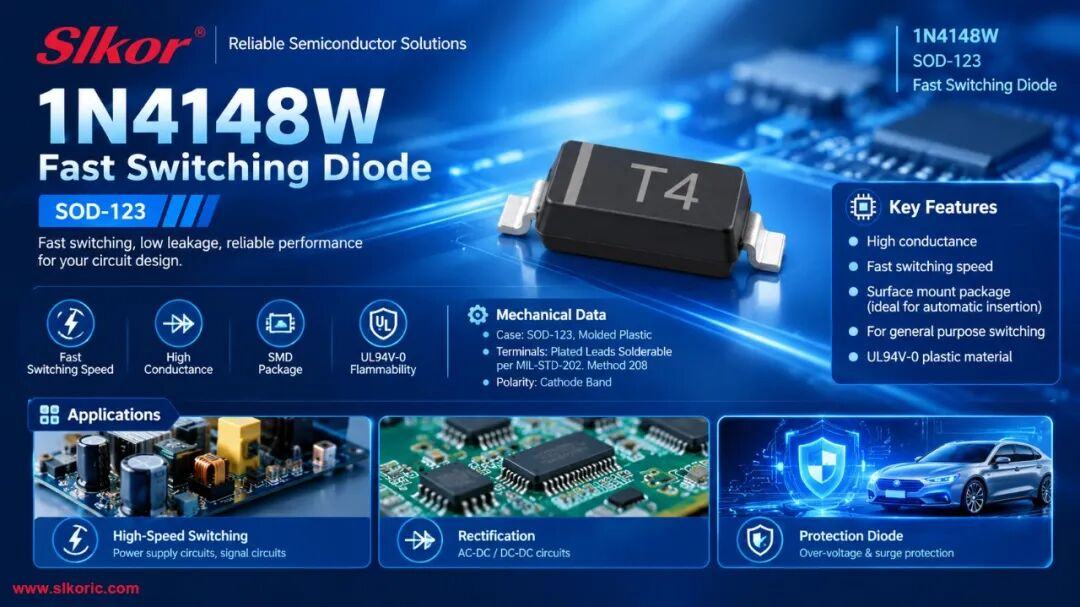
Slkor 1N4148W on big sale, feel free to contact for quotation
International Tech News:
The combined revenue of the world's top 10 fabless IC design firms exceeded 141.45 billion US dollars in Q2 2026. NVIDIA retained the top spot, while AMD surpassed Qualcomm to rank third.
Samsung Electronics is accelerating the development of silicon photonics technology and plans to complete internal testing of silicon photonic integrated circuit (PIC) wafers by the end of this year.
Japan's Fujitsu unveiled its new-generation CPU FUJITSU-MONAKA, which will go on sale starting in November.
ASML has reached a High-NA EUV cooperation agreement with Samsung, Intel and other partners to jointly advance supporting solutions for the new-generation high-NA extreme ultraviolet lithography machine.
TrendForce analysis indicates that NOR flash memory price trends are expected to diverge in the second half of 2026, with prices of high-capacity products projected to rise by 90-110%.
The Ulsan AI data center jointly developed by SK Group and Amazon has expanded its capacity to nearly 900 megawatts, with an estimated investment of 7 trillion South Korean won.
Domestic Tech News:
VOGT Electronics and AWA Biomedical simultaneously launched the AWA-HT series of all-glass organ-on-a-chip systems.
Turing Quantum unveiled the world's first third-generation optical quantum computer, TuringQ Gen3.
Song Shiqiang, General Manager of Slkor, plans to apply AI technology to the company's AI agent "Power Boy" to fully upgrade the intelligent experience of the official website (www.slkoric.com).
Jia Yueting announced that Faraday Future (FF) will release 9 robot bodies on September 19, covering humanoid, quadruped and wheeled-arm forms.
IDC data shows that Lenovo's x86 server shipments ranked first globally for the first time in Q2, with revenue rising by 96% year-on-year.
Hua Hong Semiconductor plans to acquire a 97.4988% stake in Huali Microelectronics for 8.268 billion yuan.
Disclaimer: The information presented above was compiled from publically available web sources and does not necessarily reflect our company's beliefs or positions. If you believe any of the content infringes on your rights or you have any issues, please contact us and we will respond swiftly.
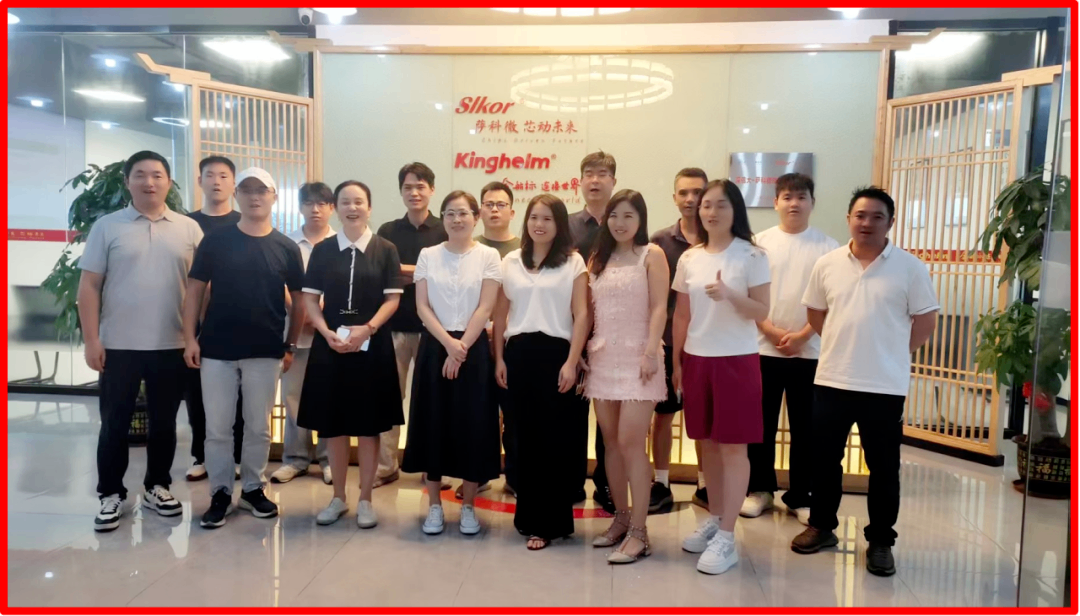
Shared Procurement Alliance Elites Visit Slkor for a Learning Exchange
2026-09-14
307
On the afternoon of September 13, elites from the Shared Procurement Alliance visited Slkor for a learning exchange
International Tech News:
Anthropic is reportedly planning to raise up to $100 billion through an IPO, at a valuation of about $2 trillion.
In Q2 2026, global server market vendor revenue reached $166.3 billion, up 52.0% year over year and 35.7% quarter over quarter.
A Chinese research team used micro-transfer printing technology to develop a high-performance thin-film lithium tantalate–silicon nitride Mach–Zehnder modulator, with relevant metrics reaching internationally advanced levels.
It is predicted that by 2028, global total advanced packaging capacity is expected to grow by about 50%.
On the afternoon of September 13, elites from the Shared Procurement Alliance visited Slkor (www.slkoric.com) for a learning exchange. Slkor FAE engineer Xiong Wenda gave an introduction to Slkor's company and products. The procurement elites got to know each other and shared "MOSFET Market Trends and Outlook." Slkor's best-selling product series and four models—A7, 1N4148W, FR107, and M7—were offered at limited-time special prices, receiving unanimous praise and recommendations.
OpenRouter’s annual token processing volume surged from about 10 trillion to over 100 trillion within one year, with its single-day peak exceeding 1 trillion.
Domestic Tech News:
Recently, research teams from Tsinghua University and Shanghai Jiao Tong University completed a study in the field of practical optical computing. The related article, "How Nanophotonics Drives Optical Computing Toward Practical Applications," was published in Nature Nanotechnology.
aigo (Patriot) launched the PL series iPhone storage companion: the direct-plug PL10 "Little Fruit Plate" and the magnetic PL50 "Big Fruit Plate."
Shenzhen Nanfei Microelectronics Co., Ltd. moved forward with its IPO process, and Shenzhen Hai Robotics Intelligent Technology Group Co., Ltd. officially filed with the Hong Kong Stock Exchange.
Seven companies including Hygon, Cambricon, Moore Threads, MetaX, Biren Technology, and Iluvatar CoreX recorded combined revenue of about RMB 21.46 billion in the first half of 2026, nearly twice that of the same period last year.
According to reports, domestic computing power chips are seeing a surge in orders, with delivery schedules for some products already extended to a year out; domestic computing power demand is more than 10 times supply.
Gutewei’s headquarters upgrade and expansion relocation ceremony was held in Suzhou Artificial Intelligence Industrial Park.
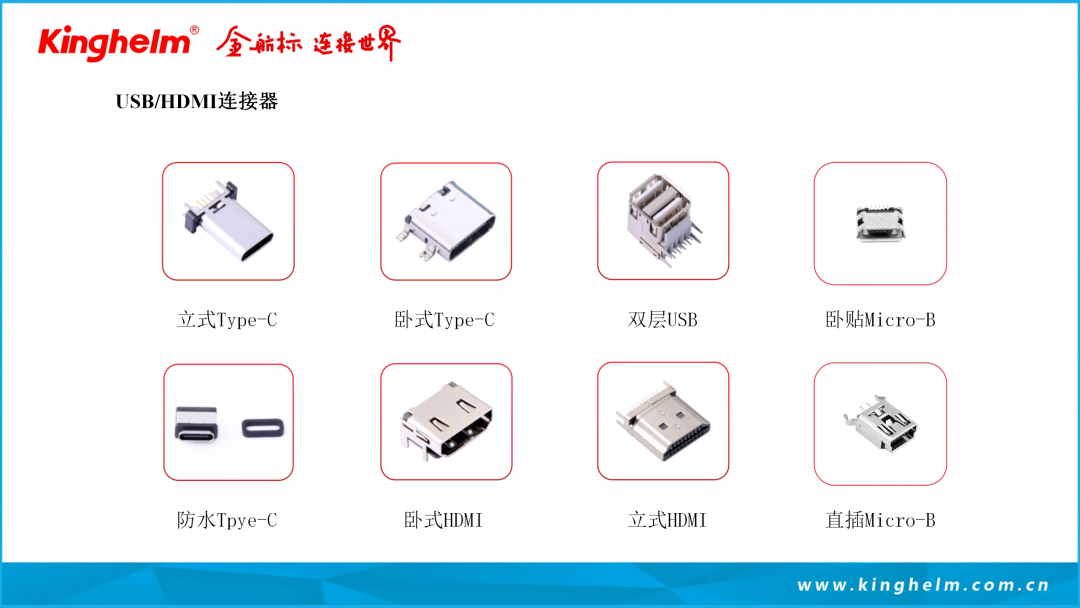
Kinghelm FPC Connector Classification
Disclaimer: The information presented above was compiled from publically available web sources and does not necessarily reflect our company's beliefs or positions. If you believe any of the content infringes on your rights or you have any issues, please contact us and we will respond swiftly.

Tech Industry Highlights From Kinghelm (Sep 7, 2026-Sep 13, 2026)
2026-09-14
92
1. Semiconductor Equipment Billings Hit Record $40.5 Billion as AI Capacity Buildout Accelerates
Date: September 7, 2026Summary:Global semiconductor equipment billings rose 23% year over year to $40.53 billion in the second quarter of 2026, according to SEMI's Worldwide Semiconductor Equipment Market Statistics report. The figure was also up 11% from the previous quarter, marking a second consecutive record quarter for the equipment market. SEMI attributed the growth to accelerating demand for the manufacturing capacity needed to support AI chips and the global buildout of AI computing infrastructure, with expansion spread across Asia, North America and Europe.Importance:Signals that AI-driven capacity expansion is broadening across regions and equipment segments, extending the semiconductor capital spending upcycle into the second half of 2026.Source:eeNews Europe
2. Connector Reliability Named Top Specifying Criterion in Europe and North America Survey
Date: September 7, 2026Summary:An independent survey commissioned by UK connector maker Harwin has mapped how engineers in Europe and North America specify and procure interconnect. Reliability was the single most important selection criterion, ahead of performance and operating life, with over 40% of respondents expecting their connectors to operate for more than ten years and a further 33% for between five and ten years. The study also found that most power connector requirements sit below 30A with a second cluster at 100A and above, and that access to downloadable models, files and footprints has become a key factor in choosing a supplier.Importance:Confirms that long-life reliability rather than price drives connector selection in industrial, telecom and automotive designs, and that digital engineering support is now part of the buying decision.Source:eeNews Europe
3. DRAM Contract Price Growth Set to Moderate to 13–18% in Q3
Date: September 7, 2026Summary:TrendForce estimates that rising DRAM contract prices lifted industry revenue 59.5% quarter on quarter to $154.73 billion in the second quarter, but now expects conventional DRAM contract price growth to moderate to 13–18% in the third quarter. The slowdown reflects a shift in demand away from high-capacity RDIMMs toward lower-capacity products, along with the limited ability of PC and smartphone customers to absorb further increases. Supplier inventories remain at historic lows, so memory supply is expected to stay tight.Importance:Marks the point where memory pricing stops being an unqualified tailwind for suppliers and starts squeezing downstream device makers, adding cost pressure across electronics bills of materials.Source:The Register
4. Samsung to Help Fortify OpenAI's Semiconductor Supply Chain
Date: September 9, 2026Summary:OpenAI will develop its next-generation AI accelerators with support from Samsung Electronics, according to comments made by OpenAI Korea general manager Harrison Kim at a press conference in Seoul. The collaboration covers joint production and research on next-generation chips and spans compute and memory supply. OpenAI later clarified that the remarks referred to its existing relationship with Samsung, which includes Samsung's internal adoption of ChatGPT.Importance:Shows how AI model developers are locking in foundry, memory and packaging capacity directly with Asian suppliers, tightening the link between AI demand and semiconductor supply chains.Source:The Register
5. Infineon and SolarEdge Bring Solid-State Protection to 800 VDC AI Data Centers
Date: September 10, 2026Summary:Infineon Technologies and SolarEdge Technologies have extended their collaboration into solid-state circuit breaker technology for 800 VDC power distribution in AI and hyperscale data centers. SolarEdge is leading development of the breaker while Infineon supplies its CoolSiC silicon carbide JFET technology for the protection devices. Because DC distribution has no natural current zero crossing, mechanical interruption is difficult; solid-state breakers can instead isolate faults within microseconds, sitting between a solid-state transformer and the compute rack to create a DC-native power path from the medium-voltage grid to the processors.Importance:Signals a shift in data center power architecture toward high-voltage DC, opening a new application for wide-bandgap semiconductors beyond power conversion and into protection and distribution.Source:eeNews Europe
6. Server Revenue Hits Record $166.3 Billion as AI Demand Broadens Beyond Hyperscalers
Date: September 11, 2026Summary:IDC reports that server vendor revenue reached an all-time high of $166.3 billion in the second quarter, up 52% year over year, even as memory costs pushed average selling prices higher. Unit shipments rose 15.4% as AI infrastructure spending spread from hyperscalers to specialized cloud providers, sovereign AI programs and enterprises adopting inference workloads. GPU-accelerated servers accounted for nearly 53% of revenue, with average selling prices for those systems up almost 44% to $170,200.Importance:Demonstrates that AI server demand is broadening into enterprise and public-sector budgets, making the current data center buildout cycle less dependent on a handful of hyperscale buyers.Source:The Register
At Kinghelm
At Kinghelm, we closely monitor global trends in semiconductor process nodes, AI infrastructure growth, and advanced packaging technologies. These developments help guide our innovation in RF antennas, connectors, wire harnesses, precision cables, and interconnect solutions for next-generation electronics.
About Kinghelm
Shenzhen Kinghelm Electronics Co., Ltd. specializes in RF transmission, antennas, connectors, automotive wiring harnesses, precision cables, and IoT connectivity solutions. With over 17 years of experience, Kinghelm delivers rugged, reliable, and internationally compliant products for applications in new energy vehicles, industrial automation, smart terminals, and medical electronics.
Disclaimer
This report summarizes publicly available technology news for industry research and communication purposes only. All trademarks and content rights belong to their respective owners.

In Q2 2026, the top ten wafer foundries generated nearly US$53.49 billion in revenue
2026-09-11
558
The Slkor team appeared on the streets of Huaqiangbei to give away fans
International Tech News:
A TrendForce report shows that in Q2 2026, the combined revenue of the world’s top ten wafer foundries reached nearly US$53.49 billion. SMIC’s revenue rose 20% quarter-on-quarter to exceed US$3 billion, with its market share rising to 5.4%, ranking third.
Qualcomm and Amazon will jointly develop custom chips for next-generation large-scale AI data centers and expand high-speed optical interconnect solutions.
Samsung Electronics will invest 40 billion yen to establish an AI chip packaging R&D center in Yokohama, Japan.
Murata Manufacturing (Japan) expects to gradually discontinue production of some specifications in series such as GRM, GRJ, GRT, GXM, GXT, GCM, GCJ, GCG, and ZRA.
ASML will break ground on a new large production campus in the Netherlands to expand mass production of extreme ultraviolet (EUV) lithography equipment.
Google has hired Hailo’s former VP of R&D to head a new Israeli team dedicated to developing AI chips for robotics and autonomous driving.
Domestic Tech News:
Yaoxin Microelectronics released the world’s first silicon carbide superjunction MOSFET (metal-oxide-semiconductor field-effect transistor) product.
Beijing E-Town released the "AI4Chip" Action Plan for the Leapfrog Development of the Integrated Circuit Industry Empowered by Artificial Intelligence (2026–2028).
The Slkor (www.slkoric.com) team appeared at Huaqiangbei yesterday, wearing uniform workwear and holding a fan giveaway, attracting the attention of many merchants. Currently, Slkor is offering limited-time special prices on four models: A7, 1N4148W, FR107, and M7. New and existing customers are welcome to inquire.
SmartSens launched SC365AT, the industry’s first automotive CMOS image sensor integrating SerDes and an on-chip ISP.
Haiguang Xinzheng announced that the company will leverage GlobalFoundries’ silicon photonics technology to advance the deployment and mass production of 6.4T NPO products.
A subsidiary of Shenzhen Kaifa Technology has spent RMB 1.85 billion to expand advanced memory chip packaging and testing capacity.
Disclaimer: The information presented above was compiled from publically available web sources and does not necessarily reflect our company's beliefs or positions. If you believe any of the content infringes on your rights or you have any issues, please contact us and we will respond swiftly.
The Third Chip Growth Forum will be held on September 19 in the conference hall on the 5th floor of Beifang Building, Futian, Shenzhen
2026-09-10
596
International Tech News:
Qualcomm has proposed three pillars of 6G architecture for the AI era: connectivity, compute, and sensing.
Industry insiders said that with the implementation of export controls, uncertainty in the supply of indium phosphide substrates is becoming a major risk facing the semiconductor industry.
Samsung Electronics' Taylor fab has been converted into a 2nm process center and will begin trial production at the end of this month or early next month.
Intel's cumulative wafer processing volume using High-NA EUV lithography has exceeded 1 million wafers.
On the afternoon of September 19, 2026, the Third Chip Growth Forum will be held in the conference hall on the 5th floor of Beifang Building, Futian, Shenzhen. The forum's grand prize, an iPhone 17 Pro, is exclusively sponsored by Slkor’s third direct-sales store in Huaqiangbei (www.slkoric.com).
Qualcomm and Amazon have reached an agreement to jointly build AI data center infrastructure and will collaborate on developing optical interconnect solutions of up to 1.6T.
Domestic Tech News:
In the first half of 2026, 5,550 A-share listed companies reported total operating revenue of RMB 37.74 trillion and net profit attributable to parent companies of RMB 3.58 trillion, up 19.4% year on year.
According to the China On-Device AI Panoramic Landscape Report, the global on-device AI market was worth about RMB 200 billion in 2023 and is expected to exceed RMB 1.9 trillion (RMB 1,900 billion) by 2028, with a compound annual growth rate of 58%.
Tianwei Electronics has decided to terminate the acquisition of a 60% equity interest in Chengdu Xiuwei Technology Development Co., Ltd. and the related capital increase and share expansion.
Xiamen Silan Jihua's 12-inch high-end analog integrated circuit project has a total investment of RMB 20 billion, will build a 12-inch high-end analog chip production line, and aims to achieve full-line production in September 2027.
CETC Ceyear’s high-end electronic measurement instrument innovation and industrial conditions construction project, with a total investment of RMB 910 million, has started construction in Qingdao.
The AI-driven memory supercycle is rewriting the profit distribution rules for consumer electronics, with the speculative bubble in Huaqiangbei channels inflating and then suddenly bursting.
Disclaimer: The information presented above was compiled from publically available web sources and does not necessarily reflect our company's beliefs or positions. If you believe any of the content infringes on your rights or you have any issues, please contact us and we will respond swiftly.
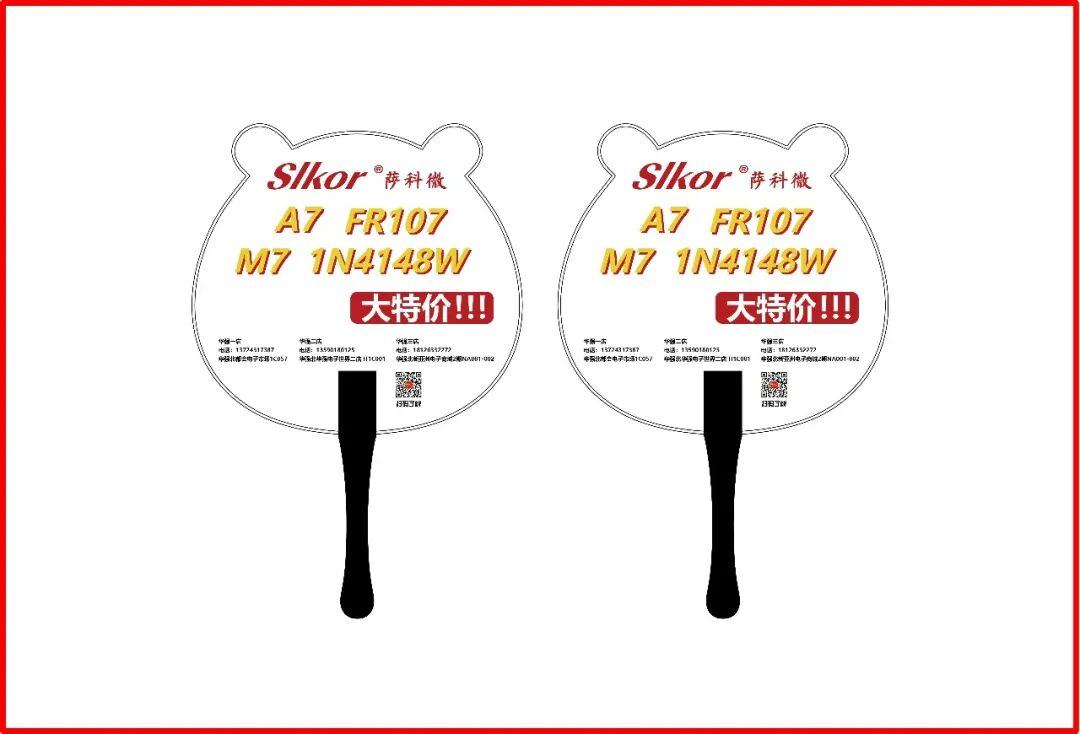
Slkor Autumn Deal! Limited-time discounts on four hot-selling diodes
2026-09-09
645
International Tech News:
Samsung Electronics' foundry business is reportedly planning to significantly increase HBM4 supply starting from the third quarter of this year.
South Korea's SKC has invested KRW 281 billion in its subsidiary Absolics to fully accelerate the commercialization of semiconductor glass substrates.
According to a Yole Group report, the global power gallium nitride market is expected to grow to US$3.5 billion by 2031, with a compound annual growth rate of 35% from 2025 to 2031.
GlobalFoundries will receive up to US$375 million in R&D funding to accelerate quantum chip manufacturing and AI infrastructure deployment.
Industry sources reveal that Intel CPUs will see their third price hike within the year, with a planned 10% increase across all products in October.
Spanish silicon photonics company iPronics has completed a US$125 million Series B financing round, co-led by Maverick Silicon and Light Street Capital, with participation from NVIDIA.
Domestic Tech News:
Qiushui Semiconductor has released the world's first mass-producible 8-inch red-light Micro-LED chip.
The 2026 IFA Berlin (International Consumer Electronics Show) will feature approximately 1,900 exhibitors, with Chinese companies accounting for nearly half (928).
From September 10 to October 10, 2026, Slkor (www.slkormicro.com) will offer limited-time promotional pricing on four models – A7, 1N4148W, FR107, and M7 – at highly competitive prices. Customers in Huaqiangbei may contact Slkor's three directly-operated stores.
On September 8, memory module manufacturer Longsys was listed on the main board of the Hong Kong Stock Exchange, reporting revenue of RMB 24.088 billion for the first half of 2026.
RoboSense has completed mass production and delivery of its self-developed Peacock SPAD-SoC, an ultra-large-array system-level chip designed for robotics and vehicle blind-spot perception applications.
MediaTek is reportedly set to launch the Dimensity 9600 Pro chip at its new product event on September 15.
Disclaimer: The information presented above was compiled from publically available web sources and does not necessarily reflect our company's beliefs or positions. If you believe any of the content infringes on your rights or you have any issues, please contact us and we will respond swiftly.
Wuhan Xinrongguang Technology Co., Ltd. has been established with a registered capital of 13.2 billion yuan!
2026-09-08
689
International Tech News:
1. The Xuanjie O3 makes its global debut, premiering on the Xiaomi 18 Fold. 2. According to reports, SK Hynix and Samsung Electronics have less than ten days of memory inventory, and the memory market could face an "unprecedented shortage" in 2027. 3. Google is accelerating the development and rollout of its custom-designed chips. 4. The Novo Nordisk Foundation is building a new quantum chip factory in Copenhagen. 5. Kinghelm (www.kinghelm.com.cn) presents Song Shiqiang's discourse series: *"Huaqiangbei Shanzhai Phones" Research (Part III)* and its English edition *"Huaqiangbei Shanzhai Phones" Research (Part III)*, launching globally alongside the bilingual versions of Parts I and II. This forms a comprehensive all-media globalization campaign to boost the Kinghelm and SLKOR brands and make them stand out. 6. According to forecasts, rising prices of NAND flash and DRAM could push the selling price of the iPhone Pro series up by more than US$200 compared to last year.
Domestic Tech News:
1. Recently, Wuhan Xinrongguang Technology Co., Ltd. was established with a registered capital of 13.2 billion yuan, jointly held by Wuhan Xinxin, Optics Valley Semiconductor Industry Investment, and others. 2. Since 2024 to date, Xiaomi Automobile's cumulative deliveries have exceeded 800,000 vehicles. 3. In the first seven months of 2026, China's total integrated circuit exports reached US$216 billion, a year-on-year increase of 99.5%. 4. Recently, Xiyuan Zhisuan (Shanghai) Technology Co., Ltd. was established, wholly owned by Zhiyuan Innovation (Shanghai) Technology Co., Ltd. 5. Xinlian Jicheng's revenue in the first half of 2026 reached 4.562 billion yuan, up 30.53% year-on-year; net profit attributable to shareholders was 278 million yuan, a year-on-year increase of 263.40%.6. Black Sesame Technologies and AUBO Intelligence have made key progress in their collaborative efforts in the field of embodied intelligent robots.
Disclaimer: The information presented above was compiled from publically available web sources and does not necessarily reflect our company's beliefs or positions. If you believe any of the content infringes on your rights or you have any issues, please contact us and we will respond swiftly.

Guangdong's Core AI Industry Surpasses RMB 300 Billion
2026-09-07
705
International Tech News:
According to the Global Semiconductor Equipment Market Report, semiconductor equipment shipments rose 23% year-on-year to reach USD 40.53 billion.
According to recent DigiTimes reports, Micron Technology is exploring a high-durability NAND flash module and researching methods to place NAND flash closer to GPUs.
Samsung Electronics has partnered with Arm to officially launch R&D for edge-side AI chips.
OpenAI released its new flagship model GPT-6 Astra, branding it as "a new generation of intelligence".
Storage costs in Q3 2026 may surge fourfold year-on-year. The market expects the iPhone 18 Pro series to see a 10%-20% price increase.
Reports state that Google is salvaging DDR4 memory modules from decommissioned servers for reuse in new-generation AI servers.
Domestic Tech News:
Statistics show that Guangdong’s core artificial-intelligence industry has exceeded RMB 300 billion so far, with a year-on-year growth rate of over 40%.
DeepSeek has finalized plans for a gigawatt-scale data center in Ulanqab, Inner Mongolia, and intends to deploy 160,000 Ascend 950DT chips.
The Sichuan-Chongqing Basketball Tournament has carried on for 21 years. The 2026 Hongtai Yuxing Cup Shenzhen Sichuan-Chongqing Basketball Tournament opened on September 5. Slkor (www.slkormicro.com) and Kinghelm were among the sponsors, and General Manager Song Shiqiang attended the opening ceremony.
Zhending Group is investing more than RMB 12 billion to build an advanced packaging substrate base project in Shenzhen.
Naura Technology has achieved major technical breakthroughs in the next-generation 3D DRAM manufacturing process for memory chips, developing an innovative two-step cyclic etching process.
Guangdong Leadyo IC Testing Co., Ltd. has terminated the acquisition of 100% equity in Guoxinwei.
Disclaimer: The information presented above was compiled from publically available web sources and does not necessarily reflect our company's beliefs or positions. If you believe any of the content infringes on your rights or you have any issues, please contact us and we will respond swiftly.
Song Shiqiang's Discourse on "Research on 'Huaqiangbei Shanzhai Mobile Phones' (Part III)" Gains Widespread International and Domestic Media Traction
2026-09-05
706
International Tech News:
According to institutional estimates, the global electronic specialty gases market is projected to reach approximately US$13.3 billion in 2026, with a compound annual growth rate of about 8.5% from 2025 to 2030.
Data shows that global annual shipments of smartphones stand at approximately 1.2–1.3 billion units, PCs at about 260–280 million units, and automobiles at around 90 million vehicles. Combined with billions of IoT and wearable devices, these form a massive potential installed base for end-side AI chips.
Gartner projects that global AI PC shipments will reach 143 million units in 2026, accounting for 55% of total PC shipments.
Global PCB leader Zhen Ding Group has invested over RMB 12 billion to double down on the AI sector, with its subsidiary, Li Ding Semiconductor, launching its advanced packaging substrate base in Shenzhen's Bao'an District.
Song Shiqiang's discourse on "Research on 'Huaqiangbei Shanzhai Mobile Phones' (Part III)" has gained significant traction in both international and domestic media. It has been republished and included by hundreds of media outlets, including Non-network, International Electronic Business, China Tech Hot News, China Hengyang News Network, Shenzhen Observation Net, Macro Trends Finance, Times Quick Tech, Morning News, People's Commentary Net, Hong Kong Economic News Network, New Guang Network, Enterprise Daily, and Oriental Financial Report. Mr. Song Shiqiang concluded: "The full-media publicity matrix of 'Research on 'Huaqiangbei Shanzhai Mobile Phones' (Parts I, II, and III)' is continuously gaining momentum, helping to drive the internationalization of Kinghelm (www.kinghelm.net) and Slkor (www.slkoric.com)!"
It is forecast that VCSEL, which possesses a complete GaAs emission and reception ecosystem, and the silicon photonics route centered on indium phosphide (InP), will together form the two major mainstream technology systems for AI optical interconnects in the future.
Domestic Tech News:
Kinghelm (www.kinghelm.com.cn) has launched the "Kinghelm" switch series, including detection switches, limit switches, encoding switches, tactile push buttons, Type-C female sockets, Type-C interfaces, joystick switches, five-key switches, rotary wheel switches, SMD detection switches, vertical detection switches, plug-in detection switches, SMD encoding switches, and other products.
Lonyu Semiconductor plans to establish a large-scale 12-inch high-end semiconductor silicon wafer production facility, with an intended total investment of RMB 3 billion.
The Xixi Electronics semiconductor advanced packaging and testing project, with a total investment of RMB 5.018 billion, has officially been signed and settled in Donggang Town, Xishan District, Wuxi City.
The Fubei Microelectronics RF filter chip R&D and production base project, with a total investment of RMB 3.99 billion, has landed in Changzhou's Tianning District.
NAURA has achieved a major technological breakthrough in the manufacturing process of next-generation memory chips—3D DRAM—by developing an innovative two-step cyclic etching process.
Biren Technology achieved operating revenue of RMB 1.236 billion in the first half of 2026, representing a year-on-year increase of approximately 1,997.6% (nearly 20-fold).
Disclaimer: The information presented above was compiled from publically available web sources and does not necessarily reflect our company's beliefs or positions. If you believe any of the content infringes on your rights or you have any issues, please contact us and we will respond swiftly.
Xiaomi Auto has officially announced that it will enter the European market next year
2026-09-04
722
International Tech News:
1. SK Group's Chey Tae-won stated that SK Hynix is considering joint production of memory chips with Japan's Kioxia.
2. Samsung Display will invest a total of 67 trillion KRW in stages in Asan, South Korea, to build production lines for OLED and next-generation displays.
3. South Korea's semiconductor exports reached $46.65 billion in August, surging 209% year-on-year.
4. Pollen Robotics, a subsidiary of Hugging Face, launched the micro bipedal robot Microduck, which surpassed $4 million in sales in just four days.
5. A Counterpoint report shows that driven by memory price hikes, over 40% of smartphones will see price increases in 2026, with average prices up 15% and new models 25% more expensive year-on-year.
6. Broadcom reported Q3 2026 revenue of $29.59 billion, up 86% from $15.95 billion in the same period last year, of which AI semiconductor revenue reached $16.7 billion, up 221% year-on-year.
Domestic Tech News:
1. Google, OPPO, and vivo plan to adopt dual-layer Ultra-Thin Glass (UTG) structures in their next-generation foldable smartphones.
2. Hua Hong Grace invested an additional $2.1 billion in Hua Hong Wuxi Phase III to build a 12-inch specialty process wafer foundry line.
3. Kinghelm Electronics (www.kinghelm.com.cn) fully participated in the 17th National Radio Management Publicity Month, with this year's theme: "Rule of Law Escorts the New Journey of the '15th Five-Year Plan', Jointly Forging a Strong Electromagnetic Space Safety Net!"
4. Xiaomi Auto will enter the European market in 2027, with its first stop in Germany, and has signed cooperation memoranda with eight German dealerships.
5. Horizon Robotics' Journey autonomous driving chips have surpassed 15 million in cumulative shipments, with the Journey 6M already mass-produced and deployed in over 1 million vehicles.
6. JCET plans to raise 6.5 billion RMB through a private placement for capacity expansion and upgrades in advanced packaging projects.
Disclaimer: The information presented above was compiled from publically available web sources and does not necessarily reflect our company's beliefs or positions. If you believe any of the content infringes on your rights or you have any issues, please contact us and we will respond swiftly.

What are the "Eight Scenes of Huaqiangbei"? And what are their contemporary significance?
2026-09-04
778
Figure 1: Song Shiqiang, General Manager of Kinghelm and Slkor, inspecting Huaqiangbei
The selection of the "Eight Scenes of Huaqiangbei" was jointly initiated by the Futian District Culture, Radio, Television, Tourism and Sports Bureau and the Huaqiangbei Sub-district Office. It was determined through public surveys and multiple rounds of expert review, and officially announced and promoted on August 18, 2021.
List of the Eight Scenes of Huaqiangbei:Electronic Sky Street, Shanghai Hotel, Tencent Starting Point, Huaqiang Historical Mirror, Saige Panorama, One-Meter Counter, China Aviation Nightscape, and Maker Ark.
Electronic Sky Street– Huaqiangbei Pedestrian Street, known as "China's No. 1 Electronic Street";
Shanghai Hotel– the original coordinate point of Shenzhen, carrying memories of hard struggle;
Tencent Starting Point– the cradle of a major company, symbolizing the entrepreneurial spirit of Huaqiangbei;
Huaqiang Historical Mirror– the Huaqiangbei Museum, behind which lies Shenzhen's and even China's "dream of development," "dream of innovation," and "dream of entrepreneurship";
Saige Panorama– Saige Plaza, the world's tallest steel-concrete composite structure building designed and constructed entirely by China;
"One-Meter Counter"– the iconic symbol and epochal microcosm of Huaqiang Electronic World, representing the entrepreneurial spirit and business legend of Huaqiangbei, and has become a symbol of Huaqiangbei and a sign of the "Shenzhen Dream";
China Aviation Nightscape– Zhonghang Street & Tianhong Shopping Mall, representing the fashion, trend, and leisure underneath Huaqiangbei's high-tech exterior;
Maker Ark– Zhifang Innovation Center, the birthplace of the new generation of maker spirit.
Figure 2: Song Shiqiang, General Manager of Kinghelm and Slkor, touring the "Eight Scenes of Huaqiangbei"
The "Eight Scenes of Huaqiangbei" trace the complete development trajectory of Huaqiangbei from an industrial zone → to the No. 1 electronics street → to a tech-fashion-culture block. They serve as cultural carriers of reform and opening-up, entrepreneurship and innovation, and urban transformation and upgrading. This is in full alignment with the "daring, innovative, resilient, and pragmatic" culture of Huaqiangbei, as distilled by Kinghelm (www.kinghelm.com.cn) and Mr. Song Shiqiang of Slkor. Their contemporary significance can be elaborated from five dimensions: history, spirit, industry, city, and culture-tourism:
They are living fossils that engrave the reform and opening-up of the special economic zone, preserving the city's collective memory;
They carry forward the spiritual core of innovation and entrepreneurship in Huaqiangbei;
They mark Huaqiangbei's shift from a "trade market" onto a new track of "technology – culture – fashion";
They shape the cultural IP of Huaqiangbei and enhance Shenzhen's cultural identity as a city;
They offer a demonstration model for the rest of the country.
Mr. Song Shiqiang notes that the "front-shop-back-factory" model of Huaqiangbei continues to exert its power. Kinghelm will soon open a "Kinghelm" specialty store in Huaqiangbei, with products including Type-C, SMA, IPEX, MCX, HDMI connectors, automotive wiring harnesses, adapter cables, pin headers, terminals, RF cables, Kinghelm (www.kinghelm.net) antennas, GPS antennas, RF coaxial connectors, WiFi antennas, Beidou antennas, and more.
In short, the Eight Scenes of Huaqiangbei are not just eight scenic spots, but a three-dimensional, readable history of the block's development: looking back, they preserve the memory of reform and opening-up struggle; grounding the present, they empower the transformation of the business district; looking forward, they pass on the spirit of innovation and entrepreneurship, making Huaqiangbei a typical model for urban renewal, industrial upgrading, and integrated cultural-commercial-tourism development in Shenzhen and across China. Today's Huaqiangbei turns more great ideas into reality, strives to build a hardware innovation ecosystem, creates an internationally influential innovation and entrepreneurship base, and develops new cultural-tourism consumption scenarios that integrate culture, tourism, and technology—offering a unique dating destination for the younger generation.
Note: The data and references in this article are based on authoritative reports and materials. Please contact us if any content infringes copyright or is inaccurate.

Into how many main stages can the development of Huaqiangbei be divided?
2026-09-03
745
Photo taken at the Huaqiangbei Museum
The development trajectory of Huaqiangbei can be broadly divided into the following five stages:
Phase I: The Industrial Foundation Period (1979–1988). As Shenzhen's earliest developed industrial zone, the Shangbu Industrial Zone hosted a number of large enterprises, including SEG, Huaqiang, and Laiyinda. In March 1988, the SEG Group utilized its existing industrial facilities to establish the SEG Electronic Supporting Market—a move widely regarded as the birthmark of Huaqiangbei.
Phase II: Market Prosperity Period (1988–2007). The SEG Electronics Market was gradually expanded to cover the entire building, and the Huaqiang Group promptly followed suit by converting its factory premises into the Huaqiang Electronics Market. In 1994, Wanjia Department Store moved in, effectively revitalizing the surrounding commercial environment; subsequently, the "One-Meter Counter" phenomenon emerged, and the "front-store, back-factory" model took shape. After China joined the World Trade Organization in 2001, global demand for electronic components surged significantly. Specialized markets such as the Metropolis Building and New Asia were successively established, and Huaqiangbei's customer base and sales network began to expand internationally.
Photo taken at the Huaqiangbei Museum
Phase III: The Peak Era of Copycat Mobile Phones (2007–2013). In 2007, the mobile phone production licensing system was abolished, leading to a rapid expansion in the scale of mobile phone manufacturing and shipment at Huaqiangbei. According to relevant statistics, the annual shipment volume had reached approximately 150 million units by around 2006. In 2008, Huaqiangbei was honored with the title of "China's No.1 Electronics Street"; its daily visitor traffic once ranged between 500,000 and 800,000 people, and the area gave rise to numerous billionaires.
Phase IV: The Transition Adjustment Period (2013–2020). Between 2013 and 2017, the construction of Metro Line 7 led to the closure of major thoroughfares and constrained transportation conditions; simultaneously, the decentralization of online e-commerce diminished the bustling foot traffic in Huaqiangbei. Coupled with the government's strengthened efforts to protect intellectual property rights and its crackdown on the sale of counterfeit products, this situation resulted in a significant exodus of merchants and the recurrent emergence of vacant storefronts, subjecting the overall commercial ecosystem to substantial adjustment pressures.
Phase V: The Era of New Quality Productivity and the Rise of the Maker Movement (2020–Present). In early 2025, Huaqiangbei was designated as the "Leading Street for the Origin of New Quality Productivity." Building upon its well-established smart hardware supply chain hub, government authorities actively promoted the development of a maker ecosystem, with a focus on emerging sectors such as drones, AI glasses, and robotics. The region's annual transaction volume grew from approximately RMB 400 billion in 2024 to around RMB 480 billion in 2025; the average daily number of foreign buyers and visitors exceeded 7,000, reflecting a steadily increasing level of internationalization.
Note: The data and information in this article are sourced from authoritative reports and materials. If you identify any instances of copyright infringement or inaccuracies, please contact us.
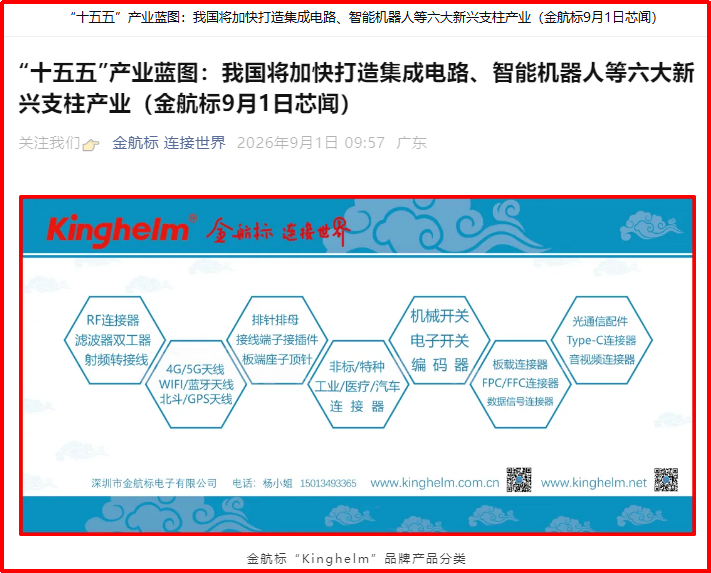
Kinghelm and Slkor's 'Daily Chip News' has been selected as a recommended headline in the industry news section of WeCom (Enterprise WeChat).
2026-09-03
785
International Tech News:
1. Chip giant Qualcomm will raise chip prices starting September 1, with increases in the double-digit percentage range.2. China's Baidu is now a dual-primary-listed company on both the Hong Kong Stock Exchange and the Nasdaq Global Select Market.3. From September 8 to 11, Goldman Sachs will host the Communacopia + Technology Conference in San Francisco, with 32 global companies from fields including digital/AI chips, EDA software, analog semiconductors, semiconductor equipment, memory, and IT services participating.4. South Korea has further tightened export controls, adding high-performance AI integrated circuits, advanced semiconductor manufacturing equipment, nucleic acid synthesis equipment, and other categories to its strategic materials control list.5. On September 2, Kinghelm (www.kinghelm.com.cn) and Slkor's "Daily Chip News" article *"The '15th Five-Year Plan' Industry Blueprint: China to Accelerate Development of Six Emerging Pillar Industries Including Integrated Circuits and Intelligent Robots (Kinghelm September 1 Chip News)"* was featured as the recommended headline in the Industry News section of WeCom (Enterprise WeChat). WeCom now covers more than 50 industries including retail, education, finance, healthcare, government affairs, manufacturing, and the Internet, and has become the preferred tool for most enterprises in private-domain operations and customer management, with a very high industry recommendation rate.6. ZTE's Nubia NaviX Ultra – the world's first AI agent smartphone – will feature Doubao mobile assistant, is positioned as a mass-production flagship, and is scheduled to launch and go on sale in September.
Domestic Tech News:
1. According to statistics, total investment in China's semiconductor industry in the first half of 2026 reached RMB 800.2 billion, a year-on-year increase of 72.4%.2. UniVISTA's domestically developed next-generation full-featured high-performance digital simulator, UniVista Simulator Plus (UVS+), won the Gold Reputation Product Award for EDA at the 3rd 'China Chip' Awards.3. BYD Semiconductor's next-generation satellite-architecture 4D millimeter-wave radar chip has entered mass production.4. From September 9 to 11, the 2026 International Integrated Circuit Innovation Expo (IICIE) will be held at the Shenzhen World Exhibition & Convention Center (Bao'an).5. The *Shenzhen Special Economic Zone SME Development Promotion Regulations* were passed, focusing on the full chain of entrepreneurship, innovation, market expansion, financing, and rights protection for small and medium-sized enterprises, and introducing a series of hard-hitting innovative measures.6. Chinese memory chip maker Longsys plans to list in Hong Kong, raising no more than HK$6.28 billion (approximately RMB 5.395 billion).
Disclaimer: The information presented above was compiled from publically available web sources and does not necessarily reflect our company's beliefs or positions. If you believe any of the content infringes on your rights or you have any issues, please contact us and we will respond swiftly.
《Kinghelm RF Coaxial Connectors: KH-BNC50-3511, KH-SMA-K513-G and KH-SMA-KE-Z》Featured on LCSC Homepage
2026-09-03
844
[ Kinghelm RF Coaxial Connectors: KH-BNC50-3511, KH-SMA-K513-G and KH-SMA-KE-Z ] were proudly featured on the LCSC homepage. The content is as follows:
In today's era of rapid information development, efficient and stable signal transmission has become an indispensable key element across all industries. Kinghelm (www.kinghelm.net) emphasizes technological innovation and quality control in product R&D, and has obtained ISO9001 certification as well as RoHS and REACH compliance, ensuring product quality and environmental performance from the source. Kinghelm's (www.kinghelm.com.cn) "Kinghelm" brand innovative RF coaxial connectors KH-BNC50-3511, KH-SMA-K513-G and KH-SMA-KE-Z, with their core strengths of "high reliability, high adaptability, and high cost-performance," have earned wide market recognition.
LCSC Part No.
Manufacturer Part No.
Specification
Brand
Category
C2837587
KH-BNC50-3511
Board-end socket / spring contact; RF board-end / board-end BNC
kinghelm
RF Coaxial Connectors
C411575
KH-SMA-K513-G
Board-end socket / spring contact; RF board-end / board-end SMA
kinghelm
RF Coaxial Connectors
C504007
KH-SMA-KE-Z
Board-end socket / spring contact; RF board-end / board-end SMA
kinghelm
RF Coaxial Connectors
Kinghelm KH-BNC50-3511
Kinghelm KH-BNC50-3511 Product Image 1
KH-BNC50-3511 is a high-quality right-angle, female, board-end BNC connector designed for applications requiring stable and efficient signal transmission. It features a zinc alloy body with a white insulating plastic shell, weighs 10.6 g, packaged in trays, with through-hole mounting, 50Ω impedance, maximum frequency of 3 GHz, and operating temperature range from -55℃ to +155℃.
Kinghelm KH-BNC50-3511 Product Image 2
Kinghelm (www.kinghelm.net) BNC white connector KH-BNC50-3511 stands out in signal transmission with its excellent performance, reliable connection stability, and wide application fields.
Product Features:
Durable and rugged housing;
High-quality inner conductor and insulating materials;
Convenient plug-in mating;
Reliable bayonet locking mechanism.
Product Advantages:
Robust connection design provides excellent anti-interference performance and stable signal transmission;
Superior materials and exquisite craftsmanship ensure long-term reliable operation even in harsh environments;
Easy plug-in mating and bayonet locking enable fast and secure connections;
Supports frequency up to 3 GHz, meeting a variety of signal transmission needs from low to high frequencies.
Kinghelm KH-BNC50-3511 Datasheet
Applications:KH-BNC50-3511 is typically used for RF signal transmission and can also serve as a pluggable terminal block. It is widely applied in broadcast television, security monitoring, communication testing, instrumentation, and other fields.
Precautions:
Ensure the connector interface is clean and free of foreign matter to avoid affecting signal transmission quality.
Handle gently during insertion and removal to prevent damage from excessive force.
Pay attention to operating temperature and humidity conditions to ensure the connector works within specified ranges.
Kinghelm KH-SMA-K513-G
Kinghelm KH-SMA-K513-G Product Image 1
KH-SMA-K513-G is a commonly used RF board-end SMA connector, with a female interface, right-angle style, single port, weight 2.86 g, packaged in bags, through-hole mounting, 50Ω impedance, maximum frequency 6 GHz, and operating temperature range from -55℃ to +155℃.
Kinghelm KH-SMA-K513-G Product Image 2
Kinghelm (www.kinghelm.com.cn) RF board-end socket KH-SMA-K513-G combines excellent electrical performance, robust and reliable mechanical structure, and convenient usability, solving signal transmission instability issues in high-frequency, high-temperature, and high-voltage environments.
Kinghelm KH-SMA-K513-G Datasheet 1
Product Features:
Composed of a female center contact and external thread, enabling quick connection and disconnection with good anti-interference and stability;
SMA interface offers excellent electrical and mechanical properties;
50Ω impedance and 6 GHz maximum frequency meet high-frequency transmission requirements;
Supports various connection types such as RF SMA-KE/KWE/KHD/IPEX/IPX connectors and antenna sockets.
Product Advantages:
Gold-plated housing and contacts achieve ultra-low contact resistance (inner conductor ≤3mΩ, outer conductor ≤2.5mΩ), ensuring long-term stable and reliable wireless signal transmission;
Air-gap-free structure directly connecting cable insulation medium to the interface provides insulation withstand voltage ≥1000V, allowing wireless gateways to withstand external induced voltage breakdown under harsh conditions;
Insulation material uses excellent polytetrafluoroethylene (PTFE), enabling long-term use from -180℃ to 260℃, and resistance to acids, alkalis, and organic solvents;
Wide frequency range and operating temperature from -55℃ to +155℃ adapt to various severe working environments.
Kinghelm KH-SMA-K513-G Datasheet 2
Applications:
Right-angle female design allows bent connections, suitable for space-constrained applications;
Suitable for wireless communications, RF test equipment, broadcast television, radar, satellite communications, etc., such as antennas, transceivers, power amplifiers, filters;
Extensively used in wireless gateway products.
Precautions:Use in dry, non-corrosive gas environments; avoid mechanical shock and vibration; avoid excessive temperature and humidity.
Kinghelm KH-SMA-KE-Z
Kinghelm KH-SMA-KE-Z Product Image 1
KH-SMA-KE-Z is a high-quality SMA series female, straight, board-end connector with gold-plated half-thread design, 6.2mm interface diameter and 8mm interface length/height, single port, weight 1.42 g, packaged in bags, through-hole mounting, 50Ω impedance, and performs excellently in applications requiring high stability and high-frequency performance.
Kinghelm KH-SMA-KE-Z Product Image 2
Kinghelm (www.kinghelm.net) SMA series connector KH-SMA-KE-Z is designed for RF applications and is highly regarded for its excellent performance, reliable quality, and easy installation. Whether in high-frequency signal transmission or under harsh operating environments, this connector works stably and reliably.
Kinghelm KH-SMA-KE-Z Datasheet 1
Product Features:
SMA series connector with good RF performance;
Female straight board-end design for easy installation and use;
Gold-plated half-thread design improves corrosion resistance and stability;
Supports various connection types such as RF SMA-KE/KWE/KHD/IPEX/IPX connectors and antenna sockets.
Product Advantages:
SMA interface and female design provide excellent and stable signal transmission performance;
Made of high-quality materials ensuring long service life and stable performance;
Threaded connection allows quick and simple installation;
Plug-in design facilitates connections, especially suitable for wireless communication equipment.
Kinghelm KH-SMA-KE-Z Datasheet 2
Applications:KH-SMA-KE-Z is suitable for RF applications, used for connecting coaxial cables and board-end equipment. Widely applied in communications, broadcast television, radar, navigation, aerospace, and other fields.
Precautions:Use in dry, non-corrosive gas environments; avoid mechanical shock and vibration; avoid excessive temperature and humidity.
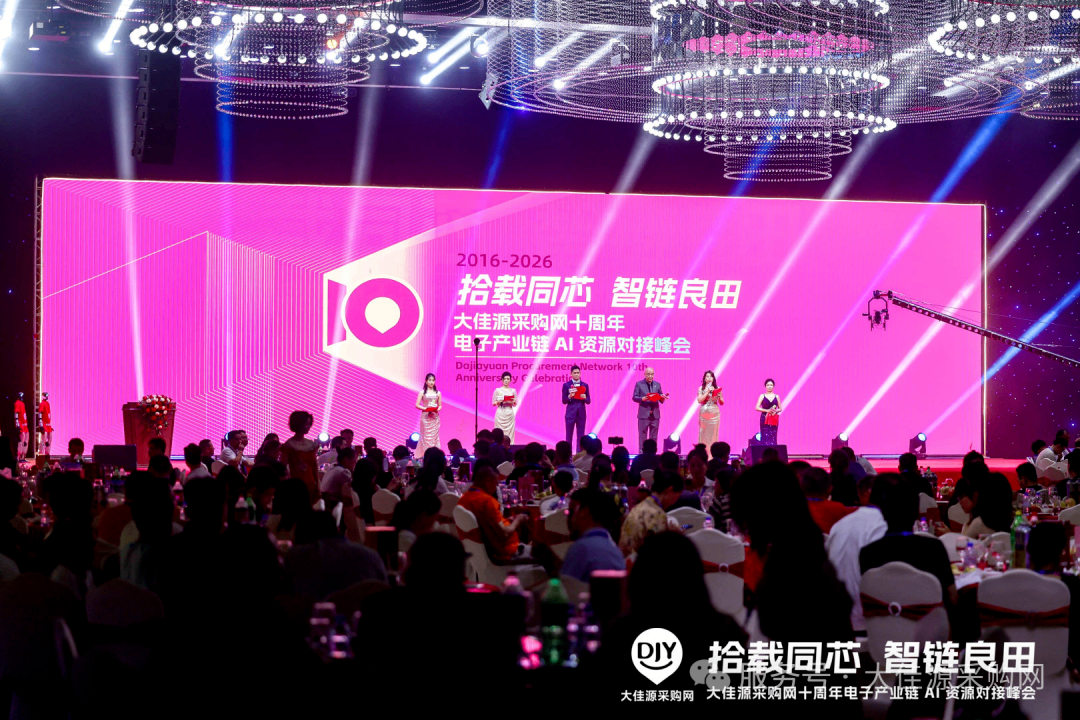
Jushi raises electronic fabric prices in September: 15% increase for heavy‑weight fabrics and 20% for thin‑weight fabrics
2026-09-02
801
Dajiayuan Successfully Hosted an Electronics Industry Summit
International Tech News:
Silicon-Valley-based a16z has raised USD 1.1 billion for its "Machine Age" fund, which will focus on investments in AI processors, memory chips, data storage and other sectors.
Sumitomo Chemical of Japan has established a mass-production system for 4-inch indium phosphide epitaxial wafers at its Ibaraki plant and officially launched product sales.
Sources indicate that Panasonic Industrial Solutions will raise prices for its full-range substrate materials effective September 1st, with increases ranging from 15% to 30%.
Kioxia will invest 1 trillion yen to build its third factory in Kitakami, Japan, mainly for manufacturing its high-density 3D NAND Flash chips.
NVIDIA's H200 chip re-enters the Chinese market, contributing less than 1% to its total data-center revenue of USD 89 billion.
Samsung Electronics will deploy 1,612 major new Korean-manufactured production equipment units at its semiconductor back-end processing factory under construction in Thái Nguyên Province, Vietnam.
Domestic Tech News:
Advanced thin-film equipment from Advanced Micro-Fab (AMF) has surpassed 500 cumulative reactor shipments, covering core models such as low-pressure chemical vapor deposition and metal thin-film deposition.
BYD's new-generation 4D millimeter-wave radar chip with satellite-supported architecture has entered mass-production phase.
On August 30, 2026, Dajiayuan Procurement Network successfully held an electronics-industry summit themed "A Decade of Co-Core, Intelligent Chain for Fertile Land". Representatives from Kinghelm / Slkor Semiconductor attended the event.
Another price-hike wave hits electronic fabrics. Jushi China has officially lifted September prices for electronic fabrics, with heavy-weight fabrics up 15% and thin-weight fabrics rising by 20%.
Hygon Information's invention patent ZL202011542637.5 Method for Loading and Running Virtual Trusted Environment, Data Processing and Security Processing Device has won China Patent Gold Award.
SHRINK Semitech has released 3.3× mask-based silicon 2.5D packaging technology, solving industry challenges for large-size chip integration.
Disclaimer: The information presented above was compiled from publically available web sources and does not necessarily reflect our company's beliefs or positions. If you believe any of the content infringes on your rights or you have any issues, please contact us and we will respond swiftly.
"15th Five-Year Plan" industrial blueprint: China will accelerate the development of six emerging pillar industries, including integrated circuits and intelligent robotics
2026-09-01
805
International Tech News:
It is estimated that Google TPU will reach an inflection point for large-scale volume production in 2028, with overall shipments expected to reach 12 to 15 million units.
Leading semiconductor silicon wafer manufacturer Liumingwei plans to establish a large-scale 12-inch high-end semiconductor silicon wafer production capacity project, with a total intended investment of RMB 3 billion.
The groundbreaking ceremony for SK Hynix's advanced packaging production base for AI-oriented memory was held.
NVIDIA and MediaTek have deepened their long-term partnership and will jointly build an AI computing platform spanning from the edge to the cloud.
Kinghelm Electronics (www.kinghelm.com.cn) has further expanded its product range, covering RF connectors, filter diplexers, RF jumper cables, 4G/5G antennas, Wi-Fi/Bluetooth antennas, BeiDou/GPS antennas, pin headers and female headers, terminal blocks and connectors, board-end sockets and pogo pins, non-standard/specialty, industrial/medical/automotive connectors, mechanical switches, electronic switches, encoders, board-mounted connectors, FPC/FFC connectors, data signal connectors, optical communication accessories, Type-C connectors, audio/video connectors, and more. For inquiries, please contact Ms. Yang: +86 15013493365.
Apple CEO Tim Cook will transition to Executive Chairman, and Apple's hardware engineering head, John Ternus, will succeed him as CEO.
Domestic Tech News:
During the "15th Five-Year Plan" period, China will focus on optimizing its industrial structure and accelerating the development of six major emerging pillar industries: integrated circuits, aerospace, biomedicine, low-altitude economy, new energy storage, and intelligent robotics.
The groundbreaking ceremony for the global headquarters project of Lianxun Instruments, with a total investment of RMB 2 billion, was held.
The R&D and manufacturing base project for semiconductor thin-film and etching equipment of Shangji Semiconductor, with a total investment exceeding RMB 1 billion, has been established.
Changxin Technology achieved operating revenue of RMB 150.31 billion in the first half of 2026, a year-on-year surge of 873.64%; net profit attributable to shareholders of the listed company reached RMB 77.605 billion.
TCL CSOT will gradually establish optical communication chip manufacturing capabilities in phases.
The phase II chip packaging project of Meiqing Semiconductor commenced, and the high-end semiconductor materials project of Guanghuan Semiconductor was launched.
Disclaimer: The information presented above was compiled from publically available web sources and does not necessarily reflect our company's beliefs or positions. If you believe any of the content infringes on your rights or you have any issues, please contact us and we will respond swiftly.