





















Service Hotline
Columnist

Columnist

The Development Path of Huaqiangbei Electronics Companies (Part II)
2026-11-07
762
Learning is one thing; putting it into practice is another. Let us now talk about the internal strength of our companies — the work we have to do on ourselves in management:
One: branding. I have already spoken about the company brand and the product-category brand in Huaqiangbei, so let me add a few thoughts here. A brand comes to stand for a category: many brands own a particular product range, and once a brand is the name people think of for a class of product, it has made it. Wang Lao Ji is herbal tea; ST's MCUs are among the company's signature products; Slkor is the silicon carbide name, and it stands for quality. It is why Gree's air conditioners sell for more than Midea's, and why Nike sells better than Li-Ning. With a brand you build trust and connection with customers at the lowest cost, and every step of trading and distribution becomes more efficient and cheaper. The mobile internet has been a real help to small companies like ours in promoting a brand. A brand also needs a story, as well as time to develop, mature and be refined.
Two: standardisation. Standardisation is an element of coordination — of communication, exchange and trading. The exchange rate between the renminbi and the dollar is a form of standardisation; so is the conversion between metric and imperial units, which lets the two systems meet. When the First Emperor of Qin made every axle-track the same width and every character the same shape, that too was standardisation, in the service of governing more efficiently. Run a company and you begin with your own management: if you want efficiency and quality, you want standardisation. Outside the company, standard terms make it quick and easy to connect with suppliers, and hard to go wrong; they do the same with customers, and large customers set real store by it — it is part of a company's soft power. Take your lead from the better firms in your own industry, and aim for the widest possible agreement with both your suppliers and your customers. Where there is interaction and coordination you have the best model there is, and half the effort brings twice the result.
You can see it with KFC and McDonald's: the soda and the food taste the same wherever you go, and so does the price. Taste and portion are the standardisation of quality; price is the standardisation of the financial numbers. What standardised data then does for market analysis, raw-material delivery, staff procedures and cost accounting — I hardly need to spell out. Brother Ming of Huaguan Semiconductor is nodding away down there; he has felt the difference and is already putting it to work. Building a domestic brand is no easy thing. Keep at it, Brother Ming.
I have a little experience of this myself. Some friends from my home town came to Shenzhen the other day, and to look the part — to pass myself off as a man of means — I took them to a five-star hotel, brought out a couple of bottles of Wuliangye and ordered abalone. Afterwards they went home saying I had done all right for myself and that they would have to stay on my good side. It cost less than what a few of my wealthier classmates had spent taking them to a private club after exotic game, and it worked better. That is standardisation doing the work for you: five stars, Wuliangye, abalone — each of them indirectly vouched for the standard of my hospitality. They belong to the five-star class, so without trying I was promoted into it as well. Knowledge is useful: it brings even one's vanity up to five-star standard.
Three: the team. I have already said that a team, not an individual, is a company's core competitiveness, so let me be brief about systems and about dependence on particular people. A team should be organised into a system that follows the flow of the work and the division of responsibility. It lifts efficiency; it makes training new arrivals faster and better; and when someone leaves or moves post, the effect on the organisation's efficiency and on product quality is kept to a minimum. That is how you reduce dependence on individuals. In my big-company days I used to come back from two weeks on the road to find half the faces changed, and the place still running as smoothly as ever. That is the point.
Four: process. Have you noticed Jialeyuan, the fast-food place doing rather well just now? A cheap canteen like that can hold a prime location with high rent, and the heart of it is the process. We used to order fast food dish by dish, which was hopeless. In the Jialeyuan process, rice, meat, the meat-and-vegetable dishes, plain vegetables, soup and the till are all handled in one line; it is very fast, it does not waste the diner's time, and it is efficient and orderly — that is the greatest benefit of process. Add standardisation to it, and a layout that moves diners through in a small loop, and you have table turnover. With those two in hand, you are most of the way there.
Why was Dongguan's service trade so famous in its day? Standardisation and process, that is why. It is not a story I should be telling, so let us say I never mentioned it.
Our ERP software runs smoothly now; it was hammered out over years of real use by a great many companies. ISO 9000 for internal management and TS 16949 for automotive work are good helpers in getting process right. Any company that can afford it should take them up. We ourselves plan to start in the second half of the year.
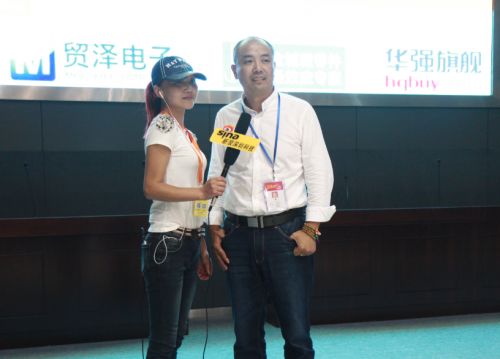
Interviewed on the Huaqiang Flagship stage at a Huaqiangbei electronics event, with Mouser Electronics branding behind him
Five: diversification. Faster growth does mean more lines, but diversification into something unrelated is hard to connect up and hard to control. Go for related diversification. If we used to sell plates, then we now sell bowls or chopsticks: the raw materials, the supply channels, the knowledge already banked and the contacts already made can all be used again, at the lowest cost, with the risk contained and the efficiency high. To make a business bigger, you add to the number of customers and you add to what each customer buys. Do both and there is nothing better. Diversifying out from a base you already have is the dependable way to do it.
Someone once told me that a well-known Chinese maker of handsets and telecom equipment asks, before it develops a new product or enters a new industry, for about seventy per cent overlap with the products, channels and technology it already has. That makes a great deal of sense. Too much surplus is hard to digest, hard to absorb, hard to turn into anything; the risk stops being controllable, and you end up with a mess.
Six: channels. There are upstream channels — your suppliers — and downstream channels — your sales. Build the upstream side properly and purchasing price, supplier responsiveness, quality and risk control can all become more stable, reliable and manageable. Some people look at nothing but the lowest price. I am not with them; it should be judged in the round. On the downstream side, look at a distributor's product lines, the customer relationships and market resources they can leverage in their region, and their overall strength. Best of all, your development strategy and your product lines fit together or complement each other, and the customer relationships you already have in the industry can turn into orders. Trade with your equals in scale. If the other side is far too big, you will not be taken seriously; far too small, and there is no synergy to be had. I would also want a company culture close to our own, or doing business together gets tiring.
The best outcome is a good, almost wordless understanding with your suppliers and your distributors: one direction in strategy, one rhythm in the market, the same long-term goals. Then information and resources can connect, and laying out the ecosystem falls into place. That is how each side sets off the other, and how all of them live and prosper together.
Seven: the craftsman's spirit. Not everyone here makes products, but I think every link in the chain can keep a craftsman's standard, and in distribution and service we can put every task we touch right. The slides for today's talk went through more than ten revisions — I hope the final result has come together well. I thought a long time about whether to write “silicon carbide” or the English “SiC”, and it took several rounds with my colleagues to settle whether Slkor should be called the silicon carbide specialist or the power-device specialist. What is really valuable is arguing with yourself where nobody is asking you to, and making the thing as good as it will go. That is how you keep improving.
Look at how many people use an iPhone, and ask why. So many of its functions would have sounded impossible not long ago. I used to think the manual must be an A5 book an inch thick — the manual for my car is that thick. So when I opened the box of my 4S and found one thin sheet of paper, I was shaken. Everything else you experience yourself and feel your way into, and one day you discover a function nobody had told you about. For that alone, no wonder people will go short of everything else to own one. So my hope is this: take the craftsman's refusal to settle, do the work in front of you properly, and the company rises with it.
Of course, internal strength is not only these seven things. There is the philosophy of the business, and there is teamwork. I have set out my own ideas in the hope of drawing better ones from you. Keep on learning and you will certainly improve.
Part four: the road of development, outward
One: choosing the market
I have planned four parts for this section, and I shall start with the first, choosing the market. A company that wants to grow big has to put its effort into the choice of market before anything else. Why did Xiaomi decide to make handsets, and why is it doing drones now? Because the markets are big enough. Why did that well-known Chinese maker of handsets and telecom equipment go into handsets? For the same reason. Look at the famous large companies in the world — every one of them sits on an enormous market. When we went into BeiDou, the market was being talked up as four hundred billion yuan, and I thought that if we worked hard there was a chance for us. What we can actually see is nearer two billion, and eighty per cent of that is in the hands of large enterprises and big state-owned groups; for us there was no way to grow big. That is why we chose to invest in Slkor and its power electronics. That market is worth a trillion yuan — room enough for me to move.
You should also choose a market where sales come often, or a company like ours will starve. I moved out of property and into electronics for exactly that reason. In property you may bring out one project every few years; in electronics a customer can give you an order every month, and that is how a small company stays alive. Now let me brag a little about Mr Wu, the best of my bad friends, who lives in my compound. Why the best of my bad friends? Three reasons. When his wife will not let him smoke at home, he comes round to my place and smokes, poisoning the stairwell. He gave me a great deal of Kouzijiao to drink — a liquor aged twenty years — and put my stomach out of order. And he rings my doorbell to suggest a run in Dasha River park, then carries me off to a nightclub for drinks the moment we are downstairs. So my family does not care for him, and of course his family does not care for me; I go and lead him into mischief from time to time myself. He used to say: you work so hard at electronics, why not go back and sell sand, cement and bricks to your old friends from the property days. My answer was that it is precisely because property trades so rarely that I dare not touch it.
Professor Gu at Peking University has a theory about this. Some companies are large and camel-shaped: they can go a long time without food or water and still reach the finish. Small companies are rabbit-shaped: they have to eat as they run, and they need speed and agility. Most of the small firms in Huaqiangbei are the second kind. So we had better sell our components honestly and steadily — I am frightened of months passing without an order.
Two: grafting products onto industries
Next, the grafting of products onto industries. For a company to develop quickly it has to graft itself onto good resources outside. Grafting is a biological term: two or more strong stocks joined so that they grow as one and bear fruit, and the benefit arrives in the shortest possible time. What I mean here is how our companies turn new resources quickly into assets and cash. Huaqiangbei has many advantages: a very high conversion rate from market to order, fast reaction to market information, sales channels and networks with roots that tangle everywhere, no shortage of gifted imitators, and a complete supply chain and ecosystem. What we have to work out is how to join all of that to the new technology, new models, new ideas and new products arriving every day.
China is today one of the world's most important markets for new-energy vehicles. Using the resources Kinghelm has banked over the past few years, we grafted the silicon carbide technology of Slkor Electronics of Korea onto our own business. We bring the strength of our team, our location and our channels; Slkor brings leading technology and its strongest products; and together we aim to become large and strong in new-energy vehicles, charging piles and photovoltaics. Our goal is to use the vast Chinese market to reach first place in the world in this trade. That is grafting done properly. Here is another: the BeiDou modules that Kinghelm sells as agent come from Aerospace Huaxun, which is the result of the China Aerospace Science and Industry Corporation taking over Xi'an Huaxun, the developer of BeiDou chips. Huaxun had good products, the group had channels and resources, and the match was immediate, with very good results on both sides. That too is effective grafting, and it is the kind of thing we can see happening around us.
Whether a graft takes depends also on how far the temperament and outlook of the two leaders, their product lines, brands, channels and teams fit one another. Where too little fits, it is not dependable. A horse and a donkey can produce a mule; a horse and a monkey cannot produce anything, can they? So the DNA deserves close attention. A listed company's takeover is another matter again — it is done at a higher level, with a different standard of integration. I shall come back to that when I reach industry and finance.
Three: building the industry ecosystem
We know something about building an industry ecosystem, so let me start with ourselves. When we first entered BeiDou we came in through selling BeiDou navigation modules. After a while we found that the market information we received was often delayed and distorted, that we spent a great deal of effort for little result, and that we were losing chances. So we began to lay out and build an ecosystem for the industry. First, we expanded our presence both upstream and downstream within that one vertical. We made friends at the chip research and development end; we also put some research into end applications at the far end of the market and took part in tenders for government projects, so that we held the most critical positions. We made friends with the other suppliers in the trade as well: over a meal and a small drink we learned what the customers we were targeting were up to and what they needed, so that in a sale we could know the other side and know ourselves, and hardly ever be surprised. Then we developed the related upstream channels and sold Kinghelm-brand BeiDou antennas and China Mobile's BeiDou data cards. One thing leading to another, and we became the first name among BeiDou distributors.
Let me say something about Huaqiangbei itself. It has an excellent ecosystem for electronic products and we should use it well. When I first came here I made friends with a great many people, and they taught me a lot I had never understood. What I value most is that Huaqiangbei has sourcing and sales channels that run straight out to every part of the world; it is a source of information and a key node in the industry chain. That is why I have put up with the crowds and the roughness of it, the difficulty of parking, the high rent and the high wages, and stayed here these years. In this district you can find high-technology goods that are hard to buy anywhere else, and you can sell what is made in Huaqiangbei to customers in the United States. You can borrow money at a steep rate, and you can dig out things that have been off the market for years. You can buy samples of an inductor or a resistor worth a few cents, and you can have a gray-market iPhone in your hand in the same week it goes on sale in America.
Put up an advertisement for BeiDou or silicon carbide in Huaqiangbei and the whole trade knows it, and it may travel the world besides. The other day Li Qiang, who runs Qiangyuanxin Electronics, came round for tea and said: Brother Song, that old line of yours — Kinghelm means BeiDou — was a good one, I remember it still. I said in joke that we had made whatever money there was to make in BeiDou, and that our new line is Slkor, the silicon carbide specialist — and asked him to pass it on when he had nothing better to do.
To put it more seriously, and at a higher level: an industrial ecosystem is a close fusion of at least eight elements — government, industry, the universities, research institutes, finance, brokers and trading platforms, sales and conversion channels, and publicity and the media. That is what a proper industrial support system looks like. A company that does this work well has a chance of becoming the leading name in its trade, and at worst will not be far behind.
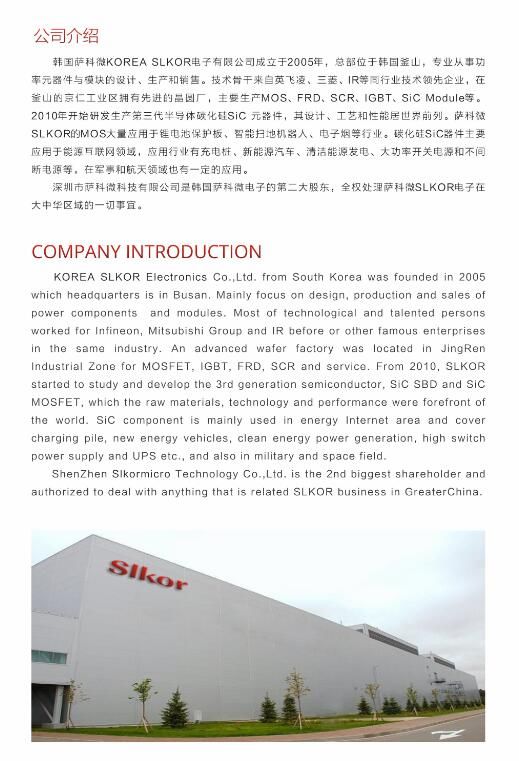
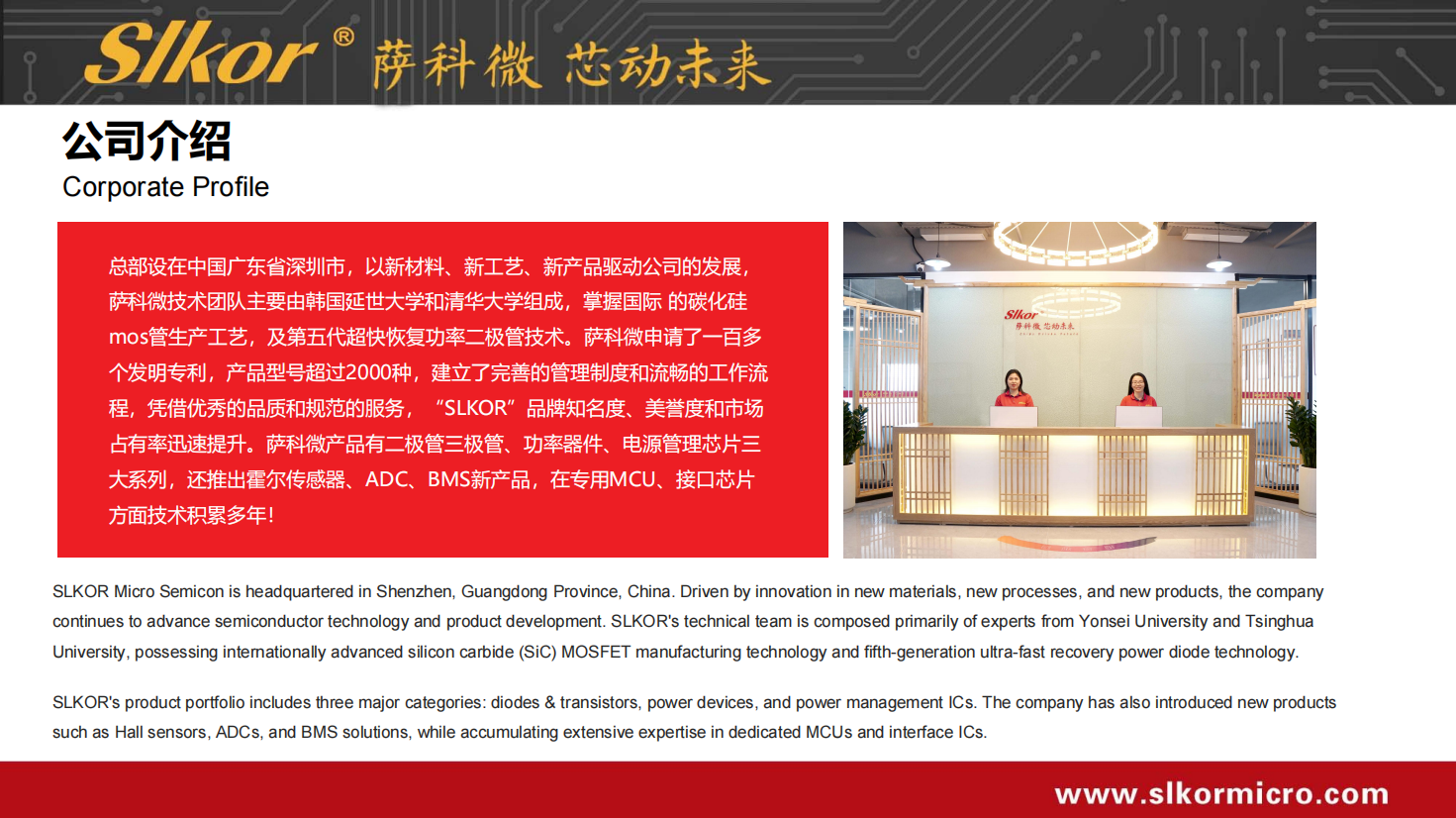
Company profile page for Slkor and Kinghelm, with the Slkor building
Four: getting into the core of the value chain, and holding the key positions
Now the core of the value chain, and the key positions along it. Every industry has them. The point of control may be materials, or technology, or a moat built out of concentrated capital, or a firewall built by long accumulation, or channels, or brand. Whoever controls these key positions has a strong voice in the industry. Honestly, which of those positions do the traders and distributors of Huaqiangbei hold? When we call ourselves porters for the original manufacturers, we are not wrong. We joke that we do the hard work and the tiring work, and sometimes the dirty work as well. It is because we stand at the far end of the value chain, and have to live by other people's leave.
The encouraging thing is that we can see many companies, once they have earned their first pot of gold, turning towards the centre of the value chain. Huaguan Semiconductor has moved upstream into the packaging and testing of semiconductors; Zhishangwei is building a range of power-bank solutions; Kexin has gone into research and manufacture of products; Meilong is building a brand and a team. The results are plain for everyone to see. Kinghelm, having secured the key positions in BeiDou, has expanded its presence into the emerging field of silicon carbide. Working with Slkor Electronics of Korea, we have begun to push on several fronts at once: core materials and processing technology, building the Slkor brand, developing downstream distributors and channels, a series of solutions, and the ecosystem around them. The road ahead is long, but we mean to understand the laws that govern this industry, take our risks with our eyes open, and go straight ahead.
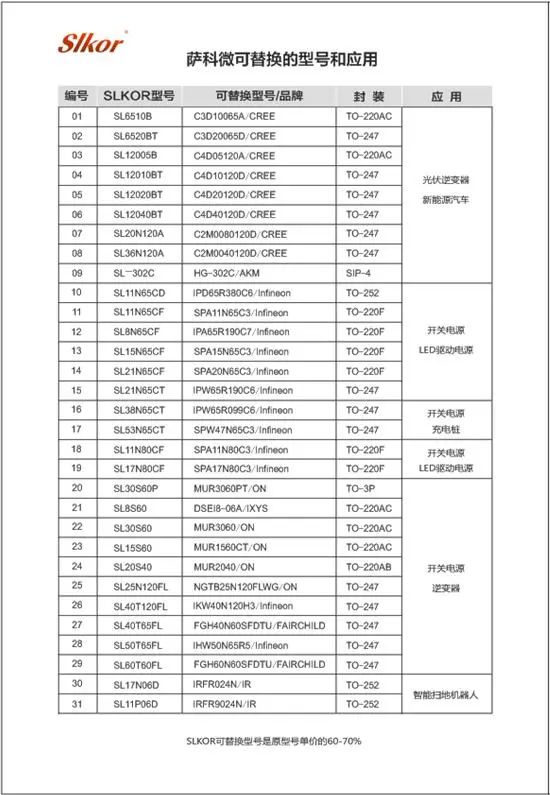
Slkor cross-reference table, page 1: Slkor part numbers, the parts they replace, package and application
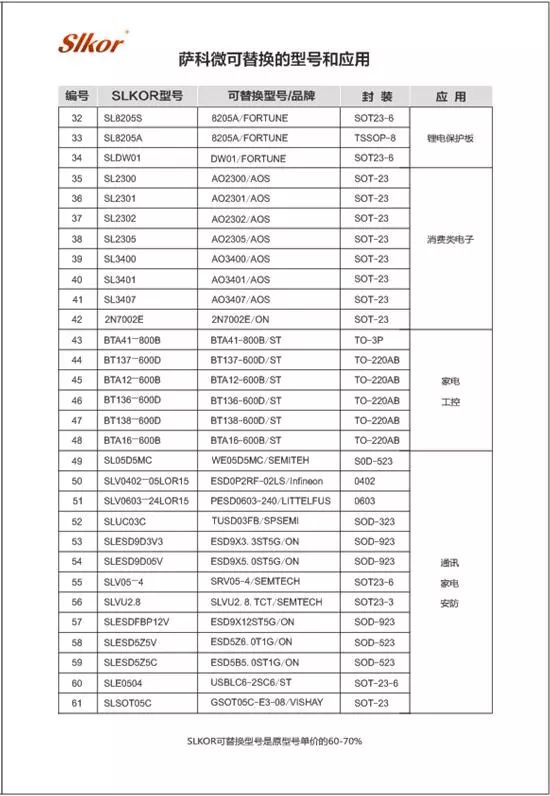
Slkor cross-reference table, page 2: Slkor part numbers, the parts they replace, package and application
Let us take a break, and I shall go on with the second half when we come back.
Introduction to Mr. Song Shiqiang
Mr. Song Shiqiang is the general manager of both Slkor and Kinghelm. He is a member of the expert pool of the Chinese Institute of Electronics, an expert on the business of Huaqiangbei in Shenzhen, and a columnist and popular-science writer. Song Shiqiang began his career as a front-line technician and has served as the chief executive of an internationally listed property company. He has wide experience in technical management and business operation, and he combines macroeconomic theory with the practical realities of running a business, leading his companies to rapid growth.
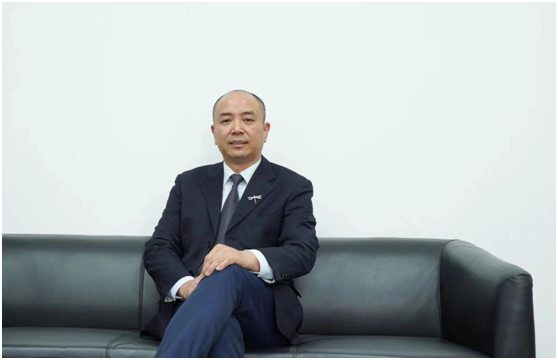
Mr. Song Shiqiang of Huaqiangbei
Slkor and Kinghelm, the two companies in which Mr. Song Shiqiang has invested, are headquartered in Shenzhen, China, and both are national high-tech enterprises. The Slkor (www.slkoric.com) and Kinghelm (www.kinghelm.net) brands have built an international presence and continue to expand their market reach. Shenzhen Slkor focuses on the development of new materials, new processes and new products; its technical team comes from Yonsei University in Korea and Tsinghua University, and it was among the first to master silicon carbide MOSFET technology. Slkor has grown from a fabless design house into a comprehensive company covering design and development, manufacturing, total solutions and sales service.
Related Recommendations