






















Service Hotline
Perspectives

Perspectives
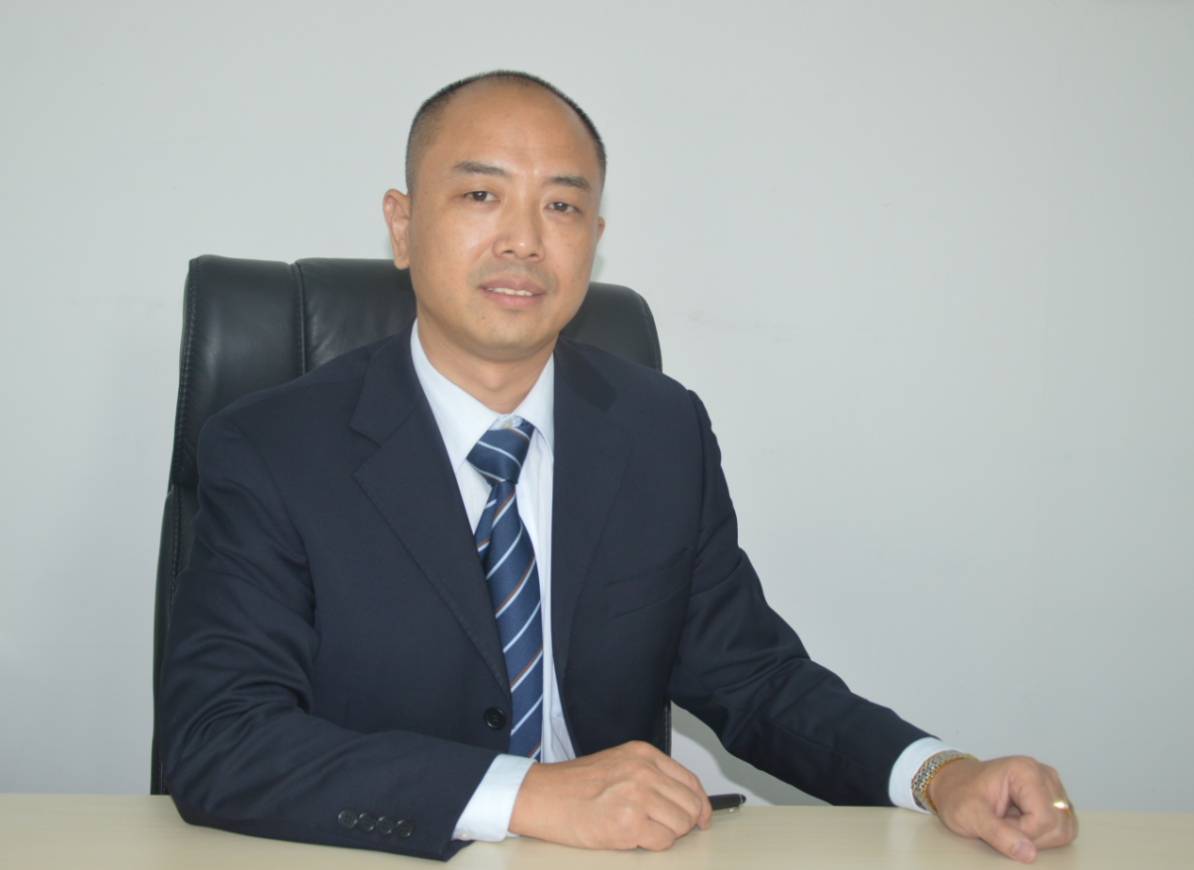
Song Shiqiang
Apart from CEO of Shenzhen SlkorMicro and Kinghelm, Mr.Song Shiqiang is currently holds a few important social positions: private economic researcher of the Economic Development Center of the China State Council, member of the electronic information expert database of China Association for Science and Technology, commercial research expert of Huaqiangbei Alliance.
Prior to invest and to manage Shenzhen SlkorMicro Semicon Co., Ltd. and Shenzhen Kinghelm Electronics Co., Ltd., Mr. Sang was the former CEO of an international real estate listed company.
Mr. Sang is working hard on building the Slkor and Kinghelm brands. Both Slkor and Kinghelm are Chinese national high-tech companies and have obtained dozens of invention patents and software copyrights. Slkor is one of the fastest-growing semiconductor companies in China, and its vision is to become the leader of the domestic semiconductor industry.
A Preliminary Exploration of Counterfeit Goods in Huaqiangbei
2026-06-09
2505
Huaqiangbei, the renowned electronics trading hub, distribution center, and ecosystem core — officially designated "China's First Electronics Street" by national authorities — was once spoken of in the same breath as Beijing's Zhongguancun. Where there are profits, there is an underworld, and Huaqiangbei is no exception. The genuine and the fake, the real and the illusory, isn't that part of Huaqiangbei's unique charm? What types of counterfeit goods exist in Huaqiangbei? I'm Lao Song from Kinghelm, a BeiDou GPS antenna company, and as Huaqiangbei's most verbose street-economy commentator, I'd like to share the insider knowledge I've accumulated from years of deep immersion in this world.
Song Shiqiang, General Manager of Kinghelm
The counterfeit goods of Huaqiangbei have one achievement worth "bragging about": they once penetrated the U.S. military supply chain and ended up in cutting-edge fighter jets. In Huaqiangbei, you can assemble an iPhone for a few hundred yuan in half a day. The latest Huawei phones can be obtained two days before their official release. Imitations of the world's newest digital products from anywhere on the globe can be found within three days — that is Huaqiangbei's core competitive edge. To understand the types of fake goods, we need to analyze them from several angles. It's a bit like how I try to assess the "vintage" proprietresses of Huaqiangbei — the ones who've been around the block and carry their experience with quiet authority. You observe whether they've been seasoned by the years; you take stock of how life has shaped them; you check whether they've made it official somewhere along the way; and you consider whether, like certain celebrity couples who famously declared "we are not who we once were, yet we still share the same door," they've reinvented themselves entirely — only to come full circle again. Round and round it goes, layer upon layer of history. The old physician's method of observe, listen, inquire, and examine serves well here too. But of course, this is all loose talk over tea and wine. In reality, these proprietresses run their businesses with sharp minds by day and raise families — sometimes quite large ones — by night. The proper term for them, really, is "second-time entrepreneurial businesswomen."
Now let me, Lao Song of Kinghelm BeiDou GPS antennas, return to the main subject of counterfeit goods in Huaqiangbei.
I. Disassembled and Refurbished Goods
These originate from overseas electronic waste, largely sorted and roughly processed in areas centered around Chendian Town and Guiyu Town in the Chaoshan region. Using the most brutally simple yet efficient methods — described colloquially as "smoke-roasting and hammer-smashing, acid-washing and alkali-bleaching, scooped up with a strainer" — the disassembly process causes severe environmental pollution that is difficult to control. Over time, operations were gradually forced to relocate to remote areas like Qingyuan, eventually going underground and operating as a guerrilla enterprise, while sales continued to flow primarily through Huaqiangbei in a front-shop-back-factory model. There is also what is commonly called "bulk cargo" — entire shipping containers or boatloads of goods purchased wholesale and then resold in smaller quantities. Imported electronic waste enters China priced by the vehicle, vessel, container, or sack, with the value benchmarked against the yield of precious metal smelting on-site. It is then sold by the jin, by the pile, by the box, or even by the number of IC pins — essentially enormous returns on minimal investment. The volumes involved are not small. After processes including sorting, testing, acid-washing, polishing, remarking (via silk-screen or laser printing), taping into reels, and packaging, most of this material ends up being sold in Huaqiangbei through a fully integrated production line. Repairing pins and replanting BGA solder balls is itself a thriving trade, with packaging designed to pass for genuine product. Many of Huaqiangbei's early overnight-millionaire stories trace back to this industry. After striking their first pot of gold, some people changed industries, some laundered their reputations, some settled into a life of leisure and enjoyment. Others upgraded their operations and pushed up the value chain, evolving from traders into original manufacturers with their own brands, distribution channels, R&D departments, and production facilities.
Capacitors and resistors have such low individual value that refurbishing them isn't worthwhile; they go straight to precious metal smelters along with PCB boards. Chips with flash memory tend to degrade in function over time and are rarely refurbished for reuse. For disassembled components whose function remains intact, Huaqiangbei's price-to-performance ratio is actually quite respectable — the product range is broad, the supply chain is mature, sourcing is convenient, and supporting services are comprehensive. This is part of why Huaqiangbei remains an active and legitimate market, regularly drawing buyers from across the country and even from abroad in search of legacy chip models. According to insiders, some foreign companies needing X86 chips for legacy equipment repairs source them through Huaqiangbei.
Disassembled components
Outside the Chaoshan region, areas in Zhejiang such as Lishui and Cixi had similar industries during the 1980s and 90s, mostly supplying markets like Zhongfa and Hailong in Beijing's Zhongguancun. However, the scale was smaller, the lifespan shorter, and the workforce much more limited.
II. Out-of-Spec New Goods (Scatter New)
In industrial production, a certain pass-through rate is maintained to ensure product quality and consistency. After processing at a foundry, rigorous testing is conducted, and dies on a wafer that fail inspection are marked with a red dot. These components, though substandard, still retain some usable value. They are acquired through various channels at scrap prices, then subjected to basic testing and sorting before being offered for sale. Some also emerge from the assembly and testing stage at the factory. This category is known in the trade as "scatter new goods." Huaqiangbei sellers with more audacity sell them outright as genuine original parts, while those with a slightly clearer conscience — or more caution — will label them for what they actually are. Compared to genuine originals, scatter new goods fall short in areas such as current and voltage ratings, insulation grade, yield rate, electrical specifications, and pin flatness. In storage products, the discrepancy often shows in capacity. Nevertheless, they can be used in a downgraded capacity for specific applications, and during supply shortages or after original products are discontinued, some traders have made handsome profits from them.
I was once told by someone in the industry that storage components are generally classified in the trade as "white chips" and "black chips" — referring to genuine originals and scatter new goods respectively. Black chips may have some sectors or quadrants damaged, resulting in smaller capacity and inferior performance, but they can still serve in a pinch. The suspiciously cheap USB drives and memory cards you find in Huaqiangbei are almost certainly sourced this way.
III. Relabeled Goods
This category accounts for enormous volume and is concentrated primarily in lower-grade products such as resistors, capacitors, and small-signal diodes and transistors. The practitioners are somewhat more sophisticated — these "second-hand proprietresses" not only know the 26 letters of the alphabet but can also read basic English product specifications. Where technical parameters are identical or sufficiently similar, they substitute one brand for another: LRC for SHARP, Yageo for Samsung, CJ for AOS, and countless other permutations.
In a corner of the third floor of the old Huaqiang Market, there used to be several small shops specializing in remarking services. Their computers held logos, part-numbering conventions, barcodes, and QR codes for every major brand, and a few years ago people would queue up to have their goods remarked. Traders doing enough volume simply bought their own marking machines.
A small remarking counter
One dealer I know by the surname Liu took things even further. He first spent considerable money to secure an authorized distributorship for Rohm, then brazenly relabeled products from CJ or UTC as Rohm — pocketing a massive price differential in the process. Before long he was driving a brand-new BMW X6. Another wealth story from Huaqiangbei. Out of gratitude for his beer sponsorships at our events, I'll refrain from naming him — not that he'd ever admit to it anyway.
IV. Misgraded Goods
This refers to the practice of passing off inferior goods as superior ones — substituting a lower grade for a higher grade. The same product line gets sold up the hierarchy: commercial grade passed off as industrial grade, industrial as military grade, military as aerospace grade. The brand and part number stay the same; only the suffix needs changing. Swap an "I" for a "V" and the asking price doubles. There is also the practice of inflating capacity: a 256K part sold as 512K, a 512K sold as 1G — rampant in the storage sector. For MCUs, DSPs, FPGAs, and similar products, the manipulation targets processing speed, resolution, and other performance metrics.
In my estimation at Kinghelm, the goods that penetrated the U.S. military supply chain were most likely of this variety. Problems wouldn't surface during standard on-board testing and burn-in, but would emerge under demanding operating conditions or after extended periods of use.
There is also what Huaqiangbei calls "big chip" and "small chip" — a distinction based on the physical size of the semiconductor die. The pattern is systematic: a 0.8A part sold as 1.0A, a 1.0A as 1.2A, 3.3V passed off as 5V, and so on following a predictable progression. Other forms of misrepresentation in key electrical parameters — on-resistance, breakdown voltage, junction capacitance — are too numerous to list individually. When fellow traders in Huaqiangbei do business with each other, they typically give each other a heads-up and sort out the details among themselves, leaving the end customer as the one footing the bill.
Relabeled goods
V. Domestic Substitute Goods
When a foreign-branded part is discontinued but market demand persists, domestic fabless IC design companies will reverse-engineer and reproduce it. Due to the inherent limitations of reverse engineering, or because costs or target markets led to stripped-down versions retaining only core functionality — combined with comparatively less mature process technology and assembly and testing capabilities — these domestic substitutes fall short of the originals in multiple respects. To open markets while managing risk exposure, design companies often ship these as "white label" (also called "neutral") products, leaving Huaqiangbei distributors free to apply whatever brand and packaging they choose. Everyone understands the arrangement and walks away satisfied.
Years ago, a particular IC used in high-definition cameras — part number UPD6453, made by NEC — retailed for around 18 RMB. A company in Hangzhou reverse-engineered it, bringing the production cost down to 3.5 RMB. A Huaqiangbei dealer surnamed Zhou sold this part for three months straight and bought a Range Rover. In 2011, severe flooding in Thailand shuttered a Sanyo Semiconductor factory, causing the discontinuation of the 2SC2078E power amplifier transistor used in Motorola GP88 walkie-talkies. Normally priced at USD 0.25, spot-market prices for remaining inventory shot up to 8 RMB per unit. Only after domestic companies like Wuxi Gudian and Quanguang developed their own versions — priced at just 0.5 RMB — did the market stabilize. The quality gap remained, of course, and I noticed some Huaqiangbei sellers packaging the domestic version as genuine Sanyo product.
The technological capabilities of China's domestic integrated circuit industry are growing stronger by the year, backed by increasing government support and an improving market environment. Domestic design and packaging-and-testing companies are now able to promote their own brands openly and build their own sales channels — a genuinely sustainable path forward.
For more products, visit www.kinghelm.net
Huaqiangbei's other sources of goods include stolen merchandise, goods confiscated and auctioned by customs, and surplus or returned inventory from failed or downsizing ODM factories. Ten years ago, when I visited an old acquaintance in Wanfeng Industrial Village in Shajing Town, I witnessed workers at Wang's Electronics smuggling ICs and solder paste home to their rental apartments in thermos flasks — yet another layer adding to the complexity and disorder of Huaqiangbei's supply chain.
With so many counterfeit goods in Huaqiangbei, outsiders are frightened and insiders are anxious. Anyone who has never been cheated in Huaqiangbei hasn't really been part of Huaqiangbei. Our own Kinghelm company used to operate a trading division sourcing electronic components for customers in the BeiDou GPS industry, and we regularly purchased fake goods that required us to compensate our clients. It was an endless battle, exhausting and demoralizing. The fakes pushed us well past our limits of tolerance. Government commercial and technical supervision authorities have regularly conducted anti-counterfeiting operations, but as soon as the news spreads, dozens of counters and shops shutter for the day — another uniquely Huaqiangbei phenomenon.
On one visit to see Dr. Zhu Junshan, the founder of ZhongyiFa, the most educated and culturally refined elder statesman of Huaqiangbei and a man deeply concerned with the psychological wellbeing of the market's prosperous young proprietresses, I noticed a microscope sitting on his desk beside a copy of Jin Ping Mei. He told me that every component he sources from the market gets checked under the microscope — and that by now his experience allows him to tell genuine from fake with his naked eye.
Dr. Zhu (center) and his microscope
My good friend Jason Fan (Fan Yi) of Anda Technologies — the man who achieved Huaqiangbei's most impressive weight-loss transformation — runs Singapore-based Anda, which specializes in sourcing scarce genuine components from around the world. He has made public an internal reference library built up over many years, covering how to identify authentic goods across dimensions including brand, country of origin, labels, packaging boxes, anti-static bags, date codes, typefaces, barcodes, trays, pin condition, orientation holes, color, and logo details. The company's social media account, "Chip Advisor," has published dedicated articles on the subject. This is a genuinely public-spirited contribution — cutting through the murk and upholding integrity in the industry.
Jason Fan (Fan Yi), Managing Director of Anda Technologies Singapore (center)
Beyond informal experience-based methods, some companies have turned authentication into a professional business, offering services such as decapping, dissolving encapsulant, reading die-level markings, performance testing, and failure analysis, backed by industry databases and reference libraries. One such company, Baima Testing, has built a thriving operation.
The electronics component market model of Huaqiangbei was the product of a specific era: the backdrop of massive international industrial relocation and China's period of extensive economic growth, during which demand for electronic components was both enormous and highly diversified. The proliferation of counterfeits has severely damaged the reputation of "China's First Electronics Street," disrupted the social and economic order, and eroded Huaqiangbei's standing. As society develops, market information becomes increasingly symmetric, and the legal environment grows steadily more rigorous. The hope is that Huaqiangbei will give rise to more companies like Tencent, Hytera, and Longsys — enterprises with genuine technology, strong growth trajectories, and meaningful contributions to the broader economy — completing Huaqiangbei's long-overdue upgrade and transformation. With the joint efforts of government, merchants, and consumers, may counterfeit goods be driven out of the market, and may Huaqiangbei be built into a paradise for electronics and digital products — the most brilliant calling card of Shenzhen, the Greater Bay Area, and all of China.
Let us all cheer Huaqiangbei on together with Kinghelm!
Research on Huaqiangbei “Shanzhai Phones” (Part Ⅱ) — Song Shiqiang, Slkor
2026-05-18
2897
During the development of Huaqiangbei, "Shanzhai phones" became a topic that could not be ignored. In 2007 alone, the shipment volume of Huaqiangbei Shanzhai phones reached 150 million units, accounting for one-sixth of the world’s total mobile phone production that year. The rise and fall of Shanzhai phones happened rapidly. It created many millionaires from the tiny "one-meter counters" in Huaqiangbei, but it also led to tragic stories, such as the bankruptcy and mental breakdown of "Prince of Shanzhai Phones," Chen Jinling.
The Shanzhai phone phenomenon also had a positive side. It helped promote Huaqiangbei’s maker culture, turning Shenzhen into a "Silicon Valley of Hardware" and a "Paradise for Entrepreneurship." It also gave birth to local mobile phone brands such as Meizu, G5, Longcheer, and Transsion. In many ways, it became the foundation of the "Huaqiangbei maker spirit" and the "Shenzhen entrepreneurial spirit."
However, the Shanzhai phone industry was also in conflict with the government’s push for intellectual property protection, patent awareness, and brand development at that time. As a result, it stood at the crossroads of market growth, technological innovation, government regulation, economic development, business ethics, and legal construction. Conflicts and failures became almost unavoidable, which is why official media and many economists rarely discussed Huaqiangbei’s Shanzhai phone.
Authoritative media and professional institutions, including Harvard Business Review, have studied the cases of MediaTek and the white box handset market using various business analysis models. These include SWOT analysis, Porter’s Five Forces, PESTEL analysis, VRIO analysis, value chain analysis, BCG matrix analysis, Ansoff matrix analysis, and marketing mix analysis.
As a long-time witness to Huaqiangbei, I, Song Shiqiang from Kinghelm and Slkor, aim to objectively and truthfully record what I saw and experienced, restoring the real history of Huaqiangbei during that era. By applying basic theories of socioeconomics, I also hope to systematically analyze the deeper logic behind the "Huaqiangbei Shanzhai phone" phenomenon and pay tribute to an era filled with opportunity and rapid economic growth.
Shanzai! MediaTek and the White Box Handset Market Case Study Solution Analysis
Following the previous article by Mr. Song of Slkor, Research on Huaqiangbei Shanzhai Phones (Part Ⅰ), this section continues the discussion on the origin of "Shanzhai," the technological evolution of Huaqiangbei Shanzhai phones, and the two major boom periods of the industry.
Ⅳ. The Wealth Miracle of Huaqiangbei
Huaqiangbei Subdistrict in Futian District, Shenzhen, possessed all the favorable conditions for the concentration of wealth and the creation of a large number of millionaires and billionaires — the perfect combination of "timing, location, and people."
At the beginning of China’s reform and opening-up, the world was experiencing the third major global industrial transfer, during which manufacturing of industrial products shifted from Europe, the United States, and the Four Asian Tigers to China. This was the "right timing." Shenzhen, as one of China’s first four Special Economic Zones, enjoyed independent legislative authority, highly flexible policies, and a strategic geographic position adjacent to Hong Kong — the "Pearl of the Orient" — while also being close to Southeast Asia, home to many overseas Chinese business communities. This was the "right location." Meanwhile, large numbers of migrant workers from across China poured into Shenzhen. They had received basic education, were hardworking and disciplined, and accepted relatively low wages and benefits, resulting in low labor costs. This was the "right people."
Huaqiangbei was famous for its "three abundances" — people, goods, and money. At its peak, Huaqiangbei was home to over 60,000 small and medium-sized enterprises and 40,000 self-employed businesses, with approximately 500,000 daily workers and merchants. During holidays, visitor traffic exceeded 800,000 people, and shoppers often had to queue just to enter malls such as Vanguard Department Store and Women’s World.
Annual transaction volume in Huaqiangbei surpassed RMB 300 billion. Transfer fees for just one meter of counter space could reach RMB 300,000, while prime retail properties in SEG Plaza sold for as much as RMB 300,000 per square meter. Although Vanguard Department Store had a business area of only 3,000 square meters, its daily revenue once reached RMB 3 million, making it one of the world’s highest-performing retail spaces in terms of sales per square meter. Over the course of 30 years, Huaqiangbei’s economic output surged from less than RMB 2 billion to RMB 300 billion, transforming the former "Shangbu Industrial Zone" into "China’s No.1 Electronics Street." The GDP of Huaqiangbei Subdistrict in Futian District eventually rivaled that of Yuehai Subdistrict in Nanshan District, one of Shenzhen’s most renowned economic hubs.
Mr. Song of Slkor Summarizes the Wealth Phenomenon of Shenzhen Huaqiangbei
Mr. Cheng Yimu from the Shenzhen Electronics Chamber of Commerce is one of the witnesses to the history of Huaqiangbei. According to him, Huaqiangbei was originally the center of Shenzhen’s electronic information industry. At that time, the Shangbu Industrial Zone, where Huaqiangbei is located, gathered many famous electronics factories and government-affiliated institutions, including Huaqiang Sanyo TV, SED Philips, Jinghua Electronics, SEG Hitachi, and Huaqiang Electronics Factory.
After China joined the World Trade Organization (WTO), mainland China rapidly became the "world’s factory." The electronics and information industry experienced explosive growth, and driven by giants such as SEG and Huaqiang, Huaqiangbei quickly rose to become "China’s No.1 Electronics Street."
At the same time, in areas beyond the reach of strict government regulation, the power of the gray market also created economic miracles. The Shanzhai phone supply chain quietly developed across the Pearl River Delta before eventually evolving in Huaqiangbei into a powerful industry force. Many outsiders who came to Huaqiangbei to make a living were willing to challenge old rules and embrace disruptive innovation.
The rise of Huaqiangbei’s free-market ecosystem was essentially a process of optimizing resources and driving industrial innovation. Some small business owners operating from tiny "one-meter counters" gradually became known as the first "Huaqiangbei makers." The district’s unique business model and profit-sharing culture encouraged ambitious newcomers to experiment, compete, and innovate. In an environment where "anything not forbidden could be tried," Huaqiangbei created its own era of glory.
Many people also grew stronger through repeated failures and fierce business competition, eventually becoming well-known entrepreneurs. This is the "Huaqiangbei culture" summarized by Mr. Song of Slkor and Kinghelm — a culture defined by innovation, risk-taking, resilience, and pragmatism.
Huaqiangbei Was Originally a Hub for the Electronics and Information Industry — Photo Provided by Cheng Yimu
Media strategist Wang Zhigang once said, "God releases the devil, but the devil creates paradise." This reflects the sociological theory of "unintended consequences," where an original intention A eventually leads to a completely different result B within a complex and changing social environment.
A well-known example is Sildenafil. It was originally developed to treat high blood pressure and angina, but later became famous for treating erectile dysfunction and improving kidney health in traditional Chinese understanding. This theory can also help explain the wealth miracle created by the Huaqiangbei Shanzhai phone industry.
Now, I cannot resist giving everyone another serious-but-funny lesson about the Chinese habit of "supplementing" health. Chinese people seem to love "boosting" everything. Men focus on strengthening the kidneys, women focus on nourishing the blood, and many households keep traditional medicines like Liuwei Dihuang Pills and Wuji Baifeng Pills in their drawers. Water cups are often filled with goji berries, red dates, or cassia seeds.
Children need extra tutoring, programmers need extra sleep, and elderly people hurry to supermarkets every day to stock up on free eggs for the fridge. It feels as if, without some kind of "supplement," people become mentally uneasy and physically weak.
Back in the peak years of China’s mobile phone industry, aside from the "Zhonghua Kuolian" group — ZTE, Huawei, Coolpad, and Lenovo — almost every other company had a complicated and inseparable connection with the Huaqiangbei shanzhai phone.
ODM companies such as Huaqin, Longcheer, Huiye, Wingtech, Yude, HEDY, Haipai, and Tinno built massive businesses during that era, and the founders behind them largely became billionaires. Mobile phone brands including Gionee, GFive, and Transsion helped figures such as Liu Lirong, Zhang Zhixue, and Zhu Zhaojiang rise to fortunes worth billions or even tens of billions of yuan.
Shanghai Moshang, a company that profited from providing "shanzhai phone" solutions, was officially registered in Shanghai, yet its manufacturing base and technical ecosystem were still deeply tied to Huaqiangbei. Design firms such as Artop and Jialantu, specializing in mobile phone exterior styling and structural design, were also located in Huaqiangbei. Beyond them were countless influential figures hidden throughout different nodes of the supply chain, whose wealth stories were all closely connected to Huaqiangbei.
I has always believed that among all the industries that created billionaires in Huaqiangbei, the "shanzhai mobile phone" wave operated at the highest capacity. It was this era that made Huaqiangbei famous across China and beyond, elevating it to the pinnacle of wealth creation.
In 2012, carrying the modest savings I had accumulated from working in real estate, I returned to Huaqiangbei to seek new opportunities. At that time, Huaqiangbei was bursting with energy. During holidays, the main streets were packed shoulder to shoulder with crowds. Psy’s Korean hit "Gangnam Style" echoed through the streets and alleys, while advertisements for "Being a Woman Feels Great" shapewear underwear covered the walls. After enjoying Damu Chaoshan beef hotpot, many shop owners would head to "Cool Party KTV" for karaoke, and once the mood peaked, everyone would start dancing Psy’s famous "horse-riding dance."
In order to break into Huaqiangbei’s high-end business circles, I often dressed like a polished gentleman, pretending to be a wealthy and cultured successful entrepreneur. I drove around in my third-hand BMW, with expired bottles of Moutai stored in the trunk, while enthusiastically explaining theories such as the "Kondratiev Cycle" and the "Fibonacci Golden Curve" to Huaqiangbei’s businesswomen. I even added the ancient business wisdom of Fan Li — "measuring surplus and shortage, distinguishing righteousness from profit" — as a finishing touch. People began to feel that Huaqiangbei still had its share of intellectuals.
At first, the Huaqiangbei businesswomen remained cautious, suspecting that I was selling training courses, insurance, direct sales products, or cosmetic surgery services. But by discussing topics such as the characteristics of the integrated circuit industry, large-scale manufacturing, supply chain structures, geopolitical influences, and Huaqiangbei’s role as both an "inventory reservoir" and a critical intersection between production and sales, I gradually summarized several principles for rapidly building wealth in Huaqiangbei. Over time, they began to trust me.
One businesswoman followed my theoretical model, made a fortune through electronic component trading, and bought herself a Bentley. She later gave me a Bentley car model as a gift — to clarify, it was a miniature Bentley model car, not a female Bentley sales representative, so don’t get the wrong idea. At that moment, I quietly realized to myself: coming back to Huaqiangbei this time had absolutely been the right decision.
Huaqiangbei has hosted several waves of wealth creation, where even the "one-meter counter" shop owners’ wives caught a glimpse of its fortune trajectory. In the 1980s, it was imported electronic "junk"; in the 1990s, MP3s, MP4s, and computer assembly; today, 3C digital products and trendy electronic gadgets. Recent years have seen shortages of capacitors, resistors, MOSFETs, and memory chips; high demand for brands like Texas Instruments (TI), Silans, and STMicroelectronics; and disruptions from events such as the Thailand floods, the Japan earthquake, and the US-China tariff conflicts — all of which helped Huaqiangbei’s bosses and their wives make substantial profits.
After striking their first pot of gold in Huaqiangbei, these entrepreneurs continued to grow and strengthen their businesses. Figures such as Wang Li of Haon Optics, Gao Yunfeng of Han’s Laser, Chen Zhilie of EVOC Intelligent, Cai Huabo of Jiangbolong, Song Shiqiang of Kinghelm and Slkor, Wang Laobao of Interling, and Chen Haisheng of Meilong, have all carved out distinct positions in their respective industries. They grew strong through hands-on experience in Huaqiangbei, driven by its culture of boldness, innovation, resilience, and pragmatism.
"Shanzhai Manufacturing and Maker Entrepreneurs"
Ⅴ. Huaqiangbei Mobile Phone Specialized Markets
The commercial landscape of Huaqiangbei is primarily composed of three major sectors: daily consumer shopping areas, the "Electronics Street," and specialized markets. Department stores and shopping malls such as Maoye, Rainbow, Dreams-on, and 9square serve consumers within a half-hour living radius. The "Electronics Street" is centered around Huaqiang Electronics Market, SEG Plaza, New Asia, and Metropolis Electronics City. Specialized markets cover sectors like foreign trade clothing, watches, security products, computer malls, telecommunications, and gifts, with over 50 markets exceeding 50,000 square meters at their peak.
It is said that Pony Ma initially assembled computers in Huaqiangbei before founding Tencent, and Huang Zhang of Meizu once sold MP3 players there. At the time, Huaqiangbei had several major markets for mobile phones and peripheral products: Yuanwang Digital City on Huaqiang Road, Mingtong Mobile Accessories Market on Huafa North Road, and Tongtiandi, Longsheng, and Feiyang Times Markets in the podium floors (1–3) of Huaken Building on the south side of Shennan Road, which were relatively smaller in scale. Huaqiangbei’s "shop in front, factory in back" model brought together manufacturers of small household appliances and 3C digital products from across the country, alongside nationwide and global sales channels. This convergence of supply chain and distribution networks forms a key hub and is the core competitive strength of Huaqiangbei
At that time, the first to third floors of Yuanwang Digital City in Huaqiangbei were almost entirely filled with stalls selling shanzhai mobile phones. Today, only a few counters remain tucked away in the corners of the second and third floors, but many of the old trading practices are still preserved. Typically, on the glass countertop of a one-meter-wide stall, there would be one or two laminated A4 sheets listing available phone models, specifications, and prices. Deals were negotiated directly at the counter, while bulk deliveries would be arranged at separate locations to ensure security.
Yuanwang Digital City mainly sold smuggled Hong Kong-version and U.S.-version phones, as well as refurbished devices. The refurbished brands were primarily Nokia, Motorola, Samsung, and other major international brands. Meanwhile, markets such as Mingtong Mobile Market, Tongtiandi Market, Longsheng Mobile Market, and Feiyang Times Market mainly specialized in shanzhai phones.
In Huaqiangbei, almost every type of refurbished phone could be found. Naturally, all device identification codes had already been altered. Matching phone motherboards and compatible software were also readily available. Once the casing and cover panels were assembled, technicians would flash the software onto the device, perform a quick functional test, and the phone was ready for sale. Add a leather case and a few accessories, and the product could immediately be pushed into the market in large quantities.
Shanzhai Mobile Phone Counters in Huaqiangbei
Behind every counter stood a gray-market supply chain. For example, since mobile phones in Hong Kong were often cheaper than those in Huaqiangbei, they were smuggled into Shenzhen through various channels. Along Shatoujiao’s Chung Ying Street — with one side belonging to Hong Kong and the other to Shenzhen — smugglers on the Hong Kong side would hide flip phones inside the inner tubes of off-road bicycles. The bicycles would then be ridden across into Shenzhen, where the phones could be delivered to Huaqiangbei and sold for profit. A 26-inch bicycle inner tube could conceal up to 25 mobile phones.
Refurbished phone motherboards for brands such as Nokia were collected from developed countries and secretly transported into China through various channels. Meanwhile, the domestic supply chain already had complete support for phone casings, numeric keypads, and related accessories.
Of course, some counters and merchants specialized in spare parts for feature phones and 3C digital products, while others focused on repairs and after-sales service. I remember that the after-sales repair centers for ZTE phones and Philips phones were located in SEG Science & Technology Park and the Modern Window Building respectively.
Slkor ISO9001 Quality System & ISO14001 Environmental System Certification
The business conducted through Huaqiangbei’s "one-meter counters" was supported by a massive sales network behind the scenes. There were distribution and agency channels reaching across mainland China, as well as international trading networks built over many years. One unique phenomenon was the "Huaqiangbei backpackers" — buyers from all over the world carrying backpacks as they came to Huaqiangbei for sourcing, purchasing, or bulk procurement. According to unofficial statistics, during its peak period, as many as 7,000 foreign visitors came to Huaqiangbei every day to purchase goods, inspect products, or place wholesale orders.
Large quantities of shanzhai phones and other 3C digital products from Huaqiangbei were continuously exported to countries and regions such as India, Vietnam, the Philippines, Africa, and South America. This extensive sales network, in turn, drove the growth of a complete industrial chain behind Huaqiangbei’s 3C digital products, including repair services, upgrades, accessories, and related support industries. Products such as Bluetooth earphones, mobile phone leather cases, screen protectors, and refurbished laptops became increasingly comprehensive, while constant upgrades and iterations kept the market aligned with the latest trends.
In the early days, the production cost of a Huaqiangbei shanzhai phone was around 700 to 800 RMB per unit, while the selling price could exceed 1,000 RMB. With larger production volumes, costs dropped further and profits became even more substantial. Around 2012, however, high-end smartphones led by Apple and Samsung emerged, and Huaqiangbei’s shanzhai phone supply chain struggled to keep pace technologically. Many companies could only barely survive.
Then came Xiaomi, founded by Lei Jun, with the Redmi smartphone launching at a shockingly low price of 799 RMB. It rapidly captured most of the market previously occupied by Huaqiangbei’s shanzhai phones, dealing the industry a devastating blow and effectively sending it into the ICU. Huaqiangbei’s shanzhai phone businesses were left with only a few choices: move elsewhere, upgrade and transform themselves, or be completely swept away by the tide of the market.
Ⅵ. The Gray Ecosystem of "Huaqiangbei Shanzhai Phones"
Huaqiangbei has always carried a kind of inherited "Shanzhai DNA." In its early days, the SEG Electronics Market mainly sold assembled computers and peripheral products, and a very high proportion of components were either Shanzhai (third-party) or refurbished parts. People in the industry even had a specific name for Shanzhai computers—they called them "compatible machines."
It is said that the founder of the Hedy computer brand started his business by selling these compatible machines in Huaqiangbei. The founder of Hasee Computer, Wu Haijun, also reportedly began by trading hard drives in the same area. At that time, the Shanzhai computer market mainly revolved around refurbished motherboards from brands like GIGABYTE, Acer, and ASUS, along with second-hand memory modules from Samsung and Kingston, and hard drives from Seagate. These low-cost but functional combinations made the business extremely active and gradually formed a gray ecosystem centered in Huaqiangbei and spreading across the Pearl River Delta.
In the early stage of Shanzhai mobile phones, peripheral industries were still relatively limited. However, with the rise of smartphones, the ecosystem quickly expanded. Early smartphones such as iPhones were fragile and had weak battery life, which directly led to the rapid growth of supporting industries like protective cases and power banks. At the same time, companies developing charging chips and related components also emerged.
As smartphones became more powerful and mobile applications (apps) exploded in popularity, the peripheral product ecosystem continued to expand. A complete commercial loop formed around accessories such as charging cables, phone straps, and decorative items, and these booths became extremely profitable.
In 2013, while I was running a Hong Kong-style tea restaurant near Foxconn in Longhua—trying to scale Hong Kong-style milk tea using a McDonald’s-style chain model across China—I noticed that some Foxconn employees were quietly involved in unusual activities.
Their operation model was roughly like this: during night shifts, employees involved in pilot production would secretly take out prototype Apple devices. Accomplices waiting outside would collect them, quickly pass them to nearby manufacturers for molding, duplication, and parameter replication, and then return the samples before the morning shift change. Because of this, within just a few days of a new iPhone launch, Huaqiangbei could already produce Shanzhai versions of the same model, along with a complete set of matching accessories.
Core components such as Shanzhai phone motherboards, due to their high value and higher risk, were traded in a much more hidden and mobile manner. Behind this chain, there was often a key "underworld big boss" who acted as an intermediary, organizing relationships, controlling resources, and stabilizing prices to protect profit margins while also ensuring the safety of participants. Each link in the chain typically maintained single-line contact to reduce exposure.
These motherboards were often transported in vans such as JAC or Jinbei minibuses, which would continuously circulate around major Huaqiangbei mobile phone markets. Transactions would be finalized inside the vehicle or after the vehicle stopped nearby once a deal was agreed.
A friend who ran an SMT assembly factory once told me that at the peak of the Shanzhai phone era, each motherboard he processed generated a net profit of about 15 RMB. His factory could produce around 10,000 units per day, bringing in about 150,000 RMB daily. When the cash was collected, he felt an almost overwhelming sense of achievement, like becoming the pride of his hometown. This situation lasted for several months. Later, as money accumulated too quickly, he even began to worry about whether he could "hold onto it," and eventually considered withdrawing from the industry entirely.
In the Chinese TV drama The Knockout, Gao Qiqiang says, "The bigger the storm, the more expensive the fish." The same was true for the shanzhai phone industry centered around Huaqiangbei’s supply chain ecosystem. Those who entered early and timed the market correctly became wealthy, creating countless millionaires and billionaires. Others, however, suffered devastating failures — some lost both their businesses and families, like Chen Jinling; some were framed or sabotaged by rivals and ended up in prison "working the sewing machines," like a certain mobile phone tycoon surnamed Zhang who had once come from ZTE.
As more and more people flooded into the industry chasing profits, the methods became increasingly ruthless, and the reality grew harsher. There were even stories of buyers hiring gangsters armed with knives and guns to seize shipments of certain motherboard models at the Feiyang Shidai Market in order to monopolize supply. Meanwhile, the former SMT factory owner mentioned earlier now spends his time posting photos on WeChat Moments of fishing trips, sunshine, and outings with his young girlfriend.
Behind Huaqiangbei’s shanzhai phone industry stood not only underground players, but also major mainstream technology companies. Around 2006, MediaTek and Spreadtrum Communications introduced turnkey solutions for shanzhai mobile phones in Huaqiangbei. At the same time, suppliers such as GalaxyCore with its CMOS image sensors, RDA Microelectronics with the RDA5800 chip integrating RF and digital processing functions, along with Telegent Systems and FocalTech, all shipped products in massive volumes through Huaqiangbei.
In 2013, Maxscend developed a low-power GPS LNA solution that was first tested and validated in several shanzhai smartphones in Huaqiangbei before eventually entering Samsung’s official supply chain. In many ways, Huaqiangbei’s shanzhai ecosystem also helped nurture and accelerate the growth of China’s electronics industry.
Of course, not everyone involved in the shanzhai phone business made money. The owner of Hongfu Chaoshan Restaurant on Huaqiang South Road sold his restaurant and invested everything into the declining shanzhai phone market, only to lose it all in the end. I still remember the excellent taste of their braised beef brisket hotpot with tofu skin, and the owner’s warm smile as he handed me cigarettes.
Chen Jinling, once nicknamed the "Prince of Huaqiangbei Shanzhai Phones," attempted to monopolize a best-selling phone model by stockpiling huge amounts of inventory. After his cash flow collapsed, his family fell apart and his mental state deteriorated. Today, he is often seen wandering aimlessly around Huaqiangbei.
Song Shiqiang from Kinghelm and Slkor will soon release Research on Huaqiangbei "Shanzhai Phones" (Part Ⅲ) — stay tuned!
Slkor Hall Sensor SL1613SH for Industrial and Consumer Electronics
Author Introduction
Mr. Song is a popular science lecturer of the Chinese Institute of Electronics, a member of the Electronic Information Expert Database of the China Association for Science and Technology, a science columnist, and a well-known researcher of Huaqiangbei’s commercial ecosystem.
The companies he invests in and operates include Shenzhen Slkor Semiconductor Co., Ltd. and Shenzhen Kinghelm Electronics Co., Ltd.. The brands "SLKOR" and "Kinghelm" have already gained recognition and reputation in international markets.
Under the brand slogan "Kinghelm Connects the World," Kinghelm Electronics started with the development of Beidou/GPS navigation positioning antennas. The company has since expanded into microwave antennas, RF cable assemblies, and electrical signal connectors, actively embracing the era of the Internet of Everything and intelligent connectivity.
Meanwhile, Slkor focuses on the development of semiconductor devices such as diodes, transistors, MOSFETs, and IGBTs, as well as sensors and related power devices. Together, these product lines serve more than 30,000 customers worldwide, providing both components and supporting technical solutions across industrial and consumer electronics applications.Mr. Song of Kinghelm and Slkor Awarded "Huaqiangbei Maker Mentor" Title
Huaqiangbei representative figure Mr. Song is not only an entrepreneur who successfully founded two high-tech companies—Shenzhen Kinghelm Electronics Co., Ltd. and Shenzhen Slkor Semiconductor Co., Ltd.—but also a long-term independent researcher and cultural observer of Huaqiangbei.
For more than a decade, he has continuously tracked and studied the evolution and transformation of Huaqiangbei from a Folk scholar perspective. As a thinker and cultural communicator, he has worked to interpret and reshape Huaqiangbei’s commercial culture, aiming to let the world better understand this unique industrial ecosystem while promoting the global presence of the "Kinghelm" and "SLKOR" brands.
He was among the first to systematically define and promote the concepts of "Huaqiangbei Spirit" and "Huaqiangbei Culture." As a cultural scholar, he organized the spontaneous entrepreneurial practices of Huaqiangbei into a structured theoretical framework. He refined the cultural essence into four key values: boldness in taking risks, innovation, resilience, and pragmatism.
He also summarized Huaqiangbei’s industrial upgrade path as "imitation —improvement — innovation," and proposed that each "one-meter counter" in Huaqiangbei is essentially a "unit of innovation," representing a micro expression of entrepreneurial spirit. By recognizing the value of small and micro merchants as active "capillaries" of the economic system, he helped stimulate the innovation vitality of the entire ecosystem.
In addition, he proposed the survival logic of Huaqiangbei: "light assets, fast iteration, high conversion, and information-driven operations," and creatively introduced the theory of Huaqiangbei as a "reservoir of the supply chain." This theory explains how Huaqiangbei uses inventory as a buffer to regulate upstream production capacity, efficiently match supply and demand, and reduce systemic industrial risks. This idea has become one of the foundational frameworks for studying the rapid development of China’s electronics industry after reform and opening-up.
Under his leadership, Kinghelm Electronics has been deeply engaged in Beidou/GPS navigation antenna technology, contributing to the development of China’s independent navigation and positioning systems. Slkor Semiconductor focuses on silicon carbide power devices, rapidly expanding in fields such as new energy vehicles and photovoltaics. Together, the two brands serve more than 30,000 customers worldwide and have become representative symbols of Chinese intelligent manufacturing going global.
In addition, the official Chinese and English websites of Kinghelm and Slkor have launched the column "Interviewing 100 Outstanding Entrepreneurs in the Electronics Manufacturing Industry," promoting Chinese semiconductor and electronic component brands to the global market and encouraging Huaqiangbei-originated enterprises to participate in international competition.
General Manager Mr. Song Appointed as Lecturer in Expert Group of the Chinese Institute of Electronics
Mr. Song is a science popularization lecturer in the field of electronic information and also a columnist writer in the industry. Through various online platforms, he publishes articles that present the transformation and upgrading story of Huaqiangbei to a global audience.
His research works on Huaqiangbei, including "Research on Huaqiangbei," "Transformation and Development of Huaqiangbei," and "Refuting Bloomberg’s Report on Huaqiangbei," have been widely republished by major media platforms such as the People’s Daily Online app, Xinhua News Agency, Associated Press, and Yahoo News.
Through these publications, Huaqiangbei has been successfully reframed from its former stereotype as a "Shanzhai distribution hub" into a new identity as a "global hardware innovation source." Mr. Song has played an active role as both a narrator and international communicator of Huaqiangbei’s image, contributing to the improvement of its global reputation and recognition.
From Hardship to Glory: The Road to Domestic Semiconductor Development (Part II)
2026-04-14
3370
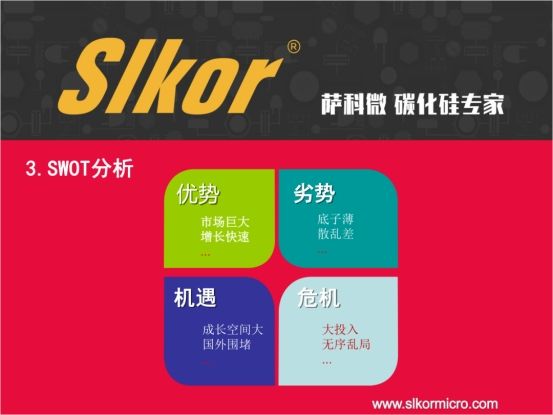
SWOT Analysis
Hello everyone, I’m Song Shiqiang from Kinghelm, often referred to as the "street economist" of Huaqiangbei. As the old saying goes, "Diamonds may be far apart, but good stories travel far and wide." So let me continue in a relaxed way and share some thoughts—this time through a SWOT analysis.
When it comes to China’s integrated circuit industry, the strengths are clear: a vast market and rapid growth. However, the weaknesses are also evident. The foundation remains relatively weak, and many companies are still small, scattered, and less competitive—this is a typical phenomenon at this stage of development. At the same time, there are significant opportunities. First, there is huge room for growth; in a way, past underdevelopment has become a unique resource. Second, external technological restrictions have pushed China to mobilize national efforts, making domestic substitution a major opportunity.
Of course, the threats are equally real. The semiconductor industry requires massive capital investment and has a very long return cycle—this is one of its defining characteristics. Only a few companies can persist to the end. In the early stages, many players rushed in without rational analysis or long-term commitment. In the end, few made money, and some even disrupted the industry ecosystem.
Over the years, we have seen waves of trending concepts—smart manufacturing, drones, robotics, BeiDou (BDS/GPS), wearable devices, AI, and VR. Yet very few have truly generated profits. Take the BeiDou (BDS/GPS) sector as an example. At Kinghelm (www.kinghelm.net), we have continued investing for years—from navigation modules to antenna cables, WiFi antennas, 4G and 5G antennas, and connectors. Only after years of persistence have we begun to see some returns.
Back then, many companies in the BeiDou ecosystem were either absorbed by large state-owned enterprises in defense and aerospace or simply disappeared. And I, Song Shiqiang, am still holding on—gritting my teeth and pushing forward as an entrepreneur determined to stay in the game.
1. Strengths Analysis
The first major strength is the sheer size of the Chinese market. On one hand, mainland China has steadily become one of the world’s largest consumer markets for electronic products. On the other hand, as Professor Wang Zhihua from Tsinghua University once pointed out to me, a significant volume of electronics manufactured in China is also exported globally. With such massive market capacity—and with parts of R&D already in place—this creates a strong engine for domestic technological and industrial upgrading. Advanced technologies and ideas can be more easily implemented and commercialized, and in the process, a large pool of talent is trained and developed. Exchanging market scale for talent, development, and technology—now that’s a smart and worthwhile strategy.
The second strength lies in rapid economic growth. Over the past decade or so, China has been one of the fastest-growing economies in the world and is now the second largest by scale. More importantly, this growth has been healthy and compound in nature—driven by coordinated development across the entire industrial and supply chain ecosystem, forming a positive, self-reinforcing cycle. Riding this wave of rapid growth has significantly boosted R&D investment, talent accumulation, and capital inflow, all of which strongly stimulate the development of the integrated circuit industry.
The third strength is, again, the vast consumer market. As Song Shiqiang from Kinghelm—known in Huaqiangbei as the "most hardcore street economist"—I’d say my take on economics is still pretty solid. During the pandemic, when the Huaqiangbei electronics market was temporarily shut down, many vendors simply moved their businesses to roadside stalls. Why? Because behind it all lies a massive domestic consumer base. As Premier Li Keqiang once noted during the Two Sessions, around 600 million people in China earn less than 1,000 RMB per month, and some estimates suggest nearly 900 million people earn under 2,000 RMB. That population size is comparable to the entire population of Europe. Only by deepening reform and opening up, freeing the mind, and encouraging creativity can society become more dynamic and the country more competitive. As incomes rise and consumption upgrades, China’s economy will unlock an even stronger new wave of growth.
The fourth strength is the enormous room for progress. Precisely because the starting point was relatively low—and the gap with developed economies in Europe, the U.S., and Japan has been significant—there is much to learn and adopt. At the same time, China can absorb lessons from others and avoid costly trial-and-error, creating opportunities to "overtake on the curve." Now, the momentum for development is already building. With such a large scale comes powerful momentum—what internet insiders describe as "pushing a massive boulder from a great height," or as Lei Jun famously put it, "a pig can fly when it stands in the wind." And right now, both Kinghelm and Slkor are riding that very wave.
2. Weaknesses Analysis
The first weakness is the relatively weak foundation. Before the founding of the People’s Republic of China, the country was impoverished and industrially underdeveloped, with almost no modern industrial base. After 1949, China adopted the industrial system of the former Soviet union—a point emphasized by Professor Zhou Zucheng from Tsinghua University’s Department of Microelectronics. Professor Zhu Yiwei from Tsinghua also once told me that China’s integrated circuit industry actually started relatively early. In the 1950s and 1960s, it was even ahead of Japan and South Korea in some respects. However, due to limited national strength and the disruptions of the Cultural Revolution, progress fell behind. After the reform and opening-up, China began to catch up, and with the opportunity of the third wave of global industrial transfer, significant progress was made. Still, development requires long-term accumulation across many dimensions. For those interested, I recommend the book "50 Years of the Integrated Circuit Industry" by Professor Zhu Yiwei, which provides a detailed account of this history.
The second weakness lies in intellectual property protection. There has been a general lack of respect for IP, with cases of simple imitation or even plagiarism of foreign technologies, often without proper digestion, absorption, or re-innovation. This not only creates friction internationally but also harms domestic development. Within China, the situation can be even more chaotic—especially among small and medium-sized enterprises, where both awareness and knowledge of IP protection are often lacking, and concrete measures are minimal. Without strong IP protection, there is little incentive for fundamental research or original innovation. If everyone copies each other, there will be no real technological breakthroughs. Eventually, products become homogenized, leading to destructive price wars where no one truly wins. At Kinghelm, we spent several years developing and securing multiple original patents for BeiDou GPS antenna connection cables. A friend of mine, Dr. Williams, once remarked that widespread piracy of Microsoft Office in China made it difficult for domestic alternatives like WPS—even with a free model—to achieve large-scale adoption.
The third weakness is the lack of long-term commitment. Today’s social atmosphere can feel overly impatient and short-term driven. Speaking frankly—as Song Shiqiang from Kinghelm—I don’t mind offending a few people: much of the content on platforms like short-video apps and news feeds is low-value, driven purely by traffic, sometimes at the expense of integrity. There’s an overabundance of superficial content, and one has to ask—what does that mean for the future of a nation? That said, I also do livestreaming myself, including sessions at Huaqiang Lecture Hall and upcoming streams on LCSC. But I try to keep my content grounded in real technology—sharing stories and insights in a way that is both engaging and educational. Real achievements, after all, come from long-term, quiet dedication. As the saying goes, you have to be willing to "sit on the bench for ten years." This is especially true in the semiconductor industry, where continuous effort, catching up, and surpassing others are essential. Even a giant like TSMC continues to evolve—Morris Chang, well into his 80s, is still pushing for innovation and strategic adjustment.
Mr. Song Shiqiang of Kinghelm during a livestream
Let me add a bit of personal commentary. On my way to work today, my old car was nearly sideswiped by a delivery rider going the wrong way. My social media feed was full of trivial celebrity gossip. In the elevator, people were glued to mobile games. When I turned on my computer, pop-up ads flooded the screen with questionable health products. During a meeting, I received 18 automated calls trying to sell me loans. A simple online search brings up hundreds of low-quality results. One has to wonder—shouldn’t "do no harm" be the baseline for these so-called tech companies? With this kind of environment, how can we expect to produce innovations like Google’s Android or Elon Musk’s Falcon rockets?
The fourth weakness is the lack of strategic planning. The semiconductor industry requires huge investment and often becomes a showcase project for local governments eager to demonstrate achievements. As a result, competition for projects can become excessive and disorderly. Meanwhile, at the national level, planning, approval, and coordination have sometimes lacked clarity. A friend in Beijing once mentioned that between April and June this year alone, around 20 semiconductor production lines were launched across the country, many focusing on IGBTs and third-generation semiconductors like silicon carbide (SiC) and gallium nitride (GaN)—a situation reminiscent of past booms in solar and wind energy. However, the semiconductor industry demands extremely high levels of capital, talent, ecosystem support, and supply chain coordination. Overinvestment can easily lead to unfinished projects and wasted resources, ultimately burdening the state. It means wasted taxpayer money, wasted national resources, and wasted time.
As a seasoned IC trader in Huaqiangbei once put it rather bluntly: "When profit is pursued too urgently, virtue is often lost." And without the right mindset, it’s impossible to create truly great products. It’s frustrating to watch.
3. Opportunities
There are significant opportunities for the development of integrated circuits. That’s why I, Song Shiqiang of Kinghelm, continue to grit my teeth and push forward. First, the growth potential is enormous; second, external technological blockades create a prime chance for domestic substitution; third, China’s industrial ecosystem is relatively complete; and fourth, the scale of available investment is massive.
The first opportunity lies in the sheer growth potential. Comparing the semiconductor value chain domestically and internationally, there remains a huge gap. In the U.S., companies like Texas Instruments, Qualcomm, and Intel lead by miles. In high-end analog devices and RF components, firms like Xilinx, ADI, and Skyworks dominate. Of course, domestic companies are working hard to catch up. Take Beijing-based Kingsemi (Jingwei Qili) for example—its head, Dr. Wang Haili, is my junior at school. Their company has faced many ups and downs but persevered, and now their products are gaining both market and capital recognition. Other small ecosystems, like Unigroup Tongchuang and GaoYun Semiconductor, are also doing well. The key growth space lies in bridging the technology gap with the U.S., combined with China’s huge incremental market. Today, there are over 1,800 IC design companies in China, many of which are publicly listed, showing strong momentum for growth.
The second opportunity comes from external blockades. From another perspective, this is actually a positive—otherwise, national policies wouldn’t heavily favor the IC industry, and gaps for domestic substitution wouldn’t exist. For instance, Slkor (www.slkoric.com) produces silicon carbide products and MOSFETs for applications like dishwashers and power tools, with many customers already testing samples. Such blockades also push domestic companies to develop high-end products, gradually upgrading technology and capturing market share. In Changsha, Hunan, a company called Zhongyi Lihua (www.ccfeihua.com), founded by former National University of Defense Technology researchers, is using RISC-V architecture, completely free of U.S. IP issues. They are already shipping low-power voice chips for smart lighting and home applications, with the ability to optimize instruction sets and customize architectures for client needs—truly achieving "independent and controllable" development, which is the strategic direction for tech companies.
SLKOR MOSFET product series
The third opportunity is China’s relatively complete industrial system. In my Kinghelm circle, there are many industry experts. A friend, Dr. Bryant, points out that out of over 1,300 industrial classifications used by the United Nations, China has about 700—a remarkably complete system. During the pandemic, Chinese manufacturers responded quickly, producing masks, gloves, mask machines, and ventilators at scale. This rapid response is thanks to a full industrial ecosystem. The alignment of resources and active social organization are comprehensive advantages for IC development. In my own network, I also have friends like Bao Shu and Wang Zijian—people who bring energy and humor to technical discussions. As the old saying goes, "Men and women together, chatting is never tiring." Even in technical circles, a lively network makes a difference.
Finally, China has enormous capital available. For example, the first phase of the National Integrated Circuit Fund invested 120 billion RMB in major projects. Rapid economic growth over recent years has also accumulated substantial private wealth, much of which is seeking productive investment. Both the government and society need to guide these funds properly—equity and private investment in IC startups should be strongly encouraged.
As a friend in our circle, Susanna Cuihua, mentioned, domestic companies like Xiaomi and Vivo are starting to develop mobile phone chips, with headhunters actively recruiting talent. Alibaba has been working on Pingtouge for several years, and Huawei’s HarmonyOS (HMS) is also rolling out. Salaries for IC professionals are rising, with recent graduates reportedly earning around 300,000 RMB annually. As the old saying goes, "The U.S. has the stock market, China has real estate"—and as someone with experience in real estate, I fully agree. Another friend, Jason Fan, the boss of Xinshiye in Poxian, told me that the stock market in China is particularly promising for IC companies. Just look at SMIC quickly stepping in to support the domestic stock market. In recent years, IC companies have accounted for a large share of IPOs in China, representing substantial capital injection into the industry.
4. Threats / Challenges
The biggest challenge is the sheer scale of investment required for integrated circuits. A single foundry can cost tens of billions of RMB, or even billions of USD for later-stage facilities. Take SMIC, for example—they’ve invested enormous amounts over the years and have only just started to turn a profit. The human resources and other inputs alone are massive. In my own case, investing in SLKOR Technology, some people are serial entrepreneurs, some start by selling property, and I—Song Shiqiang—am the "serial property-selling entrepreneur" who persists. Developing new products, building new brands, and opening new markets all require massive input. A few years ago, I wrote a story about an engineer near Shenzhen’s Nanshan Science Park who sold his house to start a company. Ten years later, he made just enough to buy back his original home. The protagonist in the first half of that story was me; as for the second half… who knows if I’ll still be around? So I need to keep pushing, writing stories, promoting, and selling more MOSFETs to keep going.
The second challenge is the long development cycle. Take SLKOR, for example—it has been five or six years and is still not profitable. Many people approach business like running a street stall: set up your stand and you must earn money immediately. But integrated circuits require long-term investment and accumulation—of talent, technology, equipment, and market presence. Professor Zhou Zucheng from Tsinghua University told me that China’s IC industry needs the efforts of multiple generations to catch up. From the first wave of returning engineers like Chen Datong, Wu Ping, Wei Shaojun, Zhu Yiming, and Deng Feng—who gave up lucrative positions abroad—to the second wave, including graduates like Zhao Weiguo, Yu Renrong, Lü Huang, Gao Feng, Zhao Lixin, Liu Weidong, and SMIC’s Zhao Haijun, all industry leaders, to the third wave of recent overseas returnees and entrepreneurs working for the country—each generation contributes. Only through persistent effort can China steadily catch up and eventually surpass the international level in integrated circuits.
The third challenge is uncertainty. Large investment and long cycles naturally create uncertainty—market fluctuations, changing returns, and environmental shifts all contribute. Entrepreneurship always requires effort, and sometimes, a little luck. Luckily, the IC sector is still a strong track with enough runway for experimentation. Regarding investments from the national IC fund, a friend in my Kinghelm circle, Dr. Williams, jokingly said in our BDS666 WeChat group: with new materials funds, sometimes 3–4 years pass without a single investment. The managers are often bureaucrats who focus on financial indicators rather than industrial insight. But many new materials startups are initially unprofitable—or even operate at a loss for a while—so government backing and policy guidance are essential. Without a scientific evaluation and assessment system, fund efficiency declines. Accurate investment can reduce uncertainty for startups.
The fourth challenge is homogeneous competition. There’s a saying: if one Jew sets up a gas station in the desert, other Jews might open a pizza shop or inn nearby, and all can profit. But if Chinese entrepreneurs see that gas station and the next two also open gas stations, all three might eventually fail. Without differentiated thinking, businesses struggle to survive. Local governments can fall into the same trap. For instance, if Nanjing in Jiangsu builds a wafer fab, then Xi’an and Chengdu might do the same, copying the technology and market strategy. In the end, no one has enough business to thrive, and money is lost—this is a major issue.
SLKOR IGBT product series
Hardship and Glory
1. Obstacles and Difficulties
The first major obstacle is that several key nodes in the industry chain are being restricted—what we call a "bottleneck." This includes EDA software, basic materials, cutting-edge equipment like ASML lithography machines, and new processes and technologies. Europe and the U.S. have been coordinating sanctions against us. Some of this equipment and technology simply will not be sold to us, no matter how much we pay.
The second challenge is the weak industrial foundation. For thousands of years, China has been primarily agricultural, so our industrial base is relatively thin. Some industries have grown in volume in recent years, but quality still lags and needs to accumulate gradually. For example, steel production has increased, addressing the quantity problem, but now the focus is on high-precision, advanced applications. Industrial software, databases, operating systems, and other tools still lag far behind global leaders like GE, Siemens, Oracle, SAP, Microsoft, and Android. Our "industrial mother hens"—machine tools—still have a huge gap compared to developed countries. Take Shenyang Machine Tool: even though it’s relatively advanced domestically, experts say it’s about 40 years behind Japan’s Fanuc in static performance. Measuring instruments, like coordinate measuring machines, also lag far behind Germany’s Zeiss.
The third issue is weak basic research. Huawei’s Ren Zhengfei has said that in chip development, we lack mathematicians, chemists, and physicists—the foundation in basic research is thin. Universities are restless; few teams focus on serious fundamental research, because it doesn’t yield immediate results or industrialization, and the government is reluctant to provide strong support. Some local governments and universities set up labs mainly to boost project GDP rather than real innovation. In such an environment, who has the time or motivation for foundational research? Everyone is focused on publishing papers, getting promotions, securing subsidies, earning a living, buying homes, and paying for children’s tutoring. From my perspective as Song Shiqiang of Kinghelm, we even lack aestheticians and philosophers. Look at Apple’s products—they are beautiful, clean, and intuitive enough that you don’t even need a manual. So, government guidance and evaluation systems need adjustment.
SLKOR Hall sensor product series
The fourth issue is the lack of craftsmanship. Creating a product—from achieving functional performance to ensuring stability, from prototype to mass production—requires a careful process. Every detail needs refinement, time, and iterative improvement. Excellence demands craftsmanship. But society is moving so fast; how can we endure the pace and still produce quality products? This is a major challenge and contradiction.
The fifth issue is that China has not fully integrated into the global industrial mainstream. Since joining the WTO, Chinese products can more easily enter global markets, but we remain largely in the role of contract manufacturers, doing the hard, dirty, and exhausting work. Companies with design and R&D capabilities, like Huawei or DJI, are still rare. Imagine if we had 10, 20, or even 50 companies like Huawei—what a different world it would be! China’s stock market is dominated by banks and state monopolies, which have prospered by absorbing the lifeblood of small and medium enterprises. Leading tech giants like Alibaba, Baidu, Tencent, 360, Toutiao, and Meituan often exploit SMEs through various schemes. By contrast, the top U.S. tech companies are unimaginably wealthy, rivaling entire nations in wealth.
2. Light and Glory
After all that hardship, our future is undoubtedly bright and glorious. After years of setbacks and struggles, China has started to take integrated circuits seriously. Once we start paying attention, gradual improvements follow. In the past, we lacked the capability; now the conditions are slowly coming together. We are naturally hardworking, our society is efficient, and wealth and success are the natural rewards of diligent labor. Look at Europe or South America—some people are lazy as can be. Sure, they play football well, but in integrated circuits, we are destined to catch up and eventually surpass them.
Our society has tremendous mobilization capacity, and national capital is strong. Integrated circuits are a capital- and technology-intensive industry. South Korea and Taiwan only succeeded because their governments poured resources relentlessly into the sector. China has the money, and the government is powerful; this boosts the efficiency of industrial development. The nation’s response to the pandemic, mobilizing as if at war, clearly demonstrated this capacity.
China also has huge advantages in population, talent, and market size—significant latecomer advantages. For example, Shanghai has twice the land and population of Tokyo, yet its GDP is only half of Tokyo’s. This shows the immense potential for growth that lies ahead.
SLKOR thyristor product series
For integrated circuits, Moore’s Law and Shannon’s Law are approaching their limits. It’s like there’s a wall ahead: we still have some distance to cover, but our competitors are slowing down. With our scale and systemic advantages, we can not only catch up but surpass them.
Five thousand years of continuous history and a great civilization will allow the descendants of Yan and Huang to stand tall among the nations of the world. Chinese culture has never broken, civilization has never paused, and the nation has never fragmented—qualities unmatched by any other people. The ultimate competition among nations is not decided by military power, economy, technology, or resources, but by culture. We are heartened to see overseas Chinese, across five continents and seven seas, remembering "the moon of the Qin dynasty and the passes of the Han," reciting Tang poems and Song lyrics in dialects from north to south. Culture endures; spirit lives on.
May those of us in the integrated circuit industry work even harder, striving for a stronger China and a happier life for our people!
From Hardship to Glory: The Road to Domestic Semiconductor Development (Part I)
2026-04-03
3399
Friends of the Huaqiang Lecture Hall, it’s great to see you all again. My surname is Song—though many new friends often mix it up and think my name is Kinghelm, which is actually my company’s English name. The Huaqiang Lecture Hall has always been a place for ideas, learning, and meaningful exchange. This is my third time speaking here. The first time, I talked about Kinghelm’s GPS and BeiDou antennas and navigation modules; the second time, I introduced Slkor’s silicon carbide technology. As someone jokingly known as a "street economist" in Huaqiangbei, and as an entrepreneur who has struggled—sometimes even selling property to keep investing in the integrated circuit industry—today I want to share my thoughts on "The Road to Domestic Semiconductor Development."
In 2020, as the global pandemic raged and the strategic competition between China and the United States intensified, integrated circuits stood at the very center of attention. In the information age, chips are as essential as food. Under such pressure, the question we must face is simple yet profound: how can we grow our own "grain" and achieve self-sufficiency in this critical field?
Mr. Song Shiqiang of Kinghelm during a live broadcast
To explain this journey, I began by outlining the global landscape of the semiconductor industry. Broadly speaking, the world can be divided into three major blocs: the United States; Europe, Japan, South Korea, and Taiwan; and China. This structure defines today’s international division of labor in integrated circuits.
From there, I turned to the current state of domestic development. Across the entire value chain—materials, manufacturing processes, design, talent, industrial software tools, and sales—we must carefully examine where we stand and what gaps remain. Each link reveals both progress and challenges.
I also shared a SWOT analysis to provide a more complete picture of China’s semiconductor industry. By looking at strengths, weaknesses, opportunities, and threats, we can better understand the realities we face and the direction we need to take.
Finally, I spoke about the future. My belief is simple: after hardship comes glory. This is not just optimism—it is a pattern seen throughout history and nature. China entered the integrated circuit field relatively late and now faces external pressure, so difficulties are inevitable. We transitioned from a semi-colonial, semi-feudal agricultural society into the information age in a relatively short and uneven way. Traditionally, more emphasis was placed on social sciences than natural sciences, and we lack the long accumulation of scientific thinking and industrial experience seen in the West. Our time in a fully developed industrial society has been brief, and our industrial system is still maturing.
If oil and steel were the "food" of the industrial age, then integrated circuit chips are the staple of the information age. The gaps we must close are significant, and the challenges are real. Yet the Chinese nation has always been defined by resilience and perseverance. Over five thousand years of both hardship and achievement, we have continually moved forward. The determined efforts of those working in the semiconductor industry today—cutting through obstacles and building from the ground up—reflect the enduring spirit that adversity can ultimately strengthen a nation.
The Global Landscape of Semiconductors
When discussing the international semiconductor landscape, we must start with the United States. It stands as the world’s sole superpower, and this dominance manifests in three main ways.
First is the control over technology and industry standards. In the past, wars were fought over land, resources, and survival. Today, we are in "War 3.0," where the battleground is markets, talent, and profit. The U.S. secures its advantage by setting cutting-edge standards, holding patents, and creating a framework where other countries and companies must follow its lead. This was evident in the intense competition over LoRa and 5G standards between Huawei and Qualcomm, where even Lenovo was criticized for siding with American standards. In essence, controlling technology standards today is like holding the high ground in traditional warfare—it gives strategic leverage.
Second is the U.S.’s comprehensive strength in fundamental research, materials, processes, talent, innovation, and institutional systems, including education. More than half of the world’s top 30 universities are in the U.S., with MIT, Stanford, Berkeley, and Harvard leading in research and talent cultivation. Bell Labs and Lucent pioneered in materials science, theoretical research, and industrial innovation. Foundational research in mathematics, physics, and chemistry fuels technological breakthroughs—it is, metaphorically, the "seeds" of industry. Major U.S. tech outputs like Google’s Android OS, Microsoft Windows, and Oracle’s SaaS systems are used worldwide, shaping global markets. The U.S.’s free and innovation-driven environment has nurtured companies like Apple, IBM, Microsoft, Tesla, and Amazon, alongside the high conversion of Silicon Valley innovation and Wall Street capital into industry. These collectively form the backbone of technological supremacy.
Mr. Song of Kinghelm answering audience questions
Third is the completeness of the high-end industrial chain. I once had a long discussion with Professor Zhou Zucheng of Tsinghua University about this. A complete chain requires both a research-industrial chain and an industrial-production chain. China demonstrated remarkable supply chain capability during the pandemic—for instance, quickly scaling mask and ventilator production—but research on vaccines and detection materials lagged far behind, revealing gaps in fundamental R&D compared to the U.S. High-end U.S. products, like Apple’s design, technology, branding, and distribution, remain primarily in America, while China focuses on assembly and logistics. Beyond industry, the U.S. protects its tech dominance with military, financial, and media influence, along with the global reach of the petrodollar system—a complex strategic web.
Turning to America’s allies in Europe, Japan, and South Korea: Europe largely aligns with the U.S., maintaining a complementary and competitive relationship. Companies like ARM (UK), Infineon (Germany), STMicroelectronics (Italy/France), and NXP (Netherlands) dominate specialized fields. Notably, ASML in the Netherlands leads in EUV lithography, with products so in demand that TSMC and Samsung scramble for them; orders placed by SMIC in 2018 still haven’t been fulfilled.
Japan and South Korea form the second tier, heavily reliant on U.S. support. Japan once led in semiconductors in the 1980s, but U.S. sanctions and strategic pressure pushed it to focus on precision silicon wafers, photoresists, ceramics, and specialty gases. South Korea, led by Samsung, developed its massive memory sector with national-scale investment, later expanding vertically into the broader semiconductor ecosystem. Samsung alone contributes roughly 40% of South Korea’s GDP, while SK Hynix and LG Chemicals also hold strong market positions.
The new products of Hall sensors from Slkor
Taiwan’s foundry sector surpasses mainland China in some aspects. TSMC, with legendary founder Morris Chang bringing talent from the U.S., has become a world leader in neutral wafer manufacturing, serving clients like Huawei, Apple, Intel, and NVIDIA. UMC follows closely, and a vibrant IC design ecosystem exists around Hsinchu, with companies like MediaTek, Novatek, and Realtek holding niche strengths.
As for mainland China, after the third global technology and industrial transfer, we began with simple manufacturing and gradually developed toward a full industrial chain. Initially focusing on labor-intensive and low-end production, we are moving toward higher-tech, higher-margin, and environmentally friendlier sectors. The U.S. views this evolution cautiously, while lower-end industries shift to neighboring countries—Vietnam taking part of Samsung’s production, some assembly and passive component factories moving to the Philippines or Malaysia—marking the fourth wave of industrial transfer.
Chinese manufacturing is also evolving from manual assembly lines to automated, intelligent production. OEMs are transforming into ODMs, shifting from basic processing to integrated development encompassing R&D, design, branding, and channels. The demographic advantage is transitioning into a talent advantage: roughly eight million university graduates enter the workforce annually, equipped with systematic education and practical experience, forming a high-quality labor pool for China’s industrial ambitions.
Major Events in Recent Years
Let me share some of the major developments in the semiconductor industry over the past two years. The first is the U.S.’s clampdown on ZTE and the collapse of Fujian Jinhua; the second is the multi-round, full-spectrum strategic game between China and the U.S.; and the third is the coordinated pressure on Huawei, where the company has shown remarkable resilience—bruised, but not broken.
After President Trump took office, the U.S. government in April 2018 banned the sale of semiconductors to ZTE. Following negotiations, ZTE was fined $1 billion, placed under compliance supervision, and required to adjust key management positions to pass the U.S. regulatory requirements. In October, Fujian Jinhua was added to the U.S. export control entity list, blocking access to high-end IC equipment containing American intellectual property. Billions already invested in infrastructure and equipment became essentially useless. By December, Taiwanese partner UMC, under pressure, withdrew all DRAM engineers, leaving Jinhua without technology, equipment, or talent—effectively ending the company.
The second major development was the ongoing China-U.S. strategic game. Though called a "game," in reality, it involved repeated U.S. attempts to suppress China. For instance, the 1996 Wassenaar Arrangement led by the U.S. and Europe restricted the export of high-end equipment and technology to China. At SLKOR, our main products are silicon carbide MOSFETs, which require two critical high-end devices—high-temperature annealing and high-voltage ion implantation—that Chinese companies cannot purchase. Local peers in Beijing had to rely on second-hand equipment, which was largely unusable. The U.S. also invoked Section 301 of its trade law to investigate any perceived violations of dumping or technology rules, giving it the authority to suppress companies threatening its interests. Essentially, whoever challenges U.S. interests risks intervention, with the U.S. holding interpretive power and exercising "long-arm jurisdiction" across the Pacific.
SMIC, China’s leading foundry, repeatedly faced such pressure. Dr. Zhang Rujing, its founder, left under TSMC-related suppression. Professor Zhou Zucheng reminded me that these pioneers dedicated themselves fully to China’s semiconductor development. Later figures like Jiang Shangzhou, Qiu Ciyun, Liang Mengsong, and Zhao Haijun are national heroes, and their stories deserve to be written and celebrated. Other companies, such as Huajing, Huahong, and Wuhan Xinxin, encountered similar challenges during their growth.
Mr. Song of Kinghelm during a live broadcast
The third major event is the encirclement of Huawei. To put it simply, Huawei’s founder Ren Zhengfei is like a diligent farmer from Guizhou, cultivating communications technology with seeds, fertilizers, and tools imported from the West. Huawei not only cultivated Chinese fields but also helped foreign companies, earning more than the seed and tool suppliers themselves. This aggressive expansion alarmed Trump, who perceived it as a direct threat. In December 2018, Canada, following U.S. requests, detained Huawei CFO Meng Wanzhou. Though released on bail, she remained restricted from travel, facing potential extradition—a clear pressure on Huawei’s core leadership. Meanwhile, Huawei was barred from the U.S. smartphone market, and countries like the UK, India, and Australia restricted Huawei 5G products amid unfounded security fears. By May 15, 2019, the U.S. prepared a total supply cutoff for Huawei, moving from a partial restriction on U.S.-origin technology to a full ban.
Huawei represents the pride of Chinese technology and the nation itself. A private company carrying the banner of China’s semiconductor and global information development is truly extraordinary. We must applaud their resilience. We believe Huawei will overcome these obstacles, with the full support of China’s domestic ecosystem. We hope more companies like Huawei emerge, forming teams and ranks to advance toward the world’s highest technological peaks, driving China’s development and prosperity. Ren Zhengfei, stay strong! Huawei, keep going!
Benchmarking Against Leading Companies
How are Chinese companies faring compared to their global counterparts? Let’s take a closer look through materials, EDA tools, IDM and Fabless, Foundry, packaging and testing, and sales channels.
Starting with materials, the key is silicon wafers, which require extremely high purity and precision—they form the foundation of integrated circuits. Japan’s Shin-Etsu and Sumco, Taiwan’s GlobalWafers, and Korea’s LG are far ahead of us. On the domestic front, Shanghai Xinsheng, Chongqing ChaoSic, Ningxia Yinhe, and Shandong Tianyue show promise, but there is still a long way to go in technology, quality, and large-scale supply. Supporting materials like frames, targets, packaging substrates, and polishing compounds have smaller gaps, but photoresists and silicon carbide (SiC) materials lag far behind. A few years ago, SLKOR (www.slkormicro.com) attempted to produce domestic SiC material replacements, but multiple trials failed, and we ultimately had to revert to Corning’s epitaxial wafers from the U.S.
EDA software is another critical tool for IC design. Early this morning, I consulted Professor Zhou Zucheng from Tsinghua University, a leading expert in EDA. Globally, the main EDA tools—Synopsys, Cadence, and Mentor—are largely U.S.-controlled, covering about 80% of the market. Mentor, sold to Germany in 2016, still retains American roots. Domestically, Huada Jiutian leads, alongside Tsinghua-affiliated startups like Boda Micro (merged into Galen Electronics), Okas Micro, and Xinhe. Chinese EDA tools hold only about 5% of the market, but that leaves substantial room for growth.
SLKOR MOSFETs
Next are IDM and Fabless companies. IDM, or vertically integrated companies, handle everything from raw materials to packaging and sales, with Samsung, Intel, TI, ADI, and Nvidia as global examples. In China, Silan Micro is a representative. Fabless companies focus on design without owning fabs. GD Zhiyin, UNISOC, Huawei HiSilicon, and Will Semiconductor are notable domestic players. Zhiyin’s MCUs are excellent, though core IP still relies on ARM. Recently, Zhiyin partnered with Nuclei Tech to explore RISC-V architecture, a promising path. UNISOC, under Zhao Weiguo’s leadership, consolidated Spreadtrum and RDA, showing the power of Chinese capital. Huawei HiSilicon ranks among the world’s top ten IC designers, mostly using U.S. EDA tools, proving the company’s exceptional capabilities. Will Semiconductor also excels in R&D, acquisitions, and building a robust tech ecosystem.
Mr. Song of Kinghelm during a live broadcast
Foundries are pure wafer processing companies. Globally, leaders include Samsung, TSMC, GlobalFoundries, and UMC. Domestically, SMIC, backed by state capital and high-end talent, is steadily catching up and can now mass-produce 14nm products. Recently, Wuhan Xinxin achieved breakthroughs in memory technology, approaching international levels. Early joint ventures with Japan, such as Huahong Hongli and China Resources Shanghai Huahong, continue contributing to IC development. Foundries in China still require sustained, large-scale investment.
Packaging and testing is a segment where China is close to global parity and even locally leading. Key international players include Amkor in the U.S., UTAC in Singapore, Nepes in Korea, and Unisem in Malaysia. In China, JCET leads the way, growing through internal effort and strategic acquisitions to become the world’s largest. Tongfu Microelectronics and Huatian Technology are also strong contributors.
SLKOR IGBT single device
Sales channels include major distributors, booming e-commerce platforms, and spot traders who sustain countless entrepreneurs in Beijing’s Zhongguancun and Shenzhen’s Huaqiangbei. U.S. leaders like Arrow and Avnet, and Taiwan’s WPG dominate globally. Digi-Key leads e-commerce with $3.25 billion in sales, followed by Mouser and Future Electronics. Domestic counterparts, such as China Electronics Port and Huaqiang Group, report annual sales exceeding 10 billion yuan, while Taikoyuan continues climbing. Though they may lack core technological control, their strong customer networks grant significant influence. Local e-commerce platforms like LCSC, Yunhan, and Liexin, managed by familiar colleagues, are rapidly advancing, comparable to Digi-Key. Our Kinghelm GPS/Beidou antennas (www.kinghelm.net) and SLKOR MOSFETs (www.slkoric.com) have also benefited from these networks. Huaqiangbei’s traders not only serve SMEs but also act as warehouses and distribution hubs, ensuring the electronic component ecosystem thrives. Personally, I enjoy sharing IC knowledge and stories with these entrepreneurs—useful, fun, and never tiring (stay tuned for the next chapter).
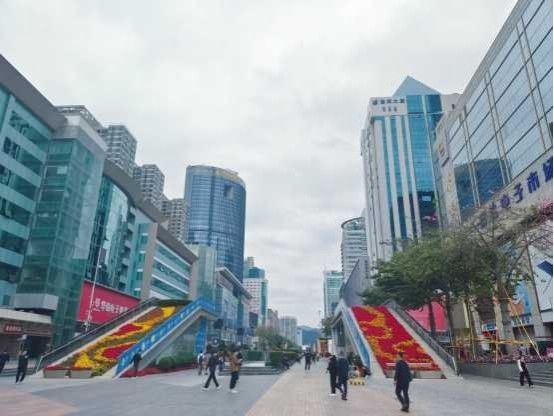
Why Does Huaqiangbei Have So Many Billionaires? SLKOR's Song Shiqiang Reveals the Wealth Secrets of Huaqiangbei!
2026-03-30
3422
Huaqiangbei, located in Futian District, Shenzhen, Guangdong Province, is a shining symbol of China's reform and opening-up era. Officially recognized by the China Electronics Chamber of Commerce as "China's No. 1 Electronics Street," it serves as a world-class hub for electronic hardware products. According to Song Shiqiang, General Manager of Kinghelm (www.kinghelm.net) and SLKOR (www.slkoric.com), the core commercial area spans about 1.45 square kilometers and houses over 60,000 enterprises, 40,000 individual businesses, and nearly 500,000 workers. Annual transaction volume reaches around 200 billion yuan—matching the GDP of nearby Yuehai Subdistrict and surpassing bustling districts like Hong Kong's Causeway Bay or New York's Fifth Avenue. "One-meter counters" in Huaqiangbei have produced more than 60 billionaires. One store in Wanjia Department Store, with just 3,000 square meters, generates up to 3 million yuan in daily sales—the highest per-square-meter efficiency worldwide. At its peak, Huaqiangbei saw over 800,000 visitors daily, with prime spots on the ground floor of SEG Plaza fetching 300,000 yuan per square meter! Tencent, founded by China's former richest man Pony Ma (Ma Huateng), started out with offices in SEG Science and Technology Park in Huaqiangbei.
Photo from Song Shiqiang's article "The Yesterday, Today, and Tomorrow of Shenzhen Huaqiangbei"
What leaves the deepest impression and sparks the most discussion about Shenzhen's Huaqiangbei is: Why are there so many billionaires here? Is there a pattern? In the agricultural era, Fan Li (Tao Zhugong) summed up principles like "distinguish the expensive from the cheap, measure distances, balance surpluses and shortages," and "in drought, invest in boats; in flood, invest in carts." Later merchants like Qiao Zhiyong and Hu Xueyan followed similar logic. In the industrial age, Adam Smith's The Wealth of Nations highlighted the invisible hand of the market, how division of labor boosts efficiency, and that helping others benefits oneself—principles that drove rapid national and personal wealth growth. Kinghelm and SLKOR have grown quickly in recent years by applying these ideas. As a well-known "street economist" in Huaqiangbei, I've been tirelessly exploring its wealth patterns, hoping to help locals get rich and guide its transformation.
To illustrate, compare Huaqiangbei in Futian District with Yuehai Subdistrict's Tech Park in Nanshan. In 2020, Yuehai's GDP hit 320 billion yuan, driven by high-tech R&D companies—often called a force that could take on U.S. tech giants single-handedly in trade wars! Tencent, DJI, ZTE, Mindray, Han's Laser, and Kingdee are headquartered there, while Huawei, Lenovo, Desay, and TCL have R&D centers. Tech Park firms are mostly listed companies: large-scale but few in number, with wealth amplified through stock markets and concentrated in founders and major shareholders. Pony Ma's net worth reached 320 billion yuan; DJI's Frank Wang is valued at 50 billion. executives earn millions annually, mostly in stock options—paper wealth.
In contrast, as Song Shiqiang of Kinghelm and SLKOR points out, Huaqiangbei's trading firms are asset-light, highly efficient, and low-cost—often run by couples with a sibling or in-law helping out. They profit from spreads on electronic components and hold real cash. With about 100,000 small companies and counters, plus 200,000 backpack traders—all independent entities—the sheer volume creates massive opportunities, leading to more billionaires.
SLKOR electronic screen ad on Huaqiangbei pedestrian street
Economist Friedrich Hayek argued that the key to economic problems lies in discovering and utilizing dispersed information—echoing Fan Li in agriculture and Adam Smith in industry, forming a foundational theory for the information age. Huaqiangbei is the perfect example! Its main model is "order matching": gathering, cleaning, and combining vast information with local ICs, then adding profit margins, repackaging sensitively, and selling. Huaqiangbei handles over 10 million IC part numbers, with complex details on channels, specs, original vs. refurbished. With 500,000+ practitioners and hundreds of thousands of daily transients channeling global info via email, WeChat, QQ, Douyin, calls, and e-commerce, spotting matches between exploding info and Huaqiangbei components equals deals and fortunes!
Huaqiangbei people hunt opportunities in chaotic information—low probability, low efficiency, but abundant asymmetry. Events like fires, floods, earthquakes, EOL notices, geopolitics, superpower games, new consumer booms, crises, or structural shortages create supply-demand imbalances and price surges. Bosses and boss-ladies seize them: speculate! Hoard!! Leverage for more!!! Gamble big when chance arises. In 2012, when I entered Huaqiangbei's electronics circle, Thailand's floods wiped out factories—parts shortages doubled prices overnight. Sanyo's 2SC2078E high-frequency transistor for Motorola GP88 walkie-talkies jumped from $0.46 wholesale to 8 RMB in Huaqiangbei; brothers trading it made fortunes. Gambling means wins and losses: correct bets multiply wealth 10x or more (e.g., a TI part from 9 RMB to 1,500 RMB in 2021—one pack of 3,000 worth a Shenzhen two-bedroom apartment). Winners flaunt luxury homes, cars, and brag in Huaqiangbei. Losers liquidate tearfully, back to street carts and pig's feet rice, eyeing the next comeback.
Huaqiangbei market downturn—clearing inventory at 1% of price and exiting
Huaqiangbei acts as a buffer for original manufacturers adjusting capacity and a valve for listed companies tweaking financials. Overproduced or provisioned goods get negotiated cheaply; spot traders buy low and stockpile. But wildflowers bloom too: 2008 crisis cut production; 2018 capacitor/resistor shortages rewarded stocked players. In 2019, under-display fingerprint chips plus Huawei stockpiling squeezed 8-inch wafer capacity, causing MOSFET/power device shortages. SLKOR's solid supply chain and inventory made us a star—earning the "domestic substitution" label—and we opened two direct stores in Huaqiangbei. From 2020, STMicro MCU and TI shortages created the latest wave of billionaires. New rich gather in private rooms at Damu Chaozhou Beef spots, sipping Martell XO, smoking He Tianxia, debating buying a Xiangmihu No.1 villa or a Rolls-Royce—and they invite me, the "Huaqiangbei intellectual," to tag along for free meals. I play along, spouting "Kondratiev waves" and "Fibonacci curves" without blushing. One sharp boss-lady applied it fast, made big money, and gifted me a Bentley model—now I have a success story to brag about; my image almost rivals motivational guru Chen Anzhi! In Huaqiangbei, happiness sometimes arrives raw and straightforward!!!
Amid global macro trends, "Made in China" dominates electronics: top producer of smartphones, PCs, appliances. China imports over $400 billion in ICs yearly; application market share 34% globally (ahead of U.S. 27%, Europe/Japan/Korea). Massive manufacturing plus 1.4 billion consumers drive huge IC demand. Huaqiangbei covers consumer, industrial, even aerospace-grade components—cluster effects build overall competitiveness! Small-batch trading supplements large-scale deals, optimizes resources, cuts costs, boosts efficiency.
Massive inflows bring resources, info, creativity. Chaozhou bosses dominate, bold and business-savvy; Hunan folk endure hardship, stubborn, patient; Sichuan/Chongqing people stay upbeat ("no diarrhea, just carry on"); plus migrants from Jiangxi, Fujian, Henan, Shaanxi. Innovation and risk-taking define them. Writer Xie Jiapeng's Father's 30,000 Yuan praises Huaqiangbei bosses' resilience—never give up.
Huaqiangbei folks cluster by hometown, classmates, family, industry—sharing info, splitting profits, dividing labor seamlessly. When money smells near, they organize fast: order, hoard, sweep remnants, release info, raise funds—all coordinated like big-company teams. We came to Shenzhen with burning ambition just to "make money." Many curse Huaqiangbei "profiteers" verbally but flock here physically. Those who fail yell louder. In a mature market economy, anything not forbidden is allowed. Letting driven people get rich is healthy positive incentive—as long as it's legal, ethical, reasonable. Many who succeed give back: Dr. Zhu Junshan of Zhongyi Law led 600+ fellow Hunan Guiyang natives to wealth; groups like An De Hui charity from SEG AOS, Huachuangtai's Lin Zhenchuan, Qin Shang Weiye's Wang Lei, and Boguang Electronics' Chen Gui'ou quietly do good.
Huaqiangbei spot trading thrives on speed! One-meter counters display samples up top, stock crammed below and behind. Thousands of small firms double as mini-warehouses. Low-value, bulky items (caps, resistors, diodes, transistors, connectors) use nearby turnover warehouses in Huaxin Village, Huaqiang South, Gangxia, Futian Village for fastest delivery. Huaqiang Electronics Network's "Huaqiang Cloud Warehouse" adds front-end speed. Total stored value hits 200 billion yuan, supporting nearly 10 billion yuan daily turnover! Factories place big warehouses in Bantian, Longhua, Guanlan—even as far as Dongguan's Tangxia and Fenggang—to feed rapid trading.
Huaqiangbei is a global resource convergence point. Shenzhen, China's southern gateway, neighbors Hong Kong and is close to Southeast Asia. Semiconductor firms and international agents enter China via Shenzhen first. Mainstream Chaozhou and Jiangzhe traders have strong overseas ties—key opportunity nodes. The IC chain is global: wafer fabs, packaging/testing, OEM/ODM are sourcing channels. Huaqiangbei integrates old markets like eastern Guangdong's Guiyu and Chendian with direct buses; vehicles park at New Asia Electronics Market east gate, surrounded by cart-pushers loading goods. Electronics suit online sales: traders maintain accounts on eBay, NetComponents, Alibaba International, HKinventory, FindChips, Efind. Huaqiangbei enables fastest global sourcing/selling—network reaches every corner!
Speech materials from Kinghelm and SLKOR's Song Shiqiang
Shenzhen Huaqiangbei is an endless exhibition: "front store, back factory" lets Wenzhou/Leqing terminals/switches, Taizhou Yuhuan hardware, Dongguan Humen/Chang'an antennas/cables find sales outlets here! Kinghelm ) has Beidou/GPS antenna R&D in Dongguan Tangxia, RF connector production in Liuzhou Guangxi, plus image stores in Huaqiangbei. SLKOR R&D in Korea, Beijing, Wuxi; packaging/testing in Taizhou/Dongguan; HQ in Bantian Shenzhou Computer Building, with two direct Huaqiangbei stores.
Electronic components last long: failure usually from moisture/ESD; in controlled storage with intact anti-static packaging, specs hold 10+ years (some longer). Refurbished pull-outs test fine, cheap. A few years back, twist cars boomed—SL7N50 MOSFET shortage; some factories used refurbished secretly at fraction of original cost, still profited big. In cutthroat competition, many use them safely.
Components are tiny, high-value, easy to ship: fingernail-sized IC worth dozens; 2021 auto IC shortage—one Freescale pack sold for 30+ million yuan. Simple packaging ships worldwide—no damage/loss. SLKOR's two Huaqiangbei stores under 3 sqm hold 600,000 yuan inventory. In globalization, Huaqiangbei earns across decades and continents—timeless, spaceless business! Some couple-run counters hit millions monthly in sales—outperforming 100-person factories in profit.
Passives (caps/resistors) are highly standardized/replaceable (Samsung, Murata, Yageo). Actives are unique—one digit off, no swap. BOMs with many lines; missing one forces premium buys—Huaqiangbei holders cash in. A friend recently took an 8 million yuan export order on a rare part—client couldn't source elsewhere; he set the price.
SLKOR's Song Shiqiang (second from right) at an electronics industry forum
Consumer products boom fast, short cycles. Spot new hits, Huaqiangbei dives in: hoard, leverage, off-market funding, knockoffs—wealth explosion mode. Every era's pulse brings fortunes: selfie sticks, TWS earbuds, copycat phones, fidget spinners. 2018 TWS breakthrough: Kinghelm/SLKOR teams positioned early. SLKOR MOSFETs (SL2301/SL2302/SL2N7002), Hall switches (SL1613 etc.), plus Kinghelm chip ceramic antennas (KH2012 etc.) and FPC connectors fit TWS perfectly—dual-brand drive! Mold/PCBA/power IC/battery suppliers thrived. Qualcomm (CSR), Bestechnic, Airoha, Realtek, Jerry, Actions, EVE Energy cashed in; some listed!
But the model is simple: low barriers, no pricing power, weak defensibility, poor risk resistance. Limited by genes, firms can't scale long-term or compound via management/knowledge upgrades. Staff usually under 5; 50 is max. Branding, PR, org building, supply chain, CRM, legal risk, processes, training, moats, culture—none developed, let alone digitalization! This economic winter, friends who flaunted cars/houses/watches on WeChat now sunbathe in Thailand. Boss-ladies who studied nights now pray at temples. Using luck-earned money to build real strength is the urgent challenge!
In summary, Shenzhen Huaqiangbei is a world-class electronics hardware hub built on spontaneous markets, with tons of money, people, goods, info, resources, opportunities, high efficiency, and light government interference. Bold Huaqiangbei people seize chances, matching vast hardware supply with huge demand swiftly—creating so many billionaires. It's a product of its era: that's Huaqiangbei's wealth code!
Huaqiangbei charity group An De Hui Love Team
Huaqiangbei is truly magical! Comrades, come strive in Huaqiangbei—for your wealth dreams and our Chinese Dream of revival. Ladies of future bosses: If you love him, send him here—endless dreams, supercars, watches to peak life. If you hate him, send him here—endless carts, endless pig's feet rice. If love-hate, let him peak then fall—won't hurt when he leaves. If hate-love, let him train on carts first, then peak—he'll stay loyal forever. If still unclear on love/hate, let him peak yet still push carts personally—like a domineering CEO. Boss success often hinges on the boss-lady's whim! Huaqiangbei's Song Shiqiang hopes we think, exchange, learn more—contributing to its prosperity!
SLKOR, Kinghelm, and Huaqiangbei's Song Shiqiang have huge overseas influence
Song Shiqiang, General Manager of Kinghelm (www.kinghelm.net) and SLKOR (www.slkoric.com), is a member of the China Association for Science and Technology's electronic information expert database, science columnist, and Huaqiangbei business research expert. He invests in and runs Shenzhen SLKOR Semiconductor Co., Ltd. and Shenzhen Kinghelm Electronics Co., Ltd., building "SLKOR" and "Kinghelm" brands—both national high-tech enterprises playing key roles in "domestic substitution" for electronic components!
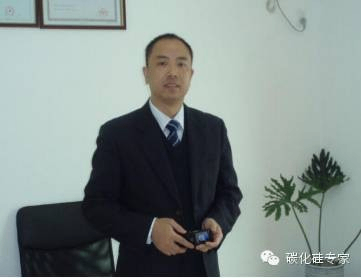
Talking About Chinese Classics Through Numbers (Part Ⅱ)
2026-03-13
3272
Friends of the Zhike Study Society, good evening. Today I will communicate with you about the Confucian "Three Guiding Principles and Eight Items."
I am Song Shiqiang, General Manager of Shenzhen Kinghelm Electronics Co., Ltd. Our company is a leader in the BeiDou ecosystem (www.kinghelm.net). Another project is silicon carbide power devices, and we are well-known experts in the silicon carbide industry (www.slkoric.com).
Song Shiqiang, General Manager of Kinghelm Electronics
First, I will talk about the influence of Confucianism on our lives. When I was young, there was a Feng clan in our production team. Among my peers were people named Feng Yunshen and Feng Wushen, friends who grew up playing naked together. In the older generation there were Feng Huaxiu and Feng Quanxiu, who lived right next to my home. In the younger generation there were Feng Qilong, Feng Qilin, and others. Only later did I learn that the generational ranking in their names came from a sentence: "Rectify the mind, cultivate the self, regulate the family, govern the state, and bring peace to the world." Their names were taken according to this line. Still later, when I grew up, I learned that this sentence comes from the Confucian classic The Book of Rites · The Great Learning. Today I will begin from here.
The way of the Great Learning lies in manifesting bright virtue, in renewing (or loving) the people, and in resting in the highest good.Only after investigating things can knowledge be extended; after knowledge is extended, intentions become sincere; after intentions are sincere, the mind becomes rectified; after the mind is rectified, the self is cultivated; after the self is cultivated, the family is regulated; after the family is regulated, the state is well governed; after the state is well governed, there is peace under Heaven.
This is what later Confucians revered as the classic "Three Guiding Principles and Eight Items."
Let us first discuss the Three Guiding Principles. The Three Guiding Principles means three fundamental guidelines (distinct from the Three Bonds and Five Constants: Three Bonds—ruler guides subject, father guides son, husband guides wife; Five Constants—benevolence, righteousness, propriety, wisdom, and trustworthiness).
The way of the Great Learning lies in manifesting bright virtue, in loving the people, and in resting in the highest good.
Here, "Great Learning" refers to the great knowledge of governing the state and stabilizing the nation. In the past, one could only enter the Great Learning at the age of fifteen, with the prerequisite of a certain cultural foundation, studying ethics, politics, philosophy, and other learning aimed at "exhausting principles, rectifying the mind, cultivating oneself, and governing others." It was education for literati who had the opportunity to accomplish great affairs, so the requirements were high. "Way" means method. The method lies in advocating and promoting upright and honorable virtue and governance, widely drawing close to the people and respecting public opinion (also educating and transforming the people so that they continually progress), and pursuing the highest goodness and perfection without end, taking the utmost good as the goal of striving.
"Manifest bright virtue": the first "manifest" is a verb meaning to advocate, promote, and carry forward; the second "bright" means upright, open, fair, and enlightened. "Virtue" refers to moral character, virtuous governance, and social ethos.
"Loving (or renewing) the people": "love" means to draw close to, observe, and respect; "people" means the masses, extended to public opinion and public sentiment. Another interpretation, based on bamboo slips unearthed from Chu tombs of the Spring and Autumn period, is that "love" should be read as "renew," meaning to renew the people—encouraging learning, abandoning the old and embracing the new, and ultimately reaching the most perfect state.
"The highest good" means the supreme state of goodness and beauty. "Resting" means to stop or settle. "Resting in" means to maintain when the goal is reached. "Resting in the highest good" means taking the highest good as the goal of striving.
Next are the Eight Items, namely: investigation of things, extension of knowledge, sincerity of intention, rectification of the mind, cultivation of the self, regulation of the family, governance of the state, and bringing peace to the world.
These are both the steps designed to achieve the Three Guiding Principles and the ladder of personal cultivation presented by Confucianism.
We should also note a very useful saying here: "Things have roots and branches; affairs have beginnings and ends." One must grasp the essence of things to avoid going astray. To make it easier for people to understand, The Great Learning also arranged its content carefully—starting from the goal and then explaining the methods. If the root is disturbed, it is impossible to govern the family, clan, state, or world well. Confusing priorities and putting the cart before the horse while expecting success is also impossible.
Only after investigating things can knowledge be extended; after knowledge is extended, intentions become sincere; after intentions are sincere, the mind becomes rectified; after the mind is rectified, the self is cultivated; after the self is cultivated, the family is regulated; after the family is regulated, the state is well governed; after the state is well governed, there is peace under Heaven.
All of Confucian doctrine essentially unfolds along these Three Guiding Principles and Eight Items. Grasping them is equivalent to holding a key that opens the gate to Confucianism. Following this ladder step by step, you will enter the hall and appreciate the profound meaning of the Confucian classics. In fact, it includes two major aspects: "inner cultivation" and "outer governance." The first four stages—investigation of things, extension of knowledge, sincerity of intention, rectification of the mind—belong to inner cultivation. The last three—regulating the family, governing the state, bringing peace to the world—belong to outer governance. The middle step, cultivation of the self, is the pivot linking the two. Connected with the former, it means perfecting oneself; connected with the latter, it means benefiting the world. This is the same principle later described as "inner sagehood and outer kingship."
To promote upright virtue in the world, one must first govern one’s state well; to govern the state well, one must first manage one’s family and clan; to manage the family well, one must cultivate one’s character; to cultivate one’s character, one must rectify one’s mind; to rectify the mind, one must make one’s intentions sincere; to make intentions sincere, one must acquire knowledge; and the way to acquire knowledge is through understanding and studying all things.
Investigation of things means increasing knowledge through studying all phenomena. This is a process of learning, research, reflection, and accumulation. It is said that Wang Yangming once split bamboo for days and nights without sleep to study it, stopping only when his body could no longer endure.
Extension of knowledge: only after studying things can knowledge be obtained. With knowledge, one can use what one has learned to serve society.
Sincerity of intention: after acquiring knowledge, intentions can become sincere. It also requires a serious attitude toward people and affairs. Only seriousness enables one to accomplish things. Today’s advocacy of the craftsman spirit follows the same principle—treating one’s products with care and respect leads to good products, and the same applies to dealing with people.
Rectification of the mind: only when intentions are sincere can the mind be upright. I believe this stage involves establishing one’s outlook on life and values, and cultivating a vast, upright spirit. From my experience, to accomplish great things one must be supported by righteousness and moral strength to withstand right and wrong and many obstacles. In Wen Tianxiang’s Song of Righteousness, he wrote that he endured immense suffering in a small prison cell because he possessed righteousness—rooted in profound national integrity and lofty patriotism.
Wen Tianxiang’s "Song of Righteousness"
At this point, I would like to mention the concept of the gentleman’s vigilance in solitude. This means that even without supervision or constraints, one can strictly demand oneself. The prerequisite is mastering self-reflection. As Zengzi said, with a clear conscience one can go anywhere under Heaven without fear, because he examined himself daily.
For more than two thousand years, generation after generation of Chinese intellectuals have followed the principle "cultivate oneself in obscurity, benefit the world when in prominence," laying their life journey on this ladder.
Regulating the family: only after cultivating character can one manage the family and clan well. The most important principle within the family is filial piety and fraternal respect. Filial piety means gratitude, respect, and support for parents and elders. Fraternal respect refers to harmony and affection among siblings, as well as harmonious relations among peers and friends. Zeng Guofan is an excellent example in this regard—he was very strict with his family. I also have such examples: when choosing partners or friends, how they treat parents, siblings, and friends is one of my evaluation standards. This afternoon, while preparing this manuscript, a friend from Huaqiangbei visited—Mr. Chen Haisheng of Meilong Electronics. His business is very successful; he is a leader in the industry, responsible to his family and employees, strict with himself and lenient with others—also a very positive example.
Governing the state: in ancient times, states were feudal territories of various lords and relatively small, unlike modern nations. Once the preceding steps are handled well, governing the state poses no problem. This reminds me of the saying, "When one’s own conduct is upright, orders are unnecessary," and also "Those who follow the Way gain much support; those who lose it gain little." The same principle applies to running a company and leading a team.
Bringing peace to the world: at that time "the world" referred to the lands of the Zhou king and surrounding influential regions such as Chu and Nanyue. It also embodied the ancient sage ideal of establishing virtue and achievement—"inner sagehood and outer kingship."
What has been discussed above is not merely a set of theories or stages of personal cultivation, but a life ladder with strong practical significance. It has shaped the character and psychology of generations of Chinese intellectuals and still exerts a subtle influence on us today. Whether you realize it or not, the concepts of investigation, knowledge, sincerity, rectitude, cultivation, family regulation, governance, and peace quietly influence your thinking and actions. Ultimately, one finds that the life journey of the Chinese people unfolds along this Confucian ladder—this is the great power of culture and the source of our nation’s enduring vitality and unity. Although traditional culture suffered severe damage from the Reform Movement of 1898 to the May Fourth Movement and later the Cultural Revolution, culture possesses the ability to heal and restore itself. With promotion by social elites and cultural feedback from East and South Asian countries, our traditional culture will surely revive, and problems such as toxic milk powder, counterfeit medicines, and fake alcohol will greatly decrease.
In addition to the Three Bonds and Five Constants, there are also the Four Cardinal Principles and Eight Virtues, which can likewise be discussed numerically. We will talk about them next time if there is an opportunity. I will end today’s lecture with a line of Tang poetry: "Looking back at where the arrows struck the eagles, for a thousand miles the evening clouds lie flat." Thank you all!
Note: This article is compiled from a speech by Mr. Song Shiqiang, General Manager of Shenzhen Kinghelm Electronics Co., Ltd.
About the Author
Mr. Song Shiqiang serves as a popular science lecturer for the China Institute of Electronics and is a member of the Electronic Information Expert Database of the China Association for Science and Technology. He is also a columnist specializing in popular science writing and an expert in Huaqiangbei business research.
Mr. Song has invested in and operates two companies in Shenzhen: Slkor Semiconductor Co., Ltd. (www.slkoric.com) and Kinghelm Electronics Co., Ltd. (www.kinghelm.net). The brands "SLKOR" and "Kinghelm" have garnered international recognition and a strong reputation.
Kinghelm, with its motto "Connecting the World," began by developing antennas for Beidou and GPS systems. The company has since expanded its product line to include microwave antennas, RF cables, and electrical signal connectors, embracing the era of intelligent connectivity where everything is interconnected.
Slkor, on the other hand, focuses on the research and development of power devices, sensors, and other semiconductor products. Together, these two companies provide services to over 20,000 customers worldwide.
Mr. Song has consistently shown a keen interest in and conducted in-depth research on Huaqiangbei, actively advocating for its development. His research articles on Huaqiangbei, including "Research on Huaqiangbei," "The Transformation and Development of Huaqiangbei," and "A Refutation of Bloomberg's News on Huaqiangbei," have been reposted by major media outlets such as the People's Daily App, Xinhua News Agency, Associated Press, and Yahoo News.
With extensive experience in the electronics industry, Mr. Song enjoys widespread recognition and influence in the semiconductor and Beidou navigation fields. He has been tirelessly working to foster a more favorable business environment in Huaqiangbei, aspiring to establish it as a prominent emblem of China's Reform and Opening-up and a distinguished hallmark of Shenzhen's rapidly thriving economy.
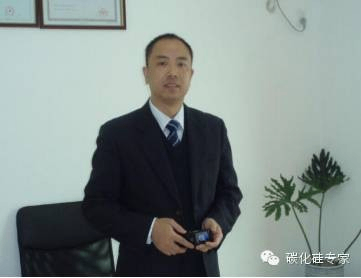
Talking About Chinese Classics Through Numbers (Part Ⅰ)
2026-02-23
3406
Friends of the Zhike Study Club, good evening! This is a feast of thoughts, a temple of scholarship. This is a dojo for communication, a place for growth. First, I want to thank Teacher Huang and Teacher Yujiang for providing this platform, giving me the opportunity to share with everyone.
Song Shiqiang, General Manager of Shenzhen Kinghelm Electronics Co., Ltd.
I am Song Shiqiang, General Manager of Shenzhen Kinghelm Electronics Co., Ltd. Our company is a leader in the Beidou ecosystem (www.kinghelm.net). Another project I am involved with is silicon carbide power devices; I am a well-known expert in the silicon carbide industry (www.slkoric.com).
I once had two wishes: one was to find a wife, because I used to be too poor, and the second was to teach at a university, because I love reading too much. The first wish was fulfilled very early; the second is gradually coming closer. Today is such an opportunity, and unconsciously, I’ve already talked about the second one. Today, what I want to talk about is "Talking About Chinese Classics Through Numbers", a collection of my life experiences.
Let’s officially begin:
Wang Guowei’s Three Realms of Achieving Great Things:
Wang Guowei was a famous modern Chinese scholar with international reputation. My favorite work of his is Renjian Cihua (Remarks on Poetry). Wang Guowei extracted several famous lines from the works of several Song Dynasty ci poets to illustrate the three realms of scholarly or worldly achievements. The original poetic meaning mostly depicts the private emotions of human beings. Yet Wang Guowei skillfully applied them to explain the realms of scholarship and achievement in a very profound way. I believe that anyone seeking to achieve great things, online or offline, in ancient or modern times, must go through these mental journeys (for example, Jack Ma and Liu Qiangdong, who are online business figures, must have gone through similar processes).
Wang Guowei
First Realm: Set Ambitions and Make a Vow (Setting a goal in management terms)
"Last night the west wind withered the green trees; alone I ascend the high tower, gazing at the road to the horizon." — from Yan Shu of the Northern Song Dynasty, Die Lian Hua: Chrysanthemums by the railing grieve in smoke, orchids weep in dew (the ci style Die Lian Hua is also known as Que Ta Zhi).
This poem originally expresses sleepless nights missing a woman at home. The phrase "gazing at the road to the horizon" arises from a sleepless night; "the west wind withers the green trees" describes not only what one sees from climbing the tower but also the memory of lying awake all night listening to the wind and fallen leaves. Yet the poet also expresses an infinite and vast realm: "alone I ascend the high tower, gazing at the road to the horizon." There is a feeling of vastness from a high vantage point, an emptiness in not seeing the object of longing, yet within that vastness lies anticipation. Though the three lines contain sorrow from separation, they are neither despairing nor destructive; from grief and indignation, one sees ambition; from desolation, one sees grandeur. This is the first realm, a stage of life’s confusion and solitude, uncertain of the path ahead, yet still with confidence to persevere. For me personally, when I shifted to electronics in 2010, it was this state: "drawing my sword, looking around, feeling bewildered", not knowing where to start, yet still determined to pursue the path of entrepreneurship.
Second Realm: Persist in Effort, Unyielding Despite Hardships
From Liu Yong’s Die Lian Hua: Leaning by the tower, the wind whispers:"Though my belt grows loose, I regret nothing; for her I waste away."
Earlier in the poem, the poet expresses worries of "spring melancholy," essentially meaning "lovesickness." Reaching this line, we understand that the persistent sorrow cannot be dispelled, not because he resents it, but because he willingly endures it, even as it gradually weakens and emaciates him, he regrets nothing. The second realm is having a goal and pursuing it with unwavering commitment, describing the state of becoming emaciated in the pursuit yet continuing without regret. It represents persistence, firm belief, and confidence to continue despite repeated setbacks. Reflecting on my own experience a few years ago, it felt like Xin Jiaxuan’s "by lamplight in drunkenness I examine my sword; in dreams I hear the bugles of the army"—confusing, somewhat painful, sometimes needing a little alcohol to relax or encourage oneself, until one sighs at the "pity of white hair." He talks of white hair; I talk of hair loss. As you can see, I now have very little hair.
Third Realm: The Turning Point, Suddenly Enlightened
"I searched for her a thousand times in the crowd; suddenly, I turn and find her in the dim glow of the lanterns." — from Xin Qiji, Southern Song Dynasty, Qing Yu An: Lantern Festival Night.
This poem is widely recognized as the best depiction of the Lantern Festival. The situation is that after searching countless times, the target is found in a quiet, overlooked place. People are reveling in the festivities, yet she is outside the crowd. The more lively the lights, the more the person’s aloofness is highlighted; the more people lose themselves, the more distinct her position in the world. It is somewhat like Lu You’s idea that "the skill lies beyond the poem itself."
This is the third realm. It indicates that after sufficient accumulation, pursuit leads to transformation; unnoticeably, one has achieved the goal. It resonates with the poem by monk Guanxiu:
"Three thousand guests intoxicated among the flowers, one sword chills fourteen provinces."
At that time, Qiantang’s Wang Qiumiao asked him to change it to "one sword chills forty provinces", which would allow a meeting with him; he refused. There is an opportunity to expand on this story later. It is similar in meaning to Wang Anshi’s "Do not fear floating clouds obscuring the eyes, for I am on the highest level."
Monk Guanxiu
My entrepreneurial journey can be described through the sword I like: from "drawing my sword, looking around, feeling bewildered", to "examining my sword by lamplight in drunkenness", to now flourishing in the Beidou and silicon carbide industries. The company achieves dual-core growth, indeed giving the sense of "one sword chills fourteen provinces", a strikingly similar experience.
Feng Youlan’s Four Realms of Life:
Feng Youlan, from Tanghe County, Henan, was a famous contemporary Chinese philosopher and educator. His family produced many masters with great contributions to education. He described four life realms: the Natural Realm, the Utilitarian Realm, the Moral Realm, and the Heaven-and-Earth Realm. I personally think these correspond and interact with Maslow’s hierarchy of needs.
Feng Youlan
Natural Realm (Instinctive)
People at this level act according to instinct or societal customs. Some act like chicks or piglets seeking food or shelter—purely instinctive. For example, doting on children, as Gorky described a hen loving her chicks. Or like children and primitive humans, acting without much awareness. Their actions have little meaning for themselves, and even less for society.
Utilitarian Realm (Economic and Social)
A person may act for their own benefit. This does not necessarily mean immorality. Their actions may benefit others, but their motive is self-interest. This corresponds to Adam Smith in The Wealth of Nations: self-interest drives beneficial social acts, like a baker producing delicious bread for profit, or a barber doing good work—a state of "I for all, all for me."
Moral Realm (Spiritual)
Some people deeply understand social existence and recognize their societal significance. With this awareness, they act for social good. Confucius said such actions are to "right the righteousness, not seek profit." They are moral people, and their actions have ethical significance. Examples include Nathan Hale in the U.S., who said when facing execution: "My only regret is that I have but one life to give to my country"; Tan Sitong of the Hundred Days’ Reform, calmly facing danger, hoping to awaken the people with his blood; Lin Zexu’s "If it benefits the country, I shall live or die accordingly"; Lu Xun’s "Frowning coldly at a thousand pointing fingers, bowing to serve the children"; and traditional Western nobility, who would sacrifice personal gains or even life for national or ethnic interests.
Tan Sitong’s wall inscription in prison
Heaven-and-Earth Realm
One realizes that beyond society, there is a greater whole: the universe. One is not only a member of society but also a member of the cosmos, as Daoism calls "unity of heaven and man", or Buddhism’s "great thousand worlds." With this understanding, one acts for the universe’s benefit. This knowledge structure constitutes the highest life realm, aligning with Northern Song scholar Zhang Hengqu’s ambition: "Establish a mind for Heaven and Earth, a life for all beings, continue the work of past sages, bring peace to all generations." Examples include Nobel laureates, many modern environmental organizations, and Doctors Without Borders.
Below is a picture of Mother Teresa, considered by some as the most beautiful image in the world. On her weathered, wrinkled face, there is no sorrow or complaint, only love, compassion, endurance, and tolerance. Facing misunderstanding and criticism, she quietly continues her work. This is what our ancestors meant: "The earth is silent, silently enduring."
Mother Teresa
We hope society will have more people with moral integrity and Heaven-and-Earth awareness, guiding and educating them step by step.
Understanding Beauty in Life and Common Misconceptions:The four levels of aesthetic appreciation, from bottom to top, are:
Gaudy (selective acceptance, taking the essence, discarding the dross)
As a child, I saw rural bright, patterned bed sheets; Northeast China’s Errenzhuan, Shanxi’s Errentai, Qinghai’s Hua’er, Shanbei’s Xintianyou. These are primitive aesthetics, raw and coarse, for entertainment, education, and energy release. For example, Wei Xiaobao formed his worldview listening to storytellers in teahouses. Of course, there were lowbrow elements, some being folk sexual education.
Subtle (highly valued)
Examples: Tang poetry, Song ci, Chinese painting, Kunqu opera. Wang Wei’s poem: "The bright moon shines between the pines, clear spring flows over the stones"—poetry in painting, painting in poetry, so beautiful! Calm, joyful, natural, and unforced.
Also, Bai Juyi’s "After countless calls, she finally appears, still holding the pipa half-covered"—vivid and unforgettable. Or Cangyang Gyatso’s love poems: "Whether you come or not, I am here, facing the sea, spring blossoms"—quiet joy in the heart, truly beautiful.
Pretentious (critical acceptance)
Examples: Picasso’s paintings, the Pompidou Centre in France. Pretentiousness is often excessive, even "showy." Picasso, for instance, married many women, but in his later years painted very ugly women. Consider "Seated Woman"—anatomically incorrect. Others include "Woman Urinating" or "Woman Wearing a Turkish Hat."
Picasso, Seated Woman
The Pompidou Centre, named after a French president, is still puzzling to me. I find at least three issues: (1) As a building, it is difficult to utilize, deviating from functional value; (2) As a public building, it fails to express cultural or aesthetic guidance—compare to Gaudi’s Sagrada Familia or the Forbidden City; (3) Maintenance is unscientific and costly, with many external pipes, risky for workers.
Pompidou Centre
Sagrada Familia, Barcelona
Perverse (strictly forbidden)
Examples: Foot-binding in ancient China (three-inch golden lotus), pugs, goldfish.
Previously mentioned distorted beauty can be dangerous; some recognized as beautiful, yet they harm humans and hinder social progress. Foot-binding, for example, satisfied men’s perverse desires but caused women extreme suffering. Similarly, facial tattoos among some Hainan minority women. We must resolutely oppose such practices.
Three-inch Golden Lotus
Nowadays, people like to walk pugs of strange, varied shapes. Crossbred dogs may have genetic defects, diseases, infertility, developmental issues, or short lifespans. Yet some still like them. In the past, mules (donkey-horse hybrids) had advantages; now, bizarre is considered beautiful. We have no comment.
That concludes today’s sharing. Until next time, I’ll end my speech with a poem I wrote today:
Thanks to Professors Huang and Yu for building this platform,Bringing talented minds together from every corner of the world.A hundred flowers bloom and diverse voices resonate,As waves of insight and goodwill flow ever forward.
Thank you all, see you next time!
About the Author
Mr. Song Shiqiang serves as a popular science lecturer for the China Institute of Electronics and is a member of the Electronic Information Expert Database of the China Association for Science and Technology. He is also a columnist specializing in popular science writing and an expert in Huaqiangbei business research.
Mr. Song has invested in and operates two companies in Shenzhen: Slkor Semiconductor Co., Ltd. (www.slkoric.com) and Kinghelm Electronics Co., Ltd. (www.kinghelm.net). The brands "SLKOR" and "Kinghelm" have garnered international recognition and a strong reputation.
Kinghelm, with its motto "Connecting the World," began by developing antennas for Beidou and GPS systems. The company has since expanded its product line to include microwave antennas, RF cables, and electrical signal connectors, embracing the era of intelligent connectivity where everything is interconnected.
Slkor, on the other hand, focuses on the research and development of power devices, sensors, and other semiconductor products. Together, these two companies provide services to over 20,000 customers worldwide.
Mr. Song has consistently shown a keen interest in and conducted in-depth research on Huaqiangbei, actively advocating for its development. His research articles on Huaqiangbei, including "Research on Huaqiangbei," "The Transformation and Development of Huaqiangbei," and "A Refutation of Bloomberg's News on Huaqiangbei," have been reposted by major media outlets such as the People's Daily App, Xinhua News Agency, Associated Press, and Yahoo News.
With extensive experience in the electronics industry, Mr. Song enjoys widespread recognition and influence in the semiconductor and Beidou navigation fields. He has been tirelessly working to foster a more favorable business environment in Huaqiangbei, aspiring to establish it as a prominent emblem of China's Reform and Opening-up and a distinguished hallmark of Shenzhen's rapidly thriving economy.
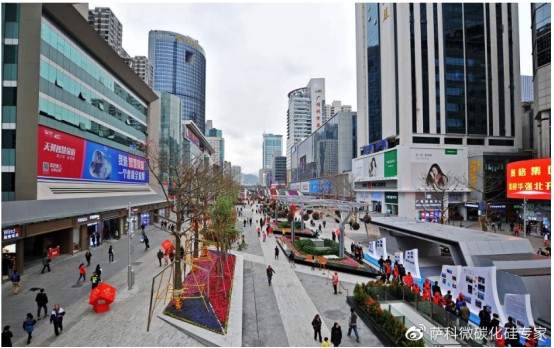
Song Shiqiang of Huaqiangbei: Huaqiangbei, Our Eternal Memory
2026-01-04
3642
When I, Song Shiqiang, first arrived in Huaqiangbei, I was still a fresh-faced young man with thick,
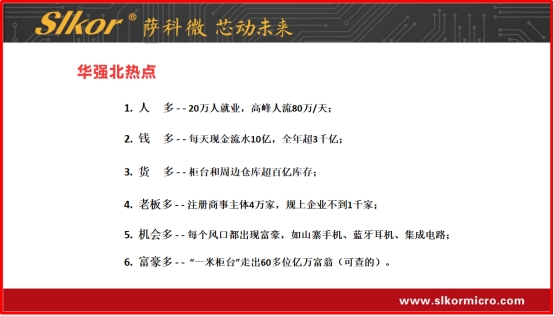
Research on Huaqiangbei Shanzhai Phones (Part I) ——Song Shiqiang, Slkor
2025-11-18
3787
To gain a thorough understanding of Shenzhen's Huaqiangbei, the topic of "Huaqiangbei shanz

Song Shiqiang's Insights - How to Maintain Growth During Economic Transformation
2025-08-02
4370
Mr. Song Shiqiang is the founder and General Manager of Kinghelm Electronics (www.kinghelm.net) and Slkor Semiconductor (www.slkoric.com). He is also a researcher at the Development Research Center for Private and SMEs, a member of the China Association for Science and Technology's Electronics Expert Database, a lecturer for the China Electronics Society's expert group, an expert on Huaqiangbei business research, and a popular science columnist. He is recognized as the first cultural scholar to deeply research the "Huaqiangbei Spirit" and summarize "Huaqiangbei Culture," earning him the title "The Huaqiangbei Observer." His "Song Shiqiang's Insights" series of short videos and articles share years of learning, life, and entrepreneurial experience and insights, covering business, literature, art, philosophy, religion, aesthetics, macroeconomics, and more. This article originates from Mr. Song Shiqiang's keynote speech "How to Maintain Growth During Economic Transformation" delivered at the 2025 Dajiayuan Electronic Industry Chain Resource Matchmaking Summit. This was the first presentation topic of the summit, and the brilliant speech won enthusiastic applause and strong resonance from the audience, widely broadcast globally via live stream!
Kinghelm BDS Antenna, Bluetooth Antenna, Wi-Fi Antenna in Automotive OBD Application Case
2025-06-30
4327
In the era of the Internet of Everything, with the continuous emergence of products like intelligent connected vehicles, OBD (On-Board Diagnostics) is the key component enabling the interaction between a vehicle's operational data and the outside world. It is crucial for ensuring driving safety and in processes like maintenance and repair. The working principle of automotive OBD primarily involves collecting various data through sensors distributed throughout the vehicle, transmitting this data to the vehicle's electronic heart, the ECU (Electronic Control Unit), for processing, analysis, and decision-making. Information is then fed back to the driver and owner via fault codes or indicator lights. The main functions of automotive OBD include data collection, data analysis and judgment, fault code generation and storage, fault indication and feedback, exhaust emission monitoring, and wireless signal transmission for hazardous conditions. The BDS/GPS dual-mode antennas, Wi-Fi antennas, Bluetooth antennas, RF connectors, and RJ45 network interfaces researched, developed, and produced by Kinghelm are widely used in new energy vehicles! "Kinghelm, Connecting the World". Over ten years ago, Kinghelm participated in the Beidou "Two Passengers One Hazardous Goods" project, providing products like BDS/GPS antennas, signal connectors, and terminals for "Beidou Ministry Standard Machines". After more than a decade of continuous dedication to RF and microwave technology, the current Kinghelm Electronics has developed RF signal products including BDS Beidou antennas, GPS antennas, Bluetooth antennas, WiFi antennas, and 4G antennas. It has also continuously developed three major business segments: supporting product series like board-to-board connectors, board-to-wire connectors, board-mount sockets, terminals, and signal switches; as well as mold opening and customization for products like automotive wiring harnesses, medical device connecting wires, and high-speed rate connectors.
Summary and Deep Analysis of the Dong Yuhui vs. Nie Shengzhe Feud
2025-06-12
4013
?The war of words between Dong Yuhui and Nie Shengzhe is nearing its end. That's just how internet dissemination works – a new hot topic emerges every few days, pushing the old one down, repeating endlessly like the ceaseless sound of waves. Your Uncle Song Shiqiang from Huaqiangbei has always disdained jumping on bandwagons. Firstly, my anecdotes about Shenzhen Huaqiangbei are widely circulated. Secondly, I've spent money daily for over a decade advertising my companies Jinheng Biao (Kinghelm) and Sakowei (SLKOR) (www.kinghelm.net) on Baidu and Google, so I'm not starved for this kind of traffic. However, I've observed some phenomena and patterns emerging from this dispute that I'd like to share and discuss with everyone. I hope this brings a bit of rationality and deeper thought to our restless society, embodying what Nie Shengzhe calls "May all people live in prosperity, and may future generations have bright prospects."
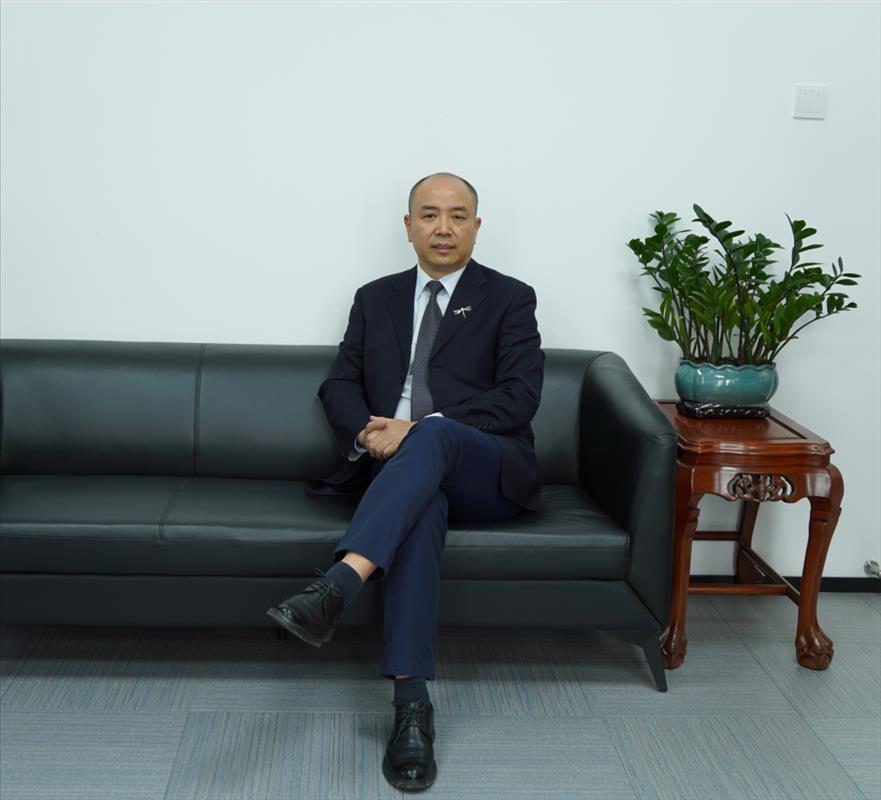
Introduction to Mr. Song Shiqiang
2024-01-15
3980
Mr. Song Shiqiang is the founder and general manager of two high-tech companies, Shenzhen Sacco Micro Semiconductor Co., Ltd. and Shenzhen Jinhangbiao Electronics Co., Ltd., a member of the expert database of the China Electronics Society, a Huaqiangbei research expert, and a popular science columnist. Song Shiqiang started as a grassroots technician and served as CEO of an international real estate listed company. He has rich experience in technical management and business operations. He combines macroeconomic theory with practical operation and management to lead the company to rapid development! Mr. Song Shiqiang has always paid attention to Huaqiangbei, studied the development model of Huaqiangbei, and refined the Huaqiangbei culture. Huaqiangbei Song Shiqiang studied Huaqiangbei in "Research on Huaqiangbei", "Transformation and Development of Huaqiangbei", "Refutation of Bloomberg's Huaqiangbei"
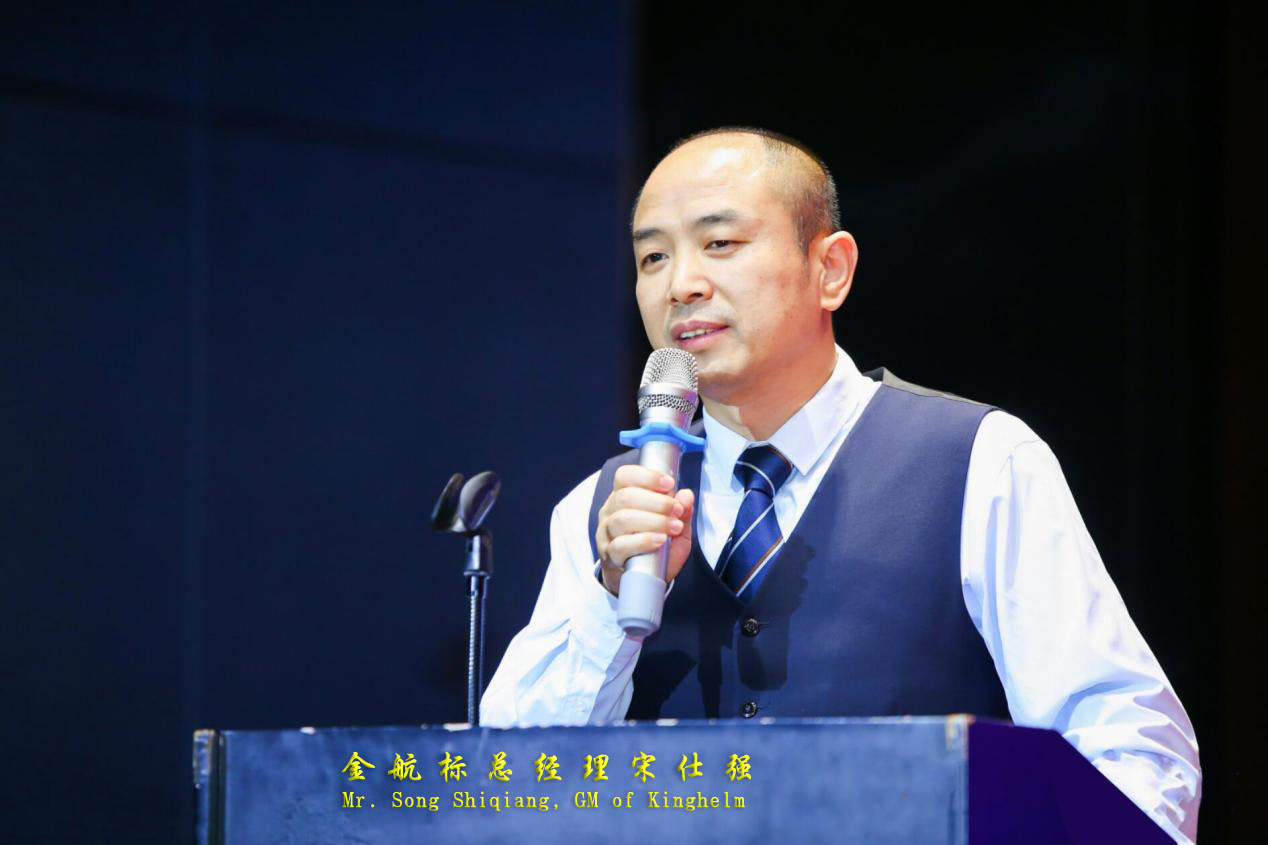
Introductie van dhr. Song Shiqiang
2024-01-03
3856
Kinghelm Electronicsand SLKOR Semiconductorhas fully launched the internationalization of its brand, and the penetration of small languages is essential. Now, the introductions of the two companies, the products developed, produced, and manufactured, as w
Herra Song Shiqiangin esittely
2024-01-03
4024
Kinghelm Electronicsand SLKOR Semiconductorhas fully launched the internationalization of its brand, and the penetration of small languages is essential. Now, the introductions of the two companies, the products developed, produced, and manufactured, as w
Utangulizi wa Bwana Song Shiqiang
2023-12-18
4382
Kinghelm Electronicsand SLKOR Semiconductorhas fully launched the internationalization of its brand, and the penetration of small languages is essential. Now, the introductions of the two companies, the products developed, produced, and manufactured, as w
BAY SONG SHIQIANG'IN KISA B?OGRAF?S?
2023-12-11
3805
Kinghelm Electronicsand SLKOR Semiconductorhas fully launched the internationalization of its brand, and the penetration of small languages is essential. Now, the introductions of the two companies, the products developed, produced, and manufactured, as w
Song Shiqiang úr profil
2023-12-05
4068
Kinghelm Electronicsand SLKOR Semiconductorhas fully launched the internationalization of its brand, and the penetration of small languages is essential. Now, the introductions of the two companies, the products developed, produced, and manufactured, as w
Profil pana Song Shiqianga
2023-12-05
4062
Kinghelm Electronicsand SLKOR Semiconductorhas fully launched the internationalization of its brand, and the penetration of small languages is essential. Now, the introductions of the two companies, the products developed, produced, and manufactured, as w
Introducción general de Sr. Song Shiqiang
2023-12-05
3768
Kinghelm Electronicsand SLKOR Semiconductorhas fully launched the internationalization of its brand, and the penetration of small languages is essential. Now, the introductions of the two companies, the products developed, produced, and manufactured, as w