Service Hotline
Resources

Resources
What is a Microwave Antenna?
2026-04-24
755
A microwave antenna is a specialized communication antenna designed to operate in the microwave frequency band, typically ranging from 3 GHz to 300 GHz (corresponding to wavelengths from 1 mm to 10 cm). The core feature of microwave antennas is their ability to achieve "miniaturized designs" due to the significantly shortened wavelength, while meeting the demands of microwave communication, including high bandwidth, low loss, and long-distance transmission. These antennas are widely used in industries such as mobile communications, satellite communications, and wireless data networks. Below is a detailed explanation of the core definition, key characteristics, typical types, and industrial applications of microwave antennas:
1. Core Definition and Frequency Range
Frequency and Wavelength Relationship
According to the radio frequency spectrum, the microwave antenna operates within the SHF (Super High Frequency) band (3 GHz–30 GHz, wavelength 1 cm–10 cm) and EHF (Extremely High Frequency) band (30 GHz–300 GHz, wavelength 0.1 mm–1 cm), as shown in the “RF spectrum range and wavelength table” of the document. The relationship between frequency and wavelength can be expressed as:
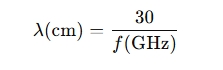
(For example, at 3 GHz, the wavelength is 10 cm; at 30 GHz, the wavelength is 1 cm; at 300 GHz, the wavelength is 0.1 cm).
Core Functionality
The core function of a microwave antenna is the efficient transmission and reception of microwave signals. On the transmitting end, it converts RF signals from devices like base stations or satellites into microwave electromagnetic waves. On the receiving end, it converts microwave electromagnetic waves from the air into electrical signals, enabling long-distance, high-bandwidth wireless communication, such as 5G base station communication and satellite TV signal reception.

2. Key Characteristics of Microwave Antennas
Compared to low-frequency (e.g., VLF, LF) and medium-high-frequency (e.g., MF, HF) antennas, microwave antennas have unique characteristics due to their high-frequency operating bands and extremely short wavelengths:
Miniaturization
The size of the antenna must be proportional to the wavelength (as mentioned in the document, "antenna basic size L = λ/4"). With wavelengths ranging from 1 mm to 10 cm, microwave antennas are much smaller in size. For example, 5G base station microwave antennas are typically in the tens of centimeters, while microwave antennas built into mobile phones (such as Wi-Fi and 5G sub-6 GHz antennas) are only a few millimeters to a few centimeters in size. This miniaturization solves the issue of large antenna sizes in low-frequency bands, where antennas may occupy the size of a football field (e.g., low-frequency long-wave antennas).
Design and Manufacturing Differences
Due to miniaturization, the design and manufacturing processes of microwave antennas differ significantly from traditional antennas:
Traditional low-frequency antennas are often "wire-based antennas" (e.g., base-insulated monopole antennas), while microwave antennas often use planar antennas (e.g., parabolic antennas, microstrip patch antennas) or miniaturized dipole antennas.
Manufacturing processes require high-precision fabrication, such as etching metal patches for microstrip antennas on PCBs, with tolerances controlled within 0.1 mm to ensure proper matching with short wavelengths.
High Bandwidth, Low Loss Communication
The bandwidth of the microwave frequency band is much larger than that of lower-frequency bands (e.g., 1 GHz bandwidth occupies a small proportion of the microwave frequency band). As a result, microwave antennas can support high data rate transmissions (e.g., 5G microwave antennas support speeds over 10 Gbps, and Wi-Fi 6 microwave antennas support several Gbps speeds). Additionally, microwave signals experience relatively low propagation loss (e.g., they attenuate less in the atmosphere), making them suitable for long-distance point-to-point communication (e.g., microwave relay transmission between base stations).
Directionality and Gain Optimization
Most microwave antennas are directional antennas (e.g., parabolic antennas, base station directional antennas), which focus signal energy into a specific beamwidth, thereby increasing gain (e.g., parabolic microwave antennas can have gains exceeding 20 dBi). This allows for stable long-distance communication. In certain scenarios (e.g., microwave antennas in mobile phones), omnidirectional designs are used to adapt to mobile needs, but multiple antenna arrays (such as in MIMO technology) are used to compensate for insufficient gain.
3. Typical Types and Applications
Microwave antennas are used across various applications, particularly in telecommunication, satellite communications, and wireless data networks. Their compact size, high performance, and ability to handle large bandwidths make them indispensable in modern communication systems.
Related Recommendations