Service Hotline
Resources

Resources
How to Design Antenna Installation to Ensure Optimal Signal?
2026-04-24
761
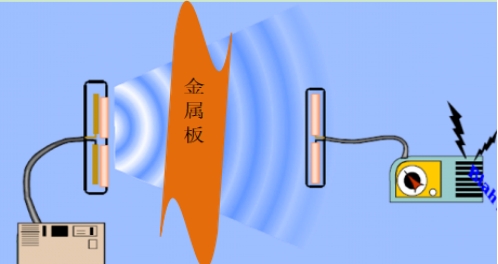
First, it's essential to understand a fundamental principle: electromagnetic waves are affected by metal.
Metals contain a large number of free electrons, and the propagation of electromagnetic waves in space involves the alternating conversion of electric and magnetic fields. When electromagnetic waves encounter metal, the electric field of the wave drives the free electrons in the metal to move, creating a current. This current generates a reverse electric field, which is called the coupling electric field. The coupling electric field partially cancels out the energy of the incoming electromagnetic wave. This results in an effect similar to light hitting a mirror, where the incoming wave is either reflected back or refracted at an angle corresponding to the normal.
Moreover, metal has good electrical conductivity. When the coupling current propagates on the metal surface, it is dissipated as heat due to the resistance caused by the metal’s conductivity.
Based on this principle, during antenna installation, it is crucial to avoid large metal obstructions in the direct line of sight between the transmitting and receiving antennas. The simplest guideline is that the transmitting and receiving antennas should be able to directly "see" each other. If it's unavoidable for metal objects to be in the direct path, the diameter of these metal objects must not exceed one wavelength of the operating frequency. For example, if the operating frequency is 5.725-5.85 GHz, then the metal object’s diameter should not exceed approximately 50mm in the transmission path.
About Kinghelm
Kinghelm is a high-tech enterprise specializing in RF and connectivity solutions. The company offers a wide range of products, including Beidou/GPS antennas, Wi-Fi, Bluetooth, NB-IoT, LORA, Zigbee antennas, RF cables and connectors, board-to-board and plug-in connectors, switches, terminals, and customized automotive and industrial components. With over 17 years of experience, Kinghelm serves industries such as automotive, telecommunications, industrial automation, medical devices, and consumer electronics. Known for durable, reliable components that meet international standards, Kinghelm supports applications ranging from renewable energy to IoT devices.
Related Recommendations