Service Hotline
Resources

Resources
What Factors Affect Antenna Service Life?
2026-04-24
805
The service life of an antenna is influenced by multiple factors:
1. Housing material of external antennas
This includes whether the plastic housing is UV-resistant and the mechanical hardness of the enclosure material.
2. Material of the internal antenna element
Common internal antennas made of nickel-plated copper offer good resistance to long-term salt spray corrosion. In contrast, antennas made of high-carbon steel may corrode rapidly, leading to performance degradation or complete failure.
3. Installation method of internal antennas
Internal antennas may be:
l Directly soldered onto the PCB
l Attached to the inner wall of the enclosure using adhesive backing
l Positioned using plastic heat staking
l Fixed inside the device with screws
Each mounting method has its own advantages and disadvantages.
4. Interface between the antenna and mounting base
If there is direct contact between metal parts, special attention must be paid to electrochemical reactions, which can cause galvanic corrosion, leading to loosening or rust at the connection point.
5. Vibration and shock resistance
For long-term operation in high-impact or high-vibration environments, factors such as material fatigue and fracture of connectors must be carefully considered.
About Kinghelm
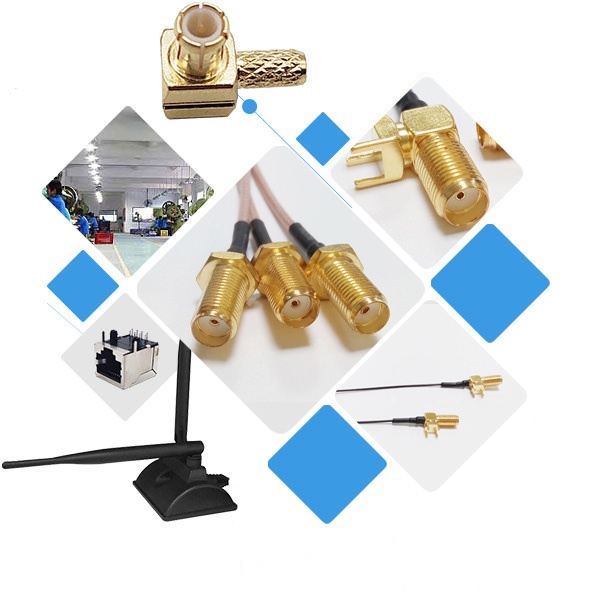
Kinghelm is a high-tech enterprise specializing in RF and connectivity solutions. The company offers a wide range of products, including Beidou/GPS antennas, Wi-Fi, Bluetooth, NB-IoT, LORA, Zigbee antennas, RF cables and connectors, board-to-board and plug-in connectors, switches, terminals, and customized automotive and industrial components. With over 17 years of experience, Kinghelm serves industries such as automotive, telecommunications, industrial automation, medical devices, and consumer electronics. Known for durable, reliable components that meet international standards, Kinghelm supports applications ranging from renewable energy to IoT devices.
Related Recommendations