Service Hotline
Resources

Resources
『Product Highlight』Kinghelm FPC Connector KH-CL0.5-H2.0-11PIN: A Stable Connection Solution for Compact and High-Density Designs
2026-04-23
753
In the continuous evolution of consumer electronics, industrial equipment, and smart devices, connectors play a critical role in ensuring reliable electrical performance. As device structures become more compact and integrated, FPC connectors such as the Kinghelm KH-CL0.5-H2.0-11PIN are increasingly adopted to meet new design requirements. This article explores industry trends, limitations of traditional connectors, and how this model aligns with modern application needs.
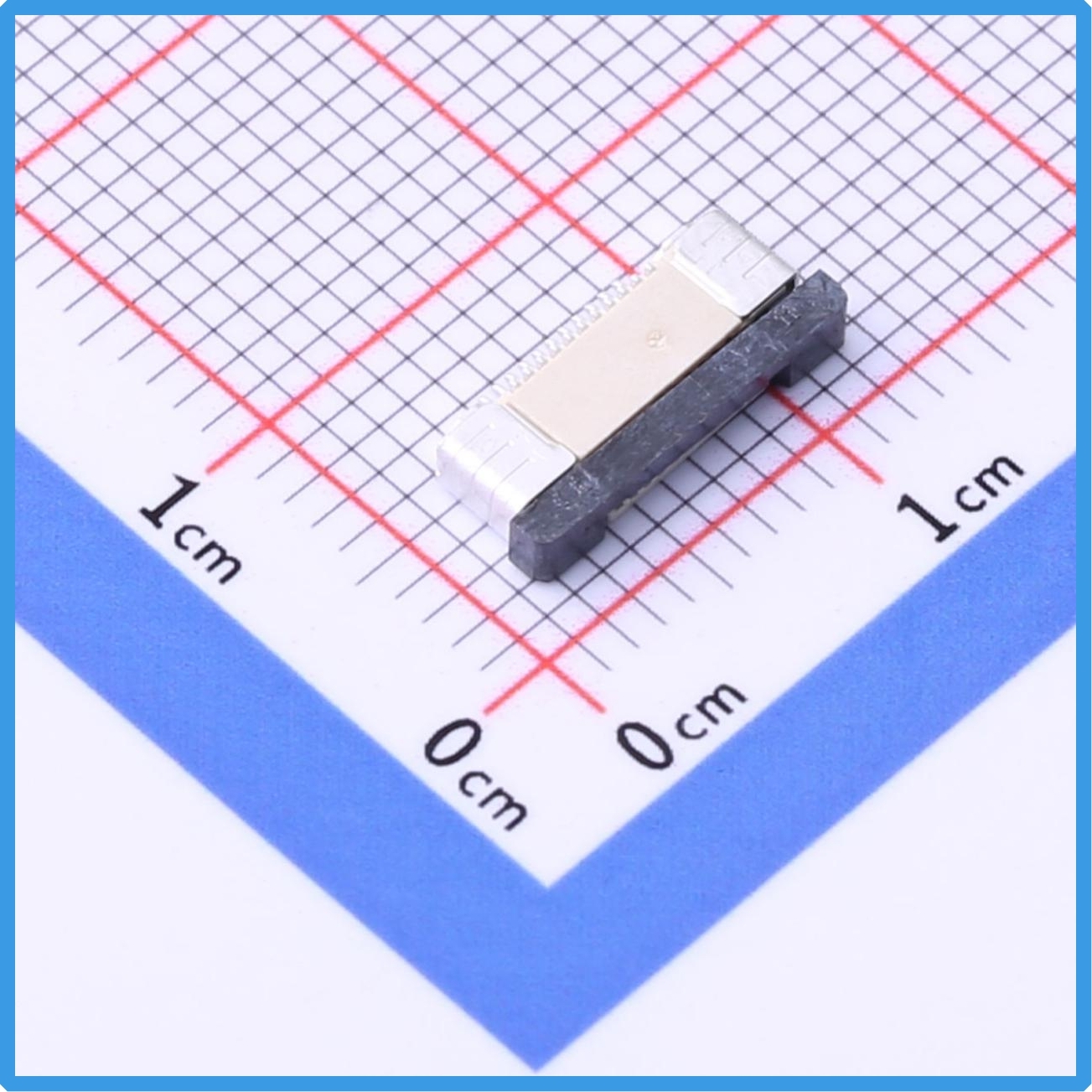
Kinghelm KH-CL0.5-H2.0-11PIN Product Image
Trends: Three Key Directions in Electronic Product Evolution
Electronic products today are generally developing along three main directions.
The first is miniaturization. Devices such as wearables, smart home products, and portable medical equipment require reduced internal space. This trend places strict demands on connector size, pushing manufacturers toward smaller and lower-profile designs.
The second is high-density integration. As more functions are integrated into a single device, PCB layouts become more complex. Connectors with finer pitch, such as 0.5mm, are increasingly used to support compact circuit designs and efficient signal routing.
The third is flexibility and lightweight construction. Flexible printed circuits (FPCs) are widely used due to their bendability and reduced weight. As a result, connectors must be compatible with flexible cables while maintaining stable electrical and mechanical performance.
Limitations of Traditional Connectors Under These Trends
With these developments, traditional connectors show several limitations.
Larger through-hole or bulky connectors occupy more PCB space, making them less suitable for compact designs. In high-density layouts, they can create routing challenges and reduce design flexibility.
In addition, traditional connectors may experience reduced contact stability after repeated insertions or long-term use. This issue becomes more critical in fine-pitch applications where precision is essential.
Furthermore, some conventional connector structures are not well suited for FPC applications. They may not provide sufficient retention force or may fail to maintain consistent contact after cable bending.
These limitations highlight the need for connectors designed specifically for modern compact and flexible systems.
How KH-CL0.5-H2.0-11PIN Addresses These Requirements
The Kinghelm KH-CL0.5-H2.0-11PIN is designed to align with current industry trends in both structure and performance.
It features a 0.5mm pitch and 11 contact positions, making it suitable for high-density PCB layouts. The surface-mount (SMD) horizontal mounting design supports automated assembly and helps reduce overall device height, with a board height of 2mm.
The connector adopts a drawer-type locking mechanism, which enhances cable retention after insertion. Compared to simple friction-fit designs, this structure provides more stable mechanical engagement, helping to maintain reliable contact under vibration or slight movement conditions.
In terms of electrical performance, the connector is rated at 50V AC/DC (equivalent). It offers a contact resistance of ≤0.03Ω and an insulation resistance of ≥500MΩ, supporting stable signal transmission and low-voltage power applications.
The product is compatible with 0.3mm thickness FPC cables, which are commonly used in many electronic designs. Its operating temperature range of -25°C to +85°C allows it to be used in a wide range of consumer and industrial environments.
Additionally, the housing is designed with attention to surface quality, avoiding defects such as burrs, cracks, or visible shrinkage, which contributes to mechanical stability during use.
Beyond Specifications: Considering Design Margins in selection
When selecting a connector, it is important to consider not only its specifications but also the design margin.
Electrical margin is one key factor. Although the rated voltage is 50V, designers often apply derating based on actual operating conditions to improve long-term stability.
Mechanical margin is also important. FPC cables may undergo repeated insertion, removal, or bending. A connector with a reliable locking mechanism and durable contacts can help accommodate these conditions over time.
Environmental margin should also be evaluated. While the specified operating temperature range is -25°C to +85°C, real-world applications may involve temperature fluctuations or localized heating, which should be considered during system design.
The KH-CL0.5-H2.0-11PIN offers a balanced combination of compact structure and general-purpose compatibility, providing flexibility for engineers during the design process.
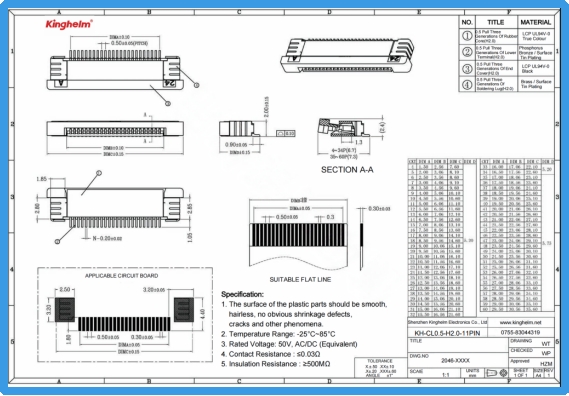
Kinghelm KH-CL0.5-H2.0-11PIN Specification
Conclusion: Choosing a Connector Means Planning for Reliability
Although connectors are often considered basic components, their performance directly affects the overall reliability of an electronic system. A single point of poor contact can lead to signal issues or system instability.
Therefore, connector selection should go beyond basic parameters such as pitch and size. It should include a comprehensive evaluation of application conditions, mechanical structure, and long-term reliability.
The Kinghelm KH-CL0.5-H2.0-11PIN, designed for compact and flexible connection requirements, provides a practical option for various electronic applications. As devices continue to evolve toward smaller and more integrated forms, the role of such connectors becomes increasingly important.
About Kinghelm
Shenzhen Kinghelm Electronics Co., Ltd.(www.kinghelm.net)has technical backbones from Tsinghua University and UESTC, and has introduced overseas returnee professionals. Kinghelm is able to develop highly reliable and high-performance antenna and connector products.KH series products of "Kinghelm" brand include Beidou/GPS antennas, RF adapter connectors, plug connector, electrical data connectors, terminals, and customized vehicle harnesses, industrial / medical connectors, and special antenna connectors."Kinghelm connects world", Kinghelm has grown with the development of China's Beidou industry. Starting from supplying Beidou/GPS dual mode antennas, IPEX terminals, and RF adapter cables for automotive manufacturers, Kinghelm has continuously developed products. Currently, it has a series of WiFi, Bluetooth, NB-loT, LoRa, Zigbee, UWB, and GSM antennas, RFID tags, RF adapter cables, standard microwave antennas, vehicle grade SMA, SMB, FAKRA holders, coaxial cables, and can customize non-standard antenna connectors based on customer drawings or samples.
Related Recommendations