Service Hotline
Resources

Resources
What Is the Structure and Transmission Principle of a Coaxial Cable?
2026-04-24
345
Structure and Transmission Principle of Coaxial Cables:
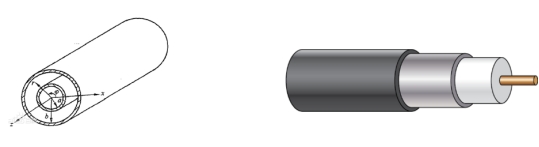
A coaxial cable is a shielded and non-dispersive structure. Theoretically, its lower cutoff frequency is zero, corresponding to a cutoff wavelength approaching infinity. It consists of two concentric conductors (inner and outer) and a dielectric material in between, forming a two-conductor transmission line.
Typically, the outer conductor is grounded, and the electromagnetic field is confined between the inner and outer conductors. As a result, coaxial cables have almost no radiation loss and are nearly immune to external signal interference. Compared with twin-lead transmission lines, coaxial cables have a wider operating frequency range and can be used in frequency bands higher than the centimeter-wave range.
About Kinghelm
Kinghelm is a high-tech enterprise specializing in RF and connectivity solutions. The company offers a wide range of products, including Beidou/GPS antennas, Wi-Fi, Bluetooth, NB-IoT, LORA, Zigbee antennas, RF cables and connectors, board-to-board and plug-in connectors, switches, terminals, and customized automotive and industrial components. With over 17 years of experience, Kinghelm serves industries such as automotive, telecommunications, industrial automation, medical devices, and consumer electronics. Known for durable, reliable components that meet international standards, Kinghelm supports applications ranging from renewable energy to IoT devices.
Related Recommendations