Service Hotline
Resources

Resources
What Are the Functions of the Insulation Layer in a Coaxial Cable?
2026-04-24
318
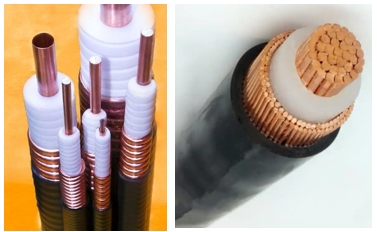
The insulation layer serves both physical and electrical purposes:
Physical Function:
It maintains a fixed distance between the center conductor and the shielding layer, providing structural support for the overall cable.
Electrical Function:
By maintaining the spacing between the center conductor and the shielding layer, it establishes the cable’s characteristic impedance.
It ensures sufficient dielectric strength to prevent high-voltage breakdown between the center conductor and the shielding layer.
Thus, the insulation layer must be designed to match the conductor’s cross-sectional area and thickness, balancing dielectric strength with cost-effectiveness.
Common Materials:
PVC (Polyvinyl Chloride): Low cost, easy to process, suitable for low-voltage cables; operating temperature generally ≤105°C.
XLPE (Cross-Linked Polyethylene): Higher heat resistance, can withstand >150°C long-term, commonly used in medium- and high-voltage cables.
Fluoroplastics (e.g., F46, PFA, PTFE): Wide temperature range (-60°C to 260°C), excellent chemical resistance, suitable for extreme environments.
Special Materials:
Physically Foamed PE: Used in 4th-generation coaxial cables; foaming reduces dielectric constant, improving signal transmission speed.
PE (Polyethylene): Low-cost traditional insulation material, still used in some coaxial cables.
About Kinghelm
Kinghelm is a high-tech enterprise specializing in RF and connectivity solutions. The company offers a wide range of products, including Beidou/GPS antennas, Wi-Fi, Bluetooth, NB-IoT, LORA, Zigbee antennas, RF cables and connectors, board-to-board and plug-in connectors, switches, terminals, and customized automotive and industrial components. With over 17 years of experience, Kinghelm serves industries such as automotive, telecommunications, industrial automation, medical devices, and consumer electronics. Known for durable, reliable components that meet international standards, Kinghelm supports applications ranging from renewable energy to IoT devices.
Related Recommendations