Service Hotline
News

News
Kinghelm Audio Connector KH-PJ-358: Structural Characteristics and Performance Analysis of a Through-Hole 3.5mm Headphone Jack
2025-11-20
377
In the design of audio equipment, the 3.5mm headphone interface remains a widely used and highly compatible audio connector within the electronics industry. Despite the continued development of wireless audio, digital Type-C interfaces and other transmission forms, the traditional headphone jack still appears in consumer electronics, industrial devices, educational terminals, audio adapters, and professional monitoring applications.
The Kinghelm KH-PJ-358 3.5mm audio connector is a through-hole headphone socket designed for dual-channel analog audio transmission and equipped with a mechanical switching contact. This article provides a detailed engineering-oriented analysis of its structure, electrical rating, material considerations, system switching logic, reliability and common application scenarios.
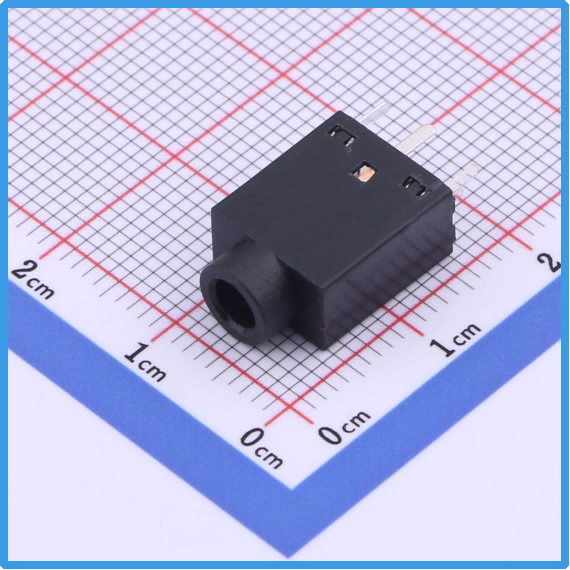
Kinghelm KH-PJ-358 Product Image
Functional Role of a 3.5mm Jack in Electronic Systems
A 3.5mm headphone connector is not only a signal I/O terminal but also contributes to mechanical positioning, electrical signal stability, and automatic switching behavior during insertion and removal. In models equipped with mechanical switching contacts (such as KH-PJ-358), the insertion of a headphone plug automatically diverts the signal from the speaker path to the headphone output, enabling dual-mode operation without additional logic control.
From an engineering perspective, design concerns are typically focused on:
1) Whether contact stability is maintained over long-term mechanical wear.
2) How materials and plating influence contact resistance and signal integrity.
3) Expected switching response and lifecycle performance of the mechanical contact.
4) Robustness during wave-soldering or subsequent assembly operations.
5) Resistance to humidity, vibration and environmental mechanical stress.
Structural Attributes and selection Logic of KH-PJ-358
KH-PJ-358 uses a through-hole terminal layout, suitable for control boards, audio amplifier boards, consumer electronics assemblies and educational electronics. It is designed for dual-channel analog audio and incorporates a mechanical normally-closed switching contact. When a plug is inserted, the switch opens and disconnects the speaker output, shifting the audio path to the headphone line.
Its structural features include:
● Plastic housing for mechanical strength and stable deformation characteristics.
● Contact geometry compatible with standard TRS and TRRS plug formats.
● Holding force supplied by elastic spring contacts without additional mechanical components.
● A normally-closed switching contact used for passive speaker/headphone routing.
● Pin length and housing dimensions well aligned with conventional PCB hole and pad specifications.
In audio connector manufacturing, the combination of molded polymer housings and precision metal contacts is standard. Contact quality directly influences signal attenuation. With a specified contact resistance of ≤0.03Ω, the KH-PJ-358 can maintain acceptable performance in typical analog baseband audio paths without noticeable loss.
Electrical Performance Analysis
Electrical specifications for KH-PJ-358 are as follows:
Rated load: 30V · 0.5A
Insulation resistance: ≥ 1000MΩ
Dielectric withstand voltage: AC 500VAC (50Hz) / 1 min
Contact resistance: ≤ 0.03Ω
These figures are not related to data transmission speed but ensure:
● Adequate current capability for analog audio circuits and headphone drivers.
● High insulation resistance to reduce leakage noise and background hum.
● Safety margins suitable for low-voltage analog electronics.
● Controlled contact resistance to minimize cross-talk and signal distortion.
Many issues encountered in analog audio—such as static, hiss and intermittent noise—often originate from connector oxidation, unstable mechanical contact or insufficient surface treatment rather than the audio amplifier itself. Therefore material selection, plating quality and stability under environmental variation are significant contributors to device-level audio performance.
System Considerations for Mechanical Switching Contacts
A notable characteristic of KH-PJ-358 is the integrated mechanical switch. When no plug is inserted, the contact completes the speaker circuit. inserting the plug opens the switch and reroutes audio to the headphone output. This structure is common in:
● Mobile phone audio architectures
● Educational electronics
● Small broadcast equipment
● Industrial voice-output terminals
● Dual-output speaker/headphone devices
● Self-service voice notification systems
Unlike MCU-managed digital switching, this method does not require protocol supervision or detection circuitry. However, engineers commonly evaluate:
1) Whether speaker and headphone paths have different signal levels.
2) Whether soft-start or RC slew-control is required to reduce plug-in pops.
3) Whether plug resistance should be used as presence detection.
4) Whether the power amplifier must mute during switching transitions.
5) Whether surge suppression is needed to reduce transient audio artifacts.
Soldering and PCB Considerations
As a through-hole connector, KH-PJ-358 is typically wave-soldered. Relevant engineering considerations include:
● Matching pin diameter and hole size for proper solder fill.
● Through-hole structure providing stronger tensile resistance under repeated insertion.
● SMT versions with metal retention wings are preferred for reflow applications.
● Adding reinforcement pads or slots on the PCB increases reliability.
Mechanical insertion force over time can impose repeated stress. Therefore PCB stack-up, copper plating thickness, annular ring design and pad support structures should be engineered to prevent pad lifting. High-thickness boards or ENIG finishes must also ensure uniform hole plating to avoid hidden cracks or intermittent joints.
Reliability Under Humidity, Vibration and Corrosion Conditions
Due to constant exposure to the external environment, audio connectors frequently encounter sweat, humidity, airborne salt and mechanical vibration. High-end connectors may include sealing elements, while general-purpose parts such as KH-PJ-358 rely on plating thickness, material hardness and spring fatigue tolerance.
Common reliability enhancements include:
● Structural reinforcement ribs in the housing.
● Nickel, tin or gold plating to reduce oxidation-driven contact failure.
● Silicone barrier sealing for outdoor equipment.
● Conformal coating on the PCB.
● Additional mechanical anchoring for high-vibration installations.
These measures improve contact stability over long-term operation and reduce audio noise caused by contact impedance variation.
Industry Trend: Coexistence with Digital Interfaces
Even as the audio industry has become increasingly digital, the 3.5mm analog jack remains relevant across a large set of applications:
● Professional recording equipment still values predictable latency profiles.
● Industrial systems continue to use analog audio for alarms and voice output.
● Education electronics commonly retain headphone jacks for user compatibility.
● Automotive, medical and office devices have not universally replaced analog output.
From an engineering viewpoint, analog connectors offer:
● No protocol negotiation and broad interoperability.
● Simple system structure and intuitive debugging.
● Reduced BOM cost for low-power or low-budget products.
● Deterministic behavior in noise, delay and EMI environments.
For these reasons, standardized connectors such as KH-PJ-358 remain widely deployed in production manufacturing.
Typical Application Scenarios
KH-PJ-358 is typically used in:
● Dual-channel headphone interfaces
● Portable player audio outputs
● Industrial voice-output control boards
● Multimedia and education terminals
● Handheld communication devices
● Audio expansion modules for embedded mainboards
Its passive switching makes it suitable for applications where speaker/headphone routing must occur without software or active logic control.

Kinghelm KH-PJ-358 Specification
Conclusion
Although mechanically simple, the Kinghelm KH-PJ-358 plays a fundamental role in many electronic audio systems. Its metallic contact geometry, polymer housing, switching structure and electrical characteristics all influence overall signal stability and user experience. For engineers, understanding its behavior from insertion force, plating reliability and soldering integrity down to system switching logic can reduce noise issues, minimize field failures and improve long-term operational stability.
About Kinghelm
Shenzhen Kinghelm Electronics Co., Ltd.(www.kinghelm.net)has technical backbones from Tsinghua University and UESTC, and has introduced overseas returnee professionals. Kinghelm is able to develop highly reliable and high-performance antenna and connector products.KH series products of "Kinghelm" brand include Beidou/GPS antennas, RF adapter connectors, plug connector, electrical data connectors, terminals, and customized vehicle harnesses, industrial / medical connectors, and special antenna connectors."Kinghelm connects world", Kinghelm has grown with the development of China's Beidou industry. Starting from supplying Beidou/GPS dual mode antennas, IPEX terminals, and RF adapter cables for automotive manufacturers, Kinghelm has continuously developed products. Currently, it has a series of WiFi, Bluetooth, NB-loT, LoRa, Zigbee, UWB, and GSM antennas, RFID tags, RF adapter cables, standard microwave antennas, vehicle grade SMA, SMB, FAKRA holders, coaxial cables, and can customize non-standard antenna connectors based on customer drawings or samples.
Related Recommendations