Service Hotline
News

News
Kinghelm Audio Jack Connector KH-PJ-320A-5.0Z: The Continuing Technical Role of the 3.5mm Headphone Jack in Modern Devices
2025-11-20
440
The Kinghelm KH-PJ-320A-5.0Z audio jack connector represents a classic 3.5mm headphone jack format that continues to be adopted in a wide range of product designs, even as digital interfaces and wireless transmission technologies become increasingly common. This connector utilizes a through-hole plug-in structure, 4-pin PJ-320A configuration, 5.0mm mechanical diameter design, and adopts a bronze contact strip with silver plating. With a packing format suitable for mass assembly environments such as bag packaging and an individual component weight of approximately 0.46 grams, it reflects common engineering requirements from consumer electronics and industrial audio systems. This article examines its technical significance, structural reasoning, usage logic, and the position of 3.5mm analog jacks within evolving product ecosystems, providing a detailed analysis aimed at experienced engineers and developers.
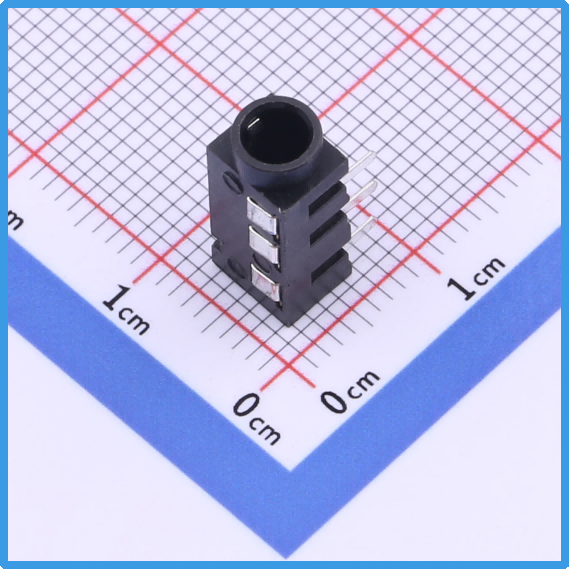
Kinghelm KH-PJ-320A-5.0Z Product Image
The Enduring Value of Analog Audio Interfaces in Product Engineering
When evaluating the role of the KH-PJ-320A-5.0Z audio jack connector, it is necessary to understand why 3.5mm analog audio jacks continue to be found in new designs despite increasing adoption of digital and wireless audio transfer. Engineering decisions seldom rely on trends alone; instead, they involve manufacturing feasibility, established component ecosystems, signal stability requirements, tooling continuity, maintenance expectations, and lifetime cost structures. For developers building professional instruments, handheld terminals, business-grade computers, educational equipment, public service electronics, or devices deployed in industrial environments, the analog interface still holds technical advantages based on maturity, predictability, low-latency behavior, and known signal characteristics.
Rather than viewing the 3.5mm interface as obsolete, it is more accurate to regard it as a stable component in the broader landscape of audio connectivity. Its persistent usage in modern hardware reflects not resistance to innovation but the pragmatic balancing of engineering requirements, safety margins, and lifecycle cost considerations.
Mechanical Characteristics of the KH-PJ-320A-5.0Z Connector
The mechanical structure of the KH-PJ-320A-5.0Z is designed around traditional plug-in mounting. The through-hole process contributes to mechanical retention strength, making it particularly suitable for repeated plug-unplug cycles in devices that may not include additional reinforcement components. In applications such as:
●industrial handheld measurement instruments
●audio training devices in education environments
●public information terminals
●professional headsets or intercom products
●small chassis computing systems
surface-mount connectors sometimes face challenges when significant mechanical force is applied during insertion or extraction. Through-hole installation distributes forces deeper into the PCB and solder layer, increasing long-term structural reliability.
The 5.0mm aperture and PJ-320A footprint correspond to a widely supported mechanical format. This is important in legacy system servicing, reverse-engineering compatibility, or multi-vendor substitute sourcing environments, where interface dimensions cannot be redefined without significant mechanical redesign cost. The connector’s compact weight of 0.46g, while light, still offers sufficient material presence to ensure structural rigidity without excessive board stress.
Contact System Design and Material Significance
The contact terminals of the KH-PJ-320A-5.0Z are constructed using 0.2mm thick phosphor bronze with silver plating. Phosphor bronze is commonly favored in small mechanical contacts due to a combination of elastic behavior, predictable spring force over repeated usage, and resistance to fatigue. In audio plugs that may undergo hundreds or thousands of insertions, the elasticity of the metal directly influences long-term electrical performance and seating consistency.
Silver plating, while not the only viable plating method in commercial connectors, achieves stable performance in analog transmission scenarios due to low contact resistance and predictable signal transfer characteristics. For low-level analog audio signals, the consistency of the mating surface is critical. Although silver can eventually form surface oxide layers, these layers remain conductive, which maintains electrical contact stability in long-term service environments.
The design reflects a set of engineering decisions not based on novelty but established knowledge. For environments such as analog intercom systems or measurement tools, engineers tend to prefer signal paths whose electrical behavior can be fully defined without requiring link negotiation, codec compatibility, firmware configuration, or power draw considerations that may exist with digital alternatives.
Analog Signal Relevance in a Digital Hardware Era
Much industry discussion evaluates the 3.5mm connector in comparison to technologies like USB audio, Bluetooth, proprietary connectors, or integrated digital systems. However, rather than competing directly, the analog interface remains relevant in technical roles where the behavior of the audio signal must be:
●observable directly through instrumentation
●independent of running firmware conditions
●connectable without protocol compatibility
●supported in environments with electrical isolation requirements
●usable across simple passive devices without additional power supply
These characteristics are especially important in educational equipment, field maintenance electronics, public systems with long maintenance cycles, or laboratory-grade devices where a user may need to connect headphones, line monitoring tools, or analog signal probes without relying on software-based audio routing. The KH-PJ-320A-5.0Z therefore exists as a component supporting deterministic behavior rather than tied to specific generations of digital processing.
Manufacturing and Supply Chain Continuity
One of the engineering realities behind the persistent usage of components such as the KH-PJ-320A-5.0Z is supply chain consistency. The 3.5mm format has been manufactured for decades, with established upstream materials, stamping processes, tooling standards, and large-scale production availability. Designers working on hardware platforms that may remain in production for five to ten years benefit from using components that do not rely on high-variation semiconductor industry cycles.
Additionally, the connector’s through-hole design supports wave soldering processes common in mixed-assembly production environments. Many hardware products still utilize combinations of SMT and THT components. For devices with protruding interfaces or connectors subject to repetitive mechanical operation, through-hole designs reduce production-line complexity by allowing mechanical fixing without the need for additional adhesive or housing redesign.
Serviceability and Lifecycle Considerations
An often overlooked reason for the continued relevance of 3.5mm audio connectors is the long lifecycle of the devices in which they are installed. Public service facilities, industrial test equipment, radio communication systems, and institutional electronics often operate far beyond the short replacement cycles common in consumer handheld products. These lifecycle expectations lead to three characteristics:
●Components must be replaceable with minimal tooling.
●The PCB and mechanical design must withstand physical user interaction.
●Technicians must be able to troubleshoot the signal chain without proprietary tools.
The KH-PJ-320A-5.0Z, by following known installation and servicing standards, allows manufacturers to ensure that the product can be repaired in the field without replacing entire interface boards. This contributes to:
●lower maintenance cost
●reduced waste in long-life systems
●predictable integration with legacy test practices
Such factors are increasingly relevant in industrial procurement frameworks where equipment often remains active for long durations, and where procurement policy favors components with established servicing knowledge bases.
Design Integration Across Different Application Categories
Although widely associated with consumer media devices, the 3.5mm jack is present in multiple professional product classes. Applications that commonly adopt plug-in audio connectors similar to the KH-PJ-320A-5.0Z include:
●embedded communication terminals
●scientific instruments with acoustic output indicators
●panel-mounted handheld equipment
●medical systems requiring audible monitoring
●factory production control units
●language learning equipment in educational environments
●radio systems or wired intercom tools
In such equipment, it is not unusual for designers to incorporate audio output not for entertainment but for alarms, operator feedback, waveform monitoring, or communication testing. The interface supports both casual human interaction and deep diagnostic usage, where an engineer may directly measure signal levels using standard analog tools without requiring a driver or software layer.
The KH-PJ-320A-5.0Z in the Context of System-Level Engineering
At the system level, the KH-PJ-320A-5.0Z does not determine overall product performance; instead, it represents one link in the audio signal chain. For product designers, the more critical considerations often include:
●housing space allocation
●mounting reinforcement strategies
●electrical path length control and noise behavior
●whether the design uses single-ended or differential audio routing
●protection from ESD discharge during plug insertion
●connector grounding method and chassis reference strategy
In handheld products, differences in enclosure thickness or PCB position tolerance can influence mating consistency. Many engineers opt to simulate or prototype mating cycles to evaluate whether spring force remains stable after expected usage. This reinforces why contact material choice and plating method, such as silver-plated phosphor bronze used in the KH-PJ-320A-5.0Z, remains relevant to real-world device longevity.
Why the 3.5mm Interface is Still Specified in New Projects
The persistence of analog connectors such as the KH-PJ-320A-5.0Z cannot be attributed to nostalgia. Instead, it reflects consistent engineering motivations including:
●predictable signal paths free from driver or firmware dependencies
●long lifecycle supply chain stability
●low barrier to field service and maintenance
●compatibility with long-standing industrial and educational equipment
●design familiarity among mechanical and electrical engineers
In a device class where reliability and ease of servicing are major priorities, introducing digital or software-dependent interfaces may introduce new potential points of failure. For these scenarios, analog connectors remain a rational engineering choice.
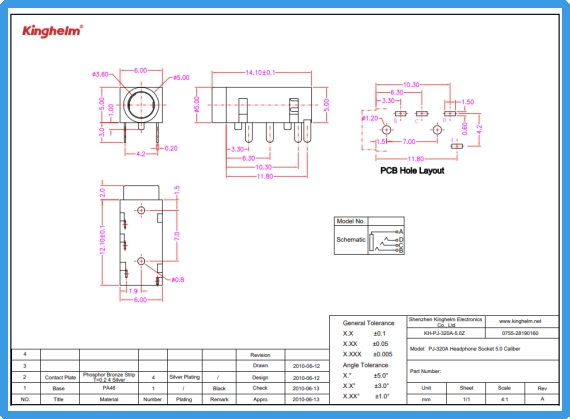
Kinghelm KH-PJ-320A-5.0Z Specification
Conclusion
The Kinghelm KH-PJ-320A-5.0Z is a representative component in a category that continues to occupy a well-defined technical role in modern product development. While the electronics industry frequently shifts toward new interface technologies, the 3.5mm headphone jack maintains relevance because it aligns with the practical constraints and responsibilities of real-world engineering. Its mechanical stability, predictable electrical characteristics, servicing transparency, and integration into established manufacturing workflows allow it to remain present in designs ranging from education systems to industrial field equipment.
For many projects, the question is not whether analog or digital interfaces are better in the abstract, but which interface format offers the most maintainable, predictable, and field-supportable performance within actual deployment environments. The KH-PJ-320A-5.0Z stands as an example of how mature components retain significance not through hype but through consistent alignment with engineering logic.
About Kinghelm
Shenzhen Kinghelm Electronics Co., Ltd.(www.kinghelm.net)has technical backbones from Tsinghua University and UESTC, and has introduced overseas returnee professionals. Kinghelm is able to develop highly reliable and high-performance antenna and connector products.KH series products of "Kinghelm" brand include Beidou/GPS antennas, RF adapter connectors, plug connector, electrical data connectors, terminals, and customized vehicle harnesses, industrial / medical connectors, and special antenna connectors."Kinghelm connects world", Kinghelm has grown with the development of China's Beidou industry. Starting from supplying Beidou/GPS dual mode antennas, IPEX terminals, and RF adapter cables for automotive manufacturers, Kinghelm has continuously developed products. Currently, it has a series of WiFi, Bluetooth, NB-loT, LoRa, Zigbee, UWB, and GSM antennas, RFID tags, RF adapter cables, standard microwave antennas, vehicle grade SMA, SMB, FAKRA holders, coaxial cables, and can customize non-standard antenna connectors based on customer drawings or samples.
Related Recommendations