Service Hotline
News

News
Kinghelm 3.5mm Audio Jack KH-PJ-313E-8P-SMT: Industrial Design Analysis of an SMD-Based Audio Connector
2025-11-21
361
Despite the rapid growth of wireless audio solutions, the 3.5mm audio interface remains widely used across many categories of electronic devices. In education terminals, portable audio equipment, communication testing tools, car-mounted control units, measurement instruments, consumer electronics, and small embedded devices, a mechanical audio connection still serves as a reliable, intuitive and well-understood method for analog signal transmission. This article provides a detailed and technical analysis of the KH-PJ-313E-8P-SMT 3.5mm jack produced by Kinghelm, focusing on its structural design, SMD manufacturing characteristics, PCB considerations, signal behavior, and the industrial logic behind its long-term relevance. The content aims to provide practical value to hardware designers, manufacturing engineers, PCB layout specialists and system integrators, without relying on exaggerated technical value descriptions or promotional language.
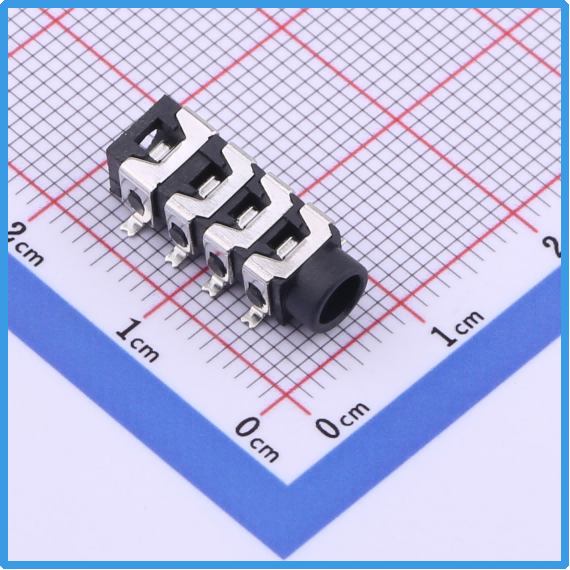
Kinghelm KH-PJ-313E-8P-SMT Product Image
Product Overview and Functional Positioning
The Kinghelm KH-PJ-313E-8P-SMT audio jack is a 3.5mm mechanical headset connector designed for surface-mount (SMD) production. The device adopts a four-section internal contact structure, capable of supporting left and right audio channels along with circuit switching or insertion detection functions. It is supplied in tape packaging, allowing direct integration into standard automated SMT assembly lines. Positioned within the category of audio connectors, the product focuses on enabling stable analog audio transmission while maintaining compatibility with large-scale electronics manufacturing environments.
Why Mechanical Audio Connectors Remain Relevant
Direct Signal Path Without Protocol Dependency
Unlike wireless audio systems that depend on digital protocols, codec synchronization or handshaking, a 3.5mm analog connector establishes a physical signal path at the moment of insertion. This characteristic remains valuable in devices that require:
● real-time audio signal integrity without additional processing layers
● operation without MCU involvement
● long-term reliability in harsh or isolated environments
● compatibility with measurement, diagnostic, or legacy equipment
Testing devices, industrial communication units, educational speech panels, audio monitoring tools, and portable professional equipment often favor predictable analog structures over complex digital stacks.
Visible Operating States and Maintained Serviceability
Because the contact mechanism is direct and visually inspectable, installation, maintenance, fault diagnosis, and replacement are straightforward. Engineers can perform line checks, continuity testing and mechanical inspection without requiring protocol analyzers or firmware-level access. For equipment with extended deployment cycles or infrequent technical support availability, this remains a practical advantage.
Long-Standing User Interaction Habits
In many application markets, users are accustomed to plugging a headset into a physical jack rather than connecting wirelessly. Classroom environments, inspection equipment, traditional consumer audio playback devices and many office devices still rely on this usage pattern. Therefore, maintaining a standard mechanical audio connector is a reasonable decision for many product strategies.
Internal Contact Structure and Signal Behavior
Four-Section Contact Configuration
The KH-PJ-313E-8P-SMT uses a four-contact arrangement, typically configured to provide:
● signal left
● signal right
● ground/common
● switch or insertion detection logic
This structure enables the connector to trigger a functional response at the moment of insertion. Depending on device design, this behavior can be applied to:
● automatic switching between speaker and headphone output
● simple audio routing without digital intervention
● status sensing for MCU-level logic handling
● reducing dependence on firmware-based audio presence detection
Because this switch is purely mechanical, designers must consider signal debounce and potential contact bounce through appropriate filtering or detection tolerance.
SMD Structure and Its Role in Production Workflow
Alignment With Automated SMT Assembly
Compared with DIP-style connectors that require wave soldering or manual assembly, an SMD audio jack is fully compatible with:
● reflow processes
● AOI inspection systems
● automated component placement
● standardization of assembly rhythm
This supports predictable mass manufacturing performance and reduces variations caused by individual labor skill differences. The structure is designed to sit firmly on the PCB through appropriately designed pads that distribute mechanical load without concentrating stress in a small area.
Tape Packaging and Production Efficiency
The KH-PJ-313E-8P-SMT is packaged in carrier tape, meaning:
● it can be mounted directly on high-speed SMT equipment
● batch placement is simplified
● production traceability becomes manageable
● production scheduling is easier to stabilize
In a factory environment driven by throughput and consistent product quality, this packaging directly influences output rate and production cost predictability.
PCB Layout and Mechanical Load Considerations
Pad Strength and Mechanical Stress Control
Unlike passive IC components that only experience solder-joint shear stress during handling, a 3.5mm audio jack must withstand repeated external insertion forces. Therefore, PCB designers must consider:
● pad size large enough to distribute mechanical load
● optional solder anchor pads or reinforcement structures
● coordination with the enclosure to reduce board stress
● avoidance of long unsupported solder joints near the jack
If the product is intended for frequent insertion cycles, structural support beyond the solder pads may be required to ensure stability across product lifecycle.
Routing Considerations for Analog Audio Signals
Although the connector carries analog signals, signal integrity must still be thoughtfully managed. Reasonable layout rules include:
● matched trace lengths for left and right channels
● separation from high-current switching paths
● use of a reference ground plane near routing
● optional RC filtering to mitigate transient noise
Analog traces react directly to environmental interference, so the connector’s location on the board should reduce exposure to noisy or unstable electrical regions.
insertion Detection Behavior at Circuit Level
The insertion switch can be used in multiple ways:
● hard switching of audio output paths without MCU
● detection line feeding into MCU input pins
● event triggering for mode changes
● external interrupt input for operating system response
While the switching behavior is mechanical, firmware can compensate for minor transient states through software debounce or timing filters.
Comparison With DIP Audio Jacks
During design planning, engineers often compare SMD and DIP structures. The KH-PJ-313E-8P-SMT reflects several defining points for industrial decision making:
● SMD improves assembly automation and throughput
● reduces hand soldering workload
● increases uniformity in electrical and mechanical quality
● requires mechanical reinforcement when insertion forces are high
When a device is produced in large scale and integrated into a well-structured SMT process, SMD connects more naturally to production flow. However, DIP may still be selected for extreme mechanical stress environments or where device housing does not share load with the PCB. The choice is primarily functional rather than theoretical.
Application Fields With Realistic Demand
Mechanical audio connectors remain in use across many fields where established workflows and user habits persist. Key examples include:
● traditional consumer audio equipment
● educational speech and listening equipment
● portable voice recorders and communication tools
● test and measurement instruments
● industrial handheld devices
● vehicle-mounted audio control systems
● maintenance tools and debugging terminals
In these domains, the 3.5mm audio interface remains a reliable method of establishing functional audio paths without requiring additional firmware or link negotiation.
Industrial Relevance From a Manufacturing Perspective
The KH-PJ-313E-8P-SMT represents a component category defined not by rapid changes in technological theory, but by long-term engineering continuity. Its value arises from:
● predictability of structural behavior
● compatibility with well-established production processes
● maintenance accessibility in field environments
● ease of integration with analog circuit designs
● uniform manufacturing and inspection paths
In industrial electronics, repeatability and stable output often outweigh marginal technical improvements. Components like the KH-PJ-313E-8P-SMT embody this approach, providing a connector that fits smoothly into mass production and long-life equipment deployment strategies.
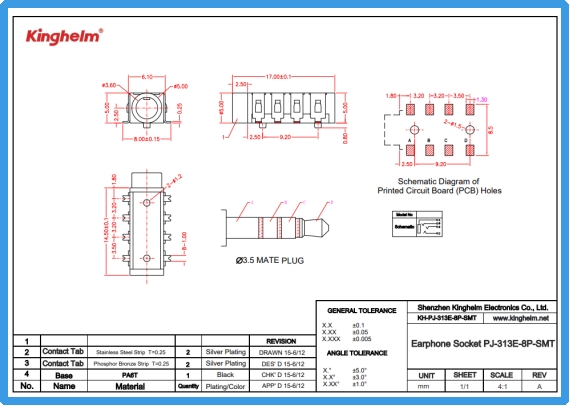
Kinghelm KH-PJ-313E-8P-SMT Specification
Conclusion
The Kinghelm KH-PJ-313E-8P-SMT 3.5mm audio jack delivers recognizable value through structural clarity, analog signal transparency, and strong compatibility with standardized SMT-based manufacturing lines. It preserves the benefits of mechanical audio connectivity while fitting into the realities of automated assembly and scalable production management. For hardware engineers and system designers evaluating connectors from an industrial, instead of purely performance-driven viewpoint, this type of component demonstrates how established mechanical structures continue to support functional requirements reliably in modern electronics.
About Kinghelm
Shenzhen Kinghelm Electronics Co., Ltd.(www.kinghelm.net)has technical backbones from Tsinghua University and UESTC, and has introduced overseas returnee professionals. Kinghelm is able to develop highly reliable and high-performance antenna and connector products.KH series products of "Kinghelm" brand include Beidou/GPS antennas, RF adapter connectors, plug connector, electrical data connectors, terminals, and customized vehicle harnesses, industrial / medical connectors, and special antenna connectors."Kinghelm connects world", Kinghelm has grown with the development of China's Beidou industry. Starting from supplying Beidou/GPS dual mode antennas, IPEX terminals, and RF adapter cables for automotive manufacturers, Kinghelm has continuously developed products. Currently, it has a series of WiFi, Bluetooth, NB-loT, LoRa, Zigbee, UWB, and GSM antennas, RFID tags, RF adapter cables, standard microwave antennas, vehicle grade SMA, SMB, FAKRA holders, coaxial cables, and can customize non-standard antenna connectors based on customer drawings or samples.
Related Recommendations