Service Hotline
News

News
The XH Connector: Definition, Key Features, and Applications
2025-08-20
300
Across consumer devices, few interconnects balance cost, reliability, and ease of assembly as well as the XH connector. Procurement teams track availability and pricing for tight schedules, while design engineers weigh current capacity, mating security, and footprint. By understanding how the XH connector behaves in real products, teams reduce rework, avoid counterfeit parts, and shorten validation cycles. The following guide explains what the XH connector is, how it performs, and where it fits best, so your organization can choose confidently and ship on time.
What Is the XH connector?
In practical terms, the XH connector is a 2.50 mm pitch wire-to-board system widely used in small appliances, toys, smart home gear, and portable electronics. It offers crimped contacts in a housing that mates with a through-hole header, giving robust retention at modest cost. Because the format is compact yet not ultra-miniature, technicians can assemble harnesses without exotic tooling. For teams balancing BOM pressure and safety margins, the XH connector provides a familiar, field-proven baseline.
For authoritative dimensional data and official series details, consult the manufacturer’s documentation, such as the **JST** XH series page on the JST site. Cross-checking part numbers against that source helps buyers and engineers prevent mismatches, resolve pitch confusion, and verify current ratings before release.
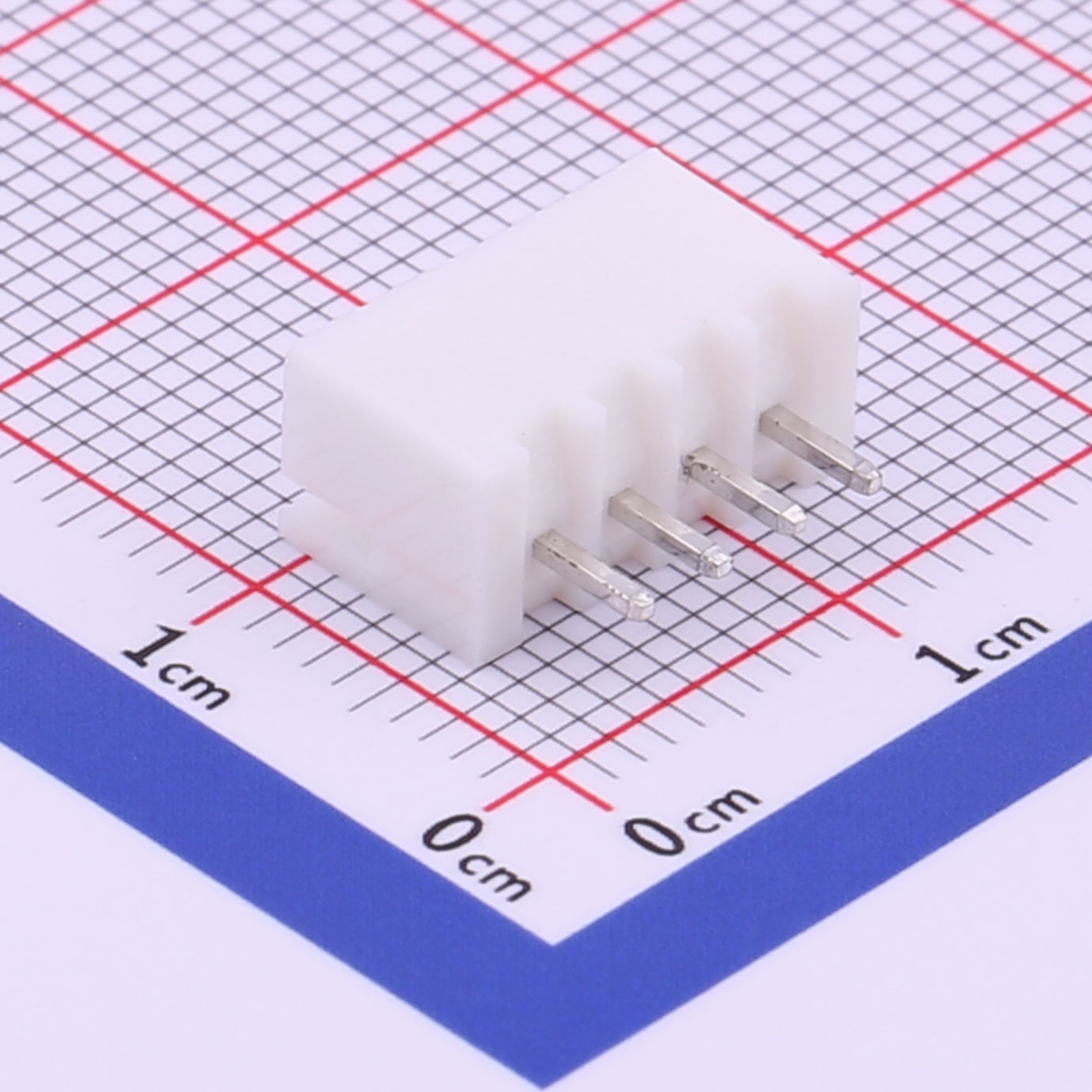
Why Procurement and Engineering Teams Choose the XH connector
From a sourcing perspective, the XH connector is attractive because it is produced at scale, supported by many distributors, and compatible with a wide range of wire gauges. That breadth simplifies second-source strategies and shortens lead-time risk. Engineering teams appreciate the straightforward footprint, adequate creepage, and predictable mating force. During EVT and DVT, the XH connector tolerates repeated insertions while keeping contact resistance stable, allowing reliable measurement and quick build iterations. In production, operators find the latch intuitive, so throughput remains high across shifts and facilities.
Key Features of the XH connector
Pitch, Form Factor, and Board Real Estate
At 2.50 mm pitch, the XH connector strikes a balance between density and handling. It fits compact layouts without forcing ultra-fine routing, and it avoids the finger-unfriendly quirks of very small systems. Designers gain flexibility on trace width and spacing, while manufacturing avoids complex rework when a header is hand-soldered. In high-mix lines, that ergonomics advantage often outweighs minor size savings from smaller families.
Current Handling and Thermal Behavior
For typical consumer loads, the XH connector supports currents that cover sensors, indicators, low-power motors, and battery taps. Real margins depend on wire gauge, ambient temperature, and duty cycle, so teams should validate with worst-case harnesses. Using conservative derating, plus airflow analysis, helps keep contact temperatures well inside limits. Empirical testing during validation confirms that crimps and contacts remain stable after vibration and cycling.
Polarization, Latching, and Mating Security
The housing and header geometry enforce keyed mating, reducing the chance of reversed insertion. Many variants include a friction-lock or latch that clicks audibly, letting operators confirm engagement without magnification. That feedback minimizes intermittent faults and helps field technicians verify service harnesses. In mixed-voltage assemblies, the XH connector reduces mis-plug risk by separating pin counts and keying styles across harness families.
Materials, Plating, and Environmental Robustness
Contacts typically use copper alloys with tin plating for cost-effective corrosion resistance. While noble-metal options exist for special use, tin remains common for consumer products. Housing materials keep shape at reflow adjacency and endure normal operating ranges. When enclosure humidity rises, the XH connector still maintains acceptable performance, provided designers avoid capillary traps and conformal coat encroachment.
Crimp Quality and Tooling Alignment
Strong performance depends on a correct crimp. Using calibrated applicators, verified pull-tests, and periodic cross-sections, teams ensure the conductor and insulation wings meet spec. The XH connector rewards proper technique with repeatable resistance and durable strain relief. Documented settings and SPC logs make audits straightforward and prevent creeping variation across sites.
Electrical and Mechanical Specifications to Verify
Before release, engineers should confirm the following characteristics against the selected series and part number. Because families evolve, always compare latest datasheets with internal targets. The XH connector spans multiple pin counts and mounting styles, so a structured checklist prevents surprises late in the build.
Rated current per circuit, including derating curves and harness gauge limits.
Contact resistance and maximum voltage drop at operating current.
Insulation resistance and dielectric withstanding capability.
Operating temperature range and thermal rise under continuous load.
insertion/withdrawal force across mating cycles and after vibration.
Header mounting style (straight, right-angle) and hole diameters.
Housing material flammability rating and RoHS/REACH compliance.
Applicable crimp terminal part numbers and strip packaging formats.
By logging these items in the release package, both procurement and engineering gain a common language for supplier alignment. The XH connector then fits the product plan without last-minute ECOs or costly rework.
Applications of the XH connector in Consumer Electronics
Product teams deploy the XH connector wherever moderate current, compact pitch, and reliable mating are needed. In smart speakers, it links LED boards and microphones. In battery-powered toys, it routes low-voltage rails to control boards. In kitchen gadgets, it carries signals to displays and buttons. In set-top boxes and routers, it ties auxiliary fans or status modules to the main board. That breadth explains the series’ persistent popularity across generations of hardware.
Small motors and actuators: hobby drones, gimbal drives, and miniature pumps.
Lighting modules: indicator PCBs, light bars, and backlight harnesses.
Battery taps: monitoring leads for pack protection circuits and chargers.
Human-machine interfaces: keypads, buzzers, and status LEDs.
Accessory boards: sensor cards, RF subassemblies, and daughtercards.
Because the system is easy to source and simple to assemble, the XH connector supports regional manufacturing and rapid variants. That flexibility enables cost-down refreshes and localized models without redesigning every harness.
selection Guide: Choosing the Right XH connector Variant
When selecting part numbers, start with pitch, then define pin count, current target, wire gauge, and mating orientation. The XH connector catalog contains straight and right-angle headers, shrouded styles, and multiple housing sizes. Finalize retention style after evaluating assembly space and service needs. If a model will be serviced by users, prefer positive locks that provide tactile confirmation. If the design is sealed, friction-lock may be sufficient. For comparison with nearby families, note that smaller PH-series parts trade handling ease for density, while larger VH-series parts deliver higher current at greater size and cost.
Sourcing and Quality: Procurement Essentials for the XH connector
Experienced buyers build resilience into the chain. The XH connector attracts imitators, so insist on traceable distribution and verifiable lot codes. Maintain AVL entries for housings, contacts, and headers separately, because substitutions often occur at the contact level. Negotiate MOQ and packaging—reels vs. bags—based on line setup. Keep buffer stock for contacts, since crimp terminals gate output if supply tightens. During ramp, coordinate with QA on incoming inspection plans so that dimensions, plating thickness, and pull-test results are sampled at practical frequencies.
Assembly, Crimping, and Test Best Practices
Harness Preparation
Define strip length, conductor exposure, and insulation support in a single, pictorial work instruction. The XH connector benefits from clear visuals that guide operators to seat strands squarely before crimping. Add in-process checks for bellmouth, symmetry, and barrel closure. Record destructive pull tests per lot and track Cp/Cpk to ensure stability.
Board-Side Handling
Headers should be soldered with controlled thermal profiles and verified hole fill. Where hand rework is allowed, use tip sizes that avoid housing damage. The XH connector housing tolerates nearby heat when operators shield plastic and avoid prolonged contact. After assembly, inspect for flux residue that could wick into housings during cleaning.
System-Level Verification
End-of-line procedures should include continuity checks, contact resistance sampling, and functional tests under load. The XH connector shows reliable behavior when harness strain relief is anchored, bends are gentle, and routing avoids sharp edges. Include vibration exposure for products that move, even if the use case seems mild, to confirm latch integrity.
Common Pitfalls and How to Avoid Them
Pitch confusion: mixing 2.50 mm with 2.54 mm footprints. Always match series and land pattern.
Undersized wire: chasing flexibility while creating excessive temperature rise. Validate with the worst-case current.
Over-crimping: collapsing barrels and nicking conductors. Follow terminal spec windows and maintain tool calibration.
Unqualified substitutes: buying look-alikes without testing. The XH connector family should be qualified per supplier.
Inadequate strain relief: skipping tie-downs in moving assemblies. Add anchors and relief boots where appropriate.
Teams that standardize documentation and fixtures see fewer escapes. The XH connector remains a dependable choice when processes are disciplined and parts are verified.
Compliance, Safety, and Documentation
Consumer products must meet both electrical safety and environmental regulations. The XH connector can satisfy those needs when designers confirm creepage, clearance, and material ratings. Keep datasheets, UL files, and declarations in the PLM system with links to current supplier pages. During audits, that trail accelerates evidence gathering. For cross-border production, align on identical drawings and tolerance stacks so regional lines build the same assembly.
Summary: When the XH connector Is the Right Answer
When a product calls for proven performance, sensible cost, and straightforward assembly, the XH connector delivers. Procurement gains broad availability and stable pricing. Engineering secures predictable mating, acceptable current capacity, and manageable footprints. With sound crimping practice, thoughtful routing, and disciplined validation, this family supports fast ramps and durable field results. That combination keeps the XH connector near the top of shortlists for mainstream consumer hardware.
Related Recommendations