
Service Hotline
News

News
『Product Highlight』Kinghelm 0.5mm FPC Connector KH-CL0.5-H1.2-5PIN-SMT: The “Invisible Link” Inside Electronic Devices
2026-04-23
239
Introduction: Connections Everywhere
If an electronic device is imagined as a miniature city, electric current would be the traffic moving through its roads. It travels between circuits, transferring signals and energy from one module to another. A display module needs control signals from the main board, cameras send image data to processing units, and sensors communicate measurement results to system controllers.
Within this complex system, connectors function like bridges and intersections. They create the pathways that allow signals to move between components. Among them, FPC connectors are widely used because they support flexible printed circuit boards while occupying limited space.
The Kinghelm KH-CL0.5-H1.2-5PIN-SMT FPC connector is designed for compact FPC connection applications. It features a 0.5 mm pitch structure suitable for high-density circuit layouts. The connector adopts a horizontal surface-mount structure and includes a drawer-type locking mechanism. Together, these structural features help maintain a stable connection between flexible cables and circuit boards inside compact electronic devices.
Although small in size, this type of connector plays an important role in maintaining reliable signal pathways. The following scenarios illustrate how it works within different electronic systems.
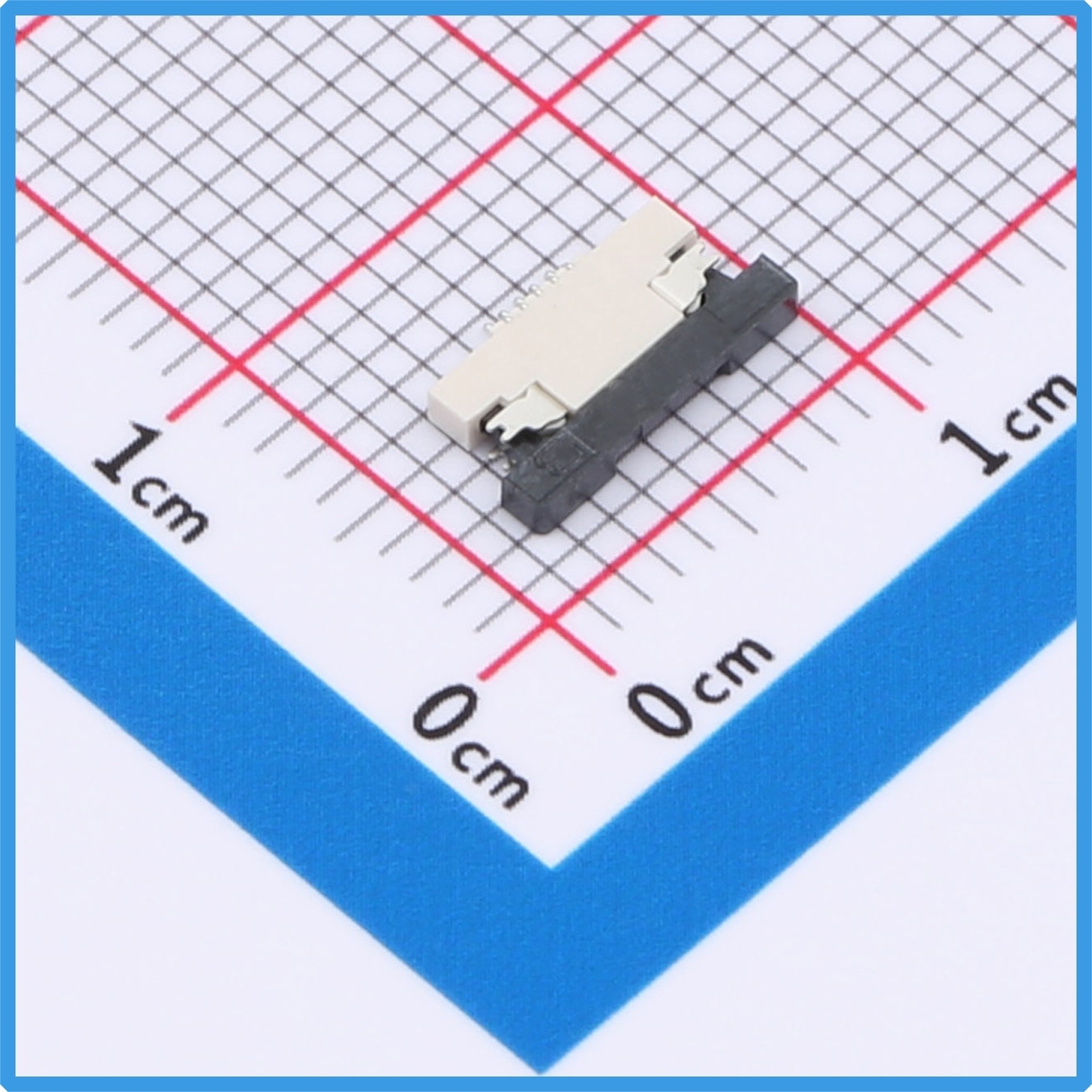
Kinghelm KH-CL0.5-H1.2-5PIN-SMT Product Image
Scene One: A Stable Link in Drone Systems
When a drone takes off and moves through the air, its internal electronics operate continuously. The flight controller receives information from cameras, sensors, and communication modules, while also sending commands to the motor control system.
During flight, rapid turns, acceleration, and wind conditions can introduce vibration inside the drone structure. These movements place mechanical stress on internal wiring and connectors.
Inside many drone camera modules, flexible cables connect the image sensor to the processing board. In this situation, the connector must maintain consistent electrical contact even while the aircraft changes direction or speed.
The KH-CL0.5-H1.2-5PIN-SMT uses a drawer-type locking structure that secures the flexible cable after insertion. This locking method helps keep the cable in position, reducing the chance of loosened contacts caused by vibration or movement.
In addition, the connector adopts a horizontal surface-mount installation style. Because the structure sits close to the PCB surface, the center of gravity is lower compared with some vertical structures. During flight maneuvers, this design helps reduce mechanical stress on the solder joints.
With a rated voltage of 50 V and stable electrical parameters, the connector supports signal transfer between the camera module and control circuitry. As a result, image data captured during flight can be transmitted smoothly to the onboard processing system.
Scene Two: The Invisible Link in Wearable Devices
Wearable electronics emphasize compact design and lightweight construction. Smart bracelets, health monitoring devices, and compact wearable sensors all require internal components to fit into limited spaces.
In these devices, flexible printed circuit boards are commonly used to connect the display module to the main control board. The size and weight of the connector therefore influence the overall mechanical design of the product.
The KH-CL0.5-H1.2-5PIN-SMT has a product weight of approximately 0.39 g, making it suitable for devices where weight management is important. Its 1.2 mm board height helps maintain a slim internal structure, allowing designers to keep wearable products thin and compact.
Wearable devices are also exposed to daily environmental factors such as body heat, outdoor temperatures, and occasional contact with moisture. The connector features terminals plated with full matte tin, helping maintain stable electrical contact during long-term use in typical consumer environments.
The operating temperature range of –25 °C to 85 °C allows the connector to function across a wide range of ambient conditions. Whether the device is used during outdoor activities or daily commuting, the internal signal pathway between the display and control board remains consistent.
For the user, this internal connection remains unnoticed. Yet inside the device, the connector continues to support communication between electronic modules.
Scene Three: Signal Transmission in Security Cameras
Security cameras rely on image acquisition and signal processing to capture and transmit video data. Inside a typical network camera, the system includes an image sensor, lens control components, power circuits, and processing electronics.
Flexible cables often connect the camera sensor module to the main board. These connections may carry multiple lines, including data signals, clock signals, and power supply lines.
The KH-CL0.5-H1.2-5PIN-SMT includes five contact positions, making it suitable for multi-line signal connections commonly found in compact camera modules. This configuration allows several signal pathways to be integrated into a single connector interface.
Stable electrical contact is important for maintaining video signal quality. The connector offers a contact resistance of ≤0.03 Ω, which helps maintain reliable electrical conduction between the flexible cable and the circuit board.
During camera operation, tasks such as switching between day and night modes or adjusting lens focus require coordinated signal transmission between modules. In these processes, the connector serves as a communication pathway inside the camera system.
Although hidden inside the device enclosure, this connection plays a role in ensuring that image data travels from the sensor to the processing circuitry and eventually to the monitoring system.
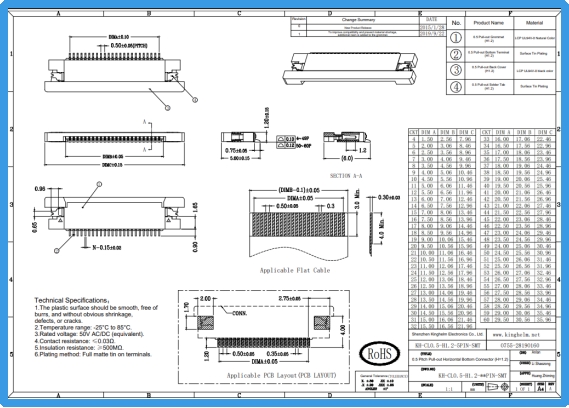
Kinghelm KH-CL0.5-H1.2-5PIN-SMT Specification
Conclusion: Small Components in a Complex System
Modern electronic devices continue to move toward smaller sizes and higher integration levels. Smartphones, drones, wearable devices, and security equipment all depend on compact electronic components working together within limited internal space.
FPC connectors are among the components that support these compact designs. The Kinghelm KH-CL0.5-H1.2-5PIN-SMT integrates a 0.5 mm pitch structure, a drawer-type locking mechanism, and a horizontal surface-mount configuration to support flexible cable connections in various electronic systems.
From airborne drone cameras to wrist-worn electronics and indoor security systems, connectors like this help create the internal signal pathways that electronic devices rely on.
Inside these systems, many small components cooperate to keep signals flowing between modules. Although rarely seen from the outside, connectors remain an essential link that helps electronic devices function as intended.
About Kinghelm
Shenzhen Kinghelm Electronics Co., Ltd.(www.kinghelm.net)has technical backbones from Tsinghua University and UESTC, and has introduced overseas returnee professionals. Kinghelm is able to develop highly reliable and high-performance antenna and connector products.KH series products of "Kinghelm" brand include Beidou/GPS antennas, RF adapter connectors, plug connector, electrical data connectors, terminals, and customized vehicle harnesses, industrial / medical connectors, and special antenna connectors."Kinghelm connects world", Kinghelm has grown with the development of China's Beidou industry. Starting from supplying Beidou/GPS dual mode antennas, IPEX terminals, and RF adapter cables for automotive manufacturers, Kinghelm has continuously developed products. Currently, it has a series of WiFi, Bluetooth, NB-loT, LoRa, Zigbee, UWB, and GSM antennas, RFID tags, RF adapter cables, standard microwave antennas, vehicle grade SMA, SMB, FAKRA holders, coaxial cables, and can customize non-standard antenna connectors based on customer drawings or samples.
Related Recommendations