
Service Hotline
News

News
『Product Highlight』Kinghelm FPC Connector KH-CL0.5-H1.2-18PS-SMT: Fine Pitch, Low Profile, and Drawer-Type Design
2026-04-23
432
1. Industry Background: The Miniaturization Trend of Connectors
With the rapid growth of mobile devices, wearable electronics, and IoT products, electronic equipment continues to move toward lighter and thinner designs. Inside these compact devices, flexible printed circuits (FPC) are widely used to connect display modules, cameras, sensors, and control boards. As a result, FPC connectors play an increasingly important role in modern electronic systems.
To support compact product structures, FPC connectors have gradually evolved toward smaller pitch sizes and lower profile designs. Among common specifications, 0.5 mm pitch connectors are widely used in consumer electronics, while even smaller 0.3 mm pitch solutions are beginning to appear in applications that require higher signal density.
In addition to pitch reduction, connector height has also become a key consideration. Many products now require connectors with a board height close to or below 1.0 mm in order to fit into increasingly slim device structures.
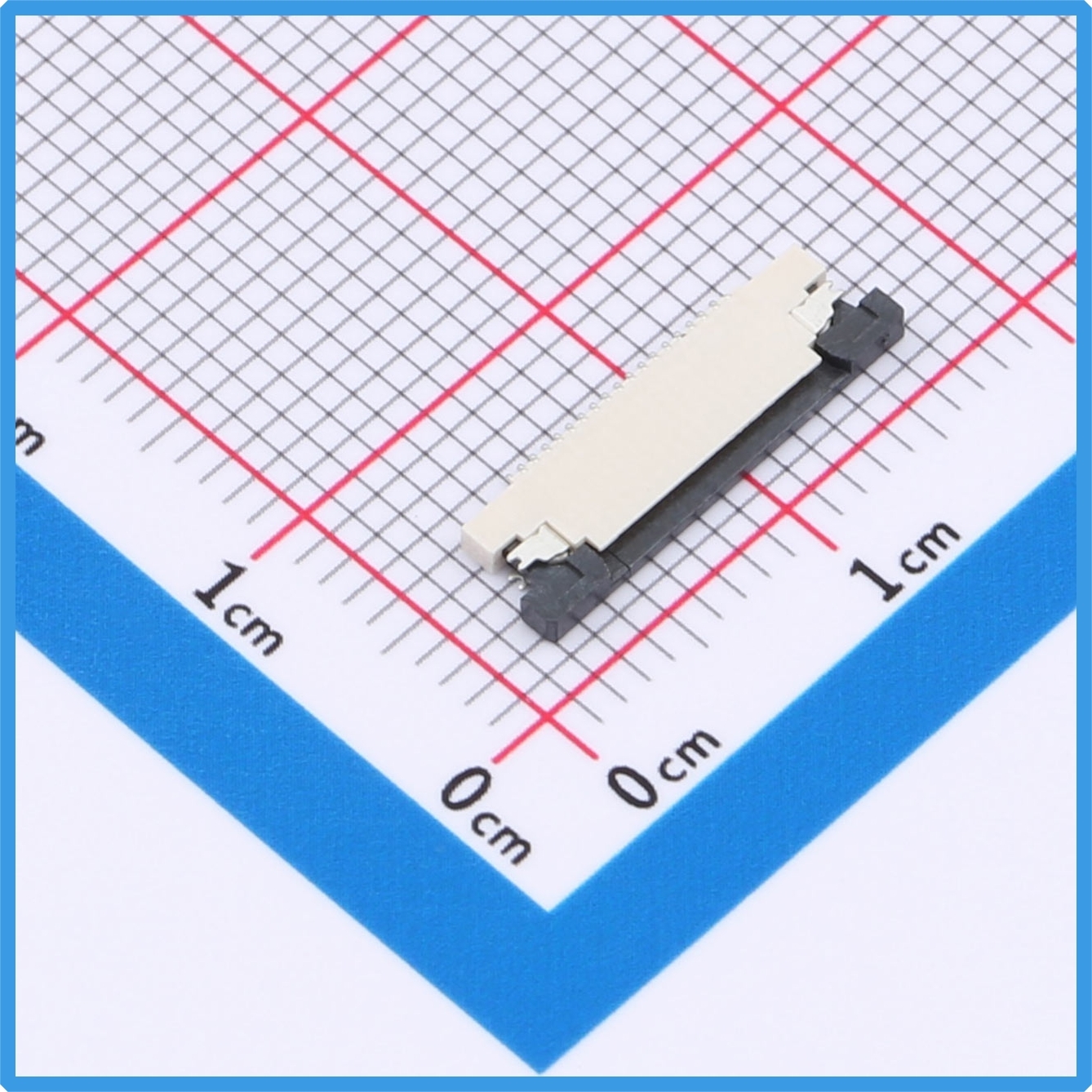
Within this development trend, the Kinghelm KH series provides a range of FPC connector solutions designed for compact electronic products. The KH-CL0.5-H1.2-18PS-SMT model adopts a 0.5 mm pitch with 18 contact positions and features a 1.2 mm low-profile structure. Its drawer-type locking design supports stable FPC cable connection while maintaining efficient use of board space.
The connector uses an SMT (surface-mount technology) package and is supplied in tape-and-reel packaging, making it suitable for automated assembly processes in modern electronic manufacturing environments.
Kinghelm KH-CL0.5-H1.2-18PS-SMT Product Image
2. Structural Comparison: Drawer-Type vs. Flip-Type Connectors
FPC connectors generally adopt either flip-type or drawer-type locking mechanisms. Each structure offers different characteristics in terms of installation method, space utilization, and mechanical stability.
Installation Method
Flip-type connectors require the locking cover to be lifted before inserting the FPC cable. After the cable is positioned, the cover is pressed down to secure the connection. This process requires a certain amount of vertical space to open the locking mechanism.
In contrast, drawer-type connectors operate through a horizontal sliding mechanism. The locking tab is pulled outward, the FPC cable is inserted, and the tab is pushed back to secure the cable. The entire operation occurs in a horizontal direction, which reduces the need for vertical space during installation.
This approach can simplify assembly work when the connector is installed in tightly arranged circuit boards.
Space Utilization
When a flip-type connector is opened, the cover requires additional clearance above the connector. In devices where components are densely arranged, this requirement may limit placement options.
Drawer-type connectors have minimal vertical movement during operation. Because the locking element slides parallel to the board, the connector can be used in environments where vertical space is restricted. This makes the structure suitable for stacked module designs and compact electronic layouts.
Mechanical Stability
In flip-type connectors, the cable is held in place by pressure applied from the cover onto the contact area. This pressure helps maintain electrical contact and mechanical retention.
Drawer-type connectors secure the FPC cable by clamping it within the sliding lock mechanism. When closed, the locking part maintains consistent pressure on the cable and keeps it positioned correctly on the contacts. In horizontal mounting configurations, this structure can provide stable cable retention during normal device operation.
For devices that require periodic assembly or maintenance, the sliding structure can also support repeated cable insertion and removal.
3. Product Design Analysis: KH-CL0.5-H1.2-18PS-SMT
The KH-CL0.5-H1.2-18PS-SMT FPC connector incorporates several structural and material design considerations intended to support reliable connection performance in compact electronic systems.
Fine-Pitch Contact Design
The connector features a 0.5 mm pitch layout with 18 contact positions. This configuration allows multiple signal lines to be transmitted through a relatively small footprint on the PCB.
The connector adopts a top-contact structure, where the internal contacts connect with the conductive pads on the upper side of the FPC cable. During insertion, the cable slides into position and aligns with the contact points inside the connector.
This type of contact arrangement distributes mechanical interaction along the cable surface and helps maintain stable electrical contact over repeated insertions.
Low-Profile Structure
The board-mounted height of the KH-CL0.5-H1.2-18PS-SMT is 1.2 mm. Such a compact profile allows the connector to fit into slim electronic products where vertical space is limited.
Low-profile connectors are commonly used in devices such as smart wearables, portable electronics, wireless audio products, and compact industrial equipment. By reducing connector height, designers can achieve more flexible internal layouts.
FPC Cable Compatibility
The connector is designed to support FPC cables with a thickness of 0.3 mm, which is a common specification used in many flexible circuit designs. Proper compatibility between cable thickness and connector structure helps ensure stable insertion and consistent electrical contact.
When the cable thickness matches the connector specification, it can also reduce the risk of cable movement after installation.
Temperature Range
The operating temperature range of the connector is −25 °C to +85 °C. This range supports typical operating environments found in many electronic products, including consumer electronics and certain industrial control modules.
Temperature tolerance is an important factor for connectors because variations in temperature may influence material stability and contact performance. A suitable operating range helps maintain stable operation under different environmental conditions.
Materials and Surface Treatment
The connector contacts use tin plating, which is widely applied in electronic connectors due to its compatibility with soldering processes. During the SMT reflow soldering stage, the plated terminals can form reliable solder joints with the PCB pads.
The insulating housing material is designed to withstand the temperature conditions of the reflow process while maintaining mechanical strength.
Additionally, the tape-and-reel packaging format allows the connector to be fed directly into automated pick-and-place machines, which supports efficient mass production.
4. Future Development of FPC Connectors
As electronic products continue to evolve toward higher integration and reduced dimensions, FPC connectors will likely continue to develop in several key directions.
One direction is the reduction of pitch size. While 0.5 mm pitch remains widely used, connectors with 0.3 mm pitch are gradually being introduced for applications requiring higher connection density.
Another trend is the support for higher data transmission frequencies. As display technologies and data interfaces develop, connectors may need to accommodate faster signal transmission, which influences structural design and material selection.
Design flexibility is also becoming increasingly important. Future connectors may support a wider range of mounting orientations and configurations to accommodate diverse product structures.
Within this evolving landscape, connector manufacturers continue to develop product lines that cover various pitch sizes, locking mechanisms, and profile heights. The Kinghelm KH series reflects this approach by providing multiple connector options suitable for different electronic design requirements.
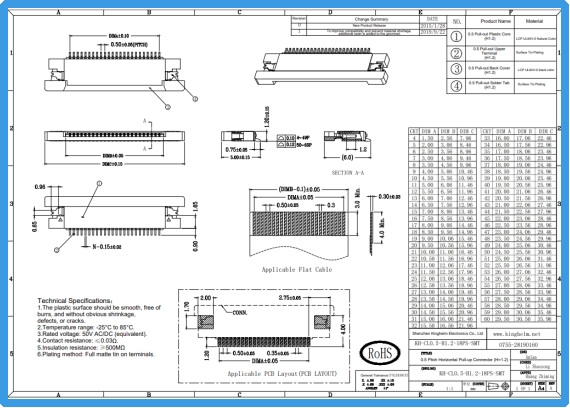
Kinghelm KH-CL0.5-H1.2-18PS-SMT Specification
Conclusion
In modern electronic design, connectors play a key role in enabling compact and efficient circuit layouts. The Kinghelm KH-CL0.5-H1.2-18PS-SMT FPC connector combines a 0.5 mm fine pitch, a 1.2 mm low-profile structure, and a drawer-type locking mechanism to support stable FPC cable connections in space-constrained devices.
For designers working with high-density circuit layouts, selecting connectors with appropriate structural features can help simplify internal design and support consistent assembly processes in electronic manufacturing.
About Kinghelm
Shenzhen Kinghelm Electronics Co., Ltd.(www.kinghelm.net)has technical backbones from Tsinghua University and UESTC, and has introduced overseas returnee professionals. Kinghelm is able to develop highly reliable and high-performance antenna and connector products.KH series products of "Kinghelm" brand include Beidou/GPS antennas, RF adapter connectors, plug connector, electrical data connectors, terminals, and customized vehicle harnesses, industrial / medical connectors, and special antenna connectors."Kinghelm connects world", Kinghelm has grown with the development of China's Beidou industry. Starting from supplying Beidou/GPS dual mode antennas, IPEX terminals, and RF adapter cables for automotive manufacturers, Kinghelm has continuously developed products. Currently, it has a series of WiFi, Bluetooth, NB-loT, LoRa, Zigbee, UWB, and GSM antennas, RFID tags, RF adapter cables, standard microwave antennas, vehicle grade SMA, SMB, FAKRA holders, coaxial cables, and can customize non-standard antenna connectors based on customer drawings or samples.
Related Recommendations