Service Hotline
News

News
What Should Be Considered When Recommending RF Products?What Prerequisites Must Be Clarified for Accurate Recommendations?
2026-05-20
495
RF products cover a wide range of categories, including communication modules, RF beauty devices, and RFID tags. The key to accurate recommendation lies in first clarifying the prerequisite conditions, then filtering options based on critical criteria. A simplified breakdown is as follows:
I. Core Considerations When Recommending RF Products
1. Key Performance Parameters
Frequency range and stability must match the application scenario (e.g., wide bandwidth for 5G testing, while Bluetooth focuses on 2.4 GHz).
Power level and resolution should align with actual usage requirements; high-precision applications demand finer adjustment accuracy.
Application-specific accuracy must be strictly controlled by category (e.g., ±0.1 °C temperature measurement accuracy for medical RFID, precise temperature control for RF beauty devices).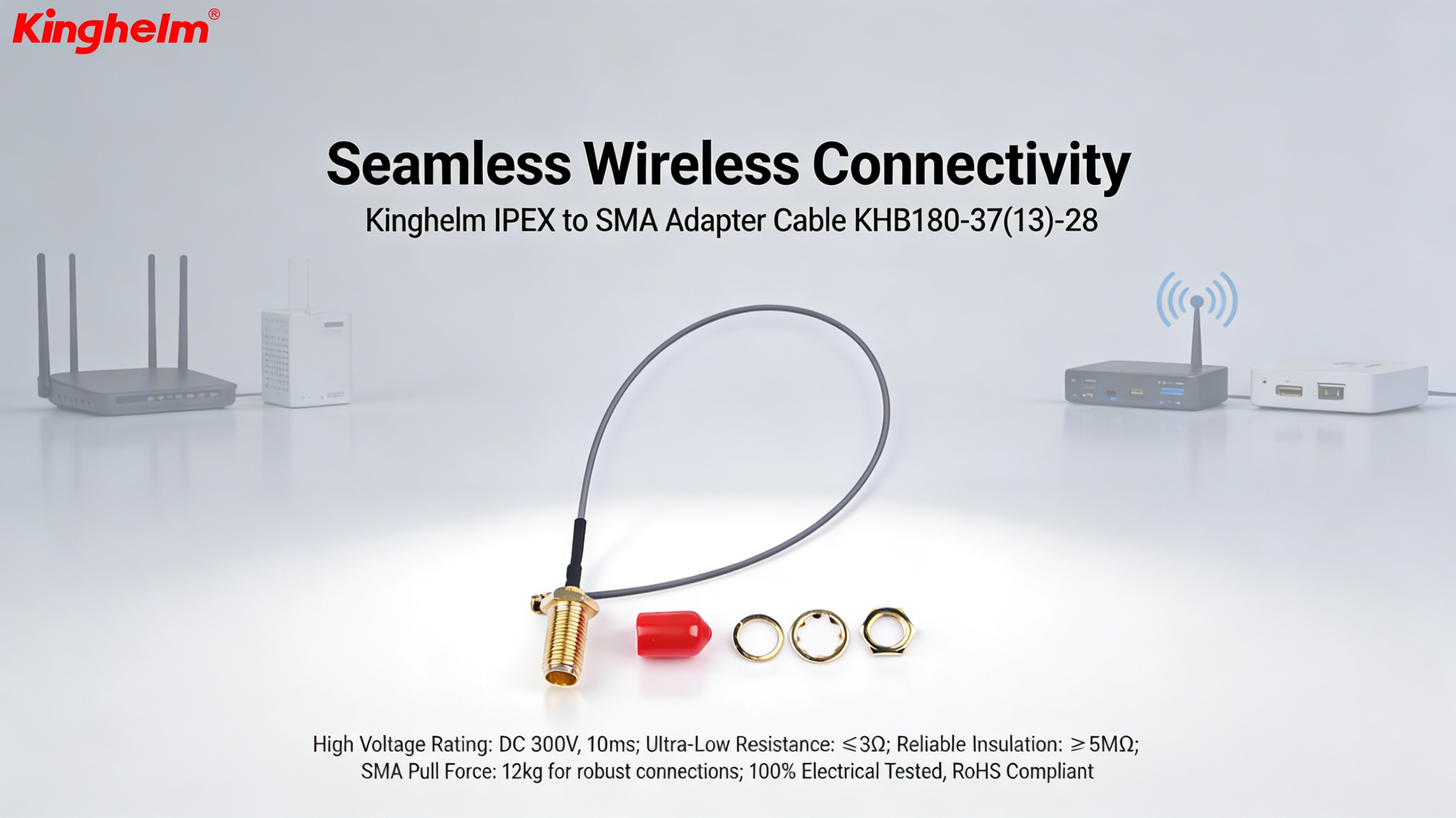
For outdoor or harsh environments, prioritize protection ratings (e.g., IP67/IP68 for industrial RFID) and tolerance to temperature and humidity extremes.
For mobile applications, lightweight designs and flexible power supply options are preferred.
For fixed installations, performance and stability can be prioritized over portability.
Give preference to products that are easy to operate or support automation and system integration (e.g., USB-based programmable control).
Choose suppliers with strong brand reputation and reliable after-sales support.
Match performance to budget: prioritize performance and reliability in critical applications, and avoid over-specification in general-purpose scenarios.
II. Prerequisite Conditions for Precise Product Recommendation
1. Clearly Define the Application Scenario
Identify the specific field (e.g., communication testing, beauty and personal care).
Clarify the operating environment, such as indoor fixed use, outdoor mobile use, or environments with strong electromagnetic interference.
2. Confirm Technical Requirements
Specify operating frequency band, transmission distance, data rate, and power consumption limits.
Identify required communication protocols (e.g., Wi-Fi, Zigbee).
Confirm compliance requirements, such as EMC or other regulatory standards.
3. Clarify Constraints and Special Requirements
Provide a clear budget range.
Indicate whether special functions are required, such as eye-area treatment for beauty devices or temperature-sensing capability for RFID tags.
Related Recommendations