Service Hotline
News

News
What is the significance of signal integrity testing for connectors?
2026-05-27
452
Signal integrity testing plays a critical role in evaluating the performance and reliability of connectors used in high-speed electronic systems. As transmission speeds continue to increase in applications such as 5G communication, automotive electronics, industrial automation, servers, medical equipment, and consumer electronics, connectors are required to handle large volumes of data with minimal signal loss or interference. Signal integrity testing ensures that connectors can maintain stable electrical performance under these demanding conditions.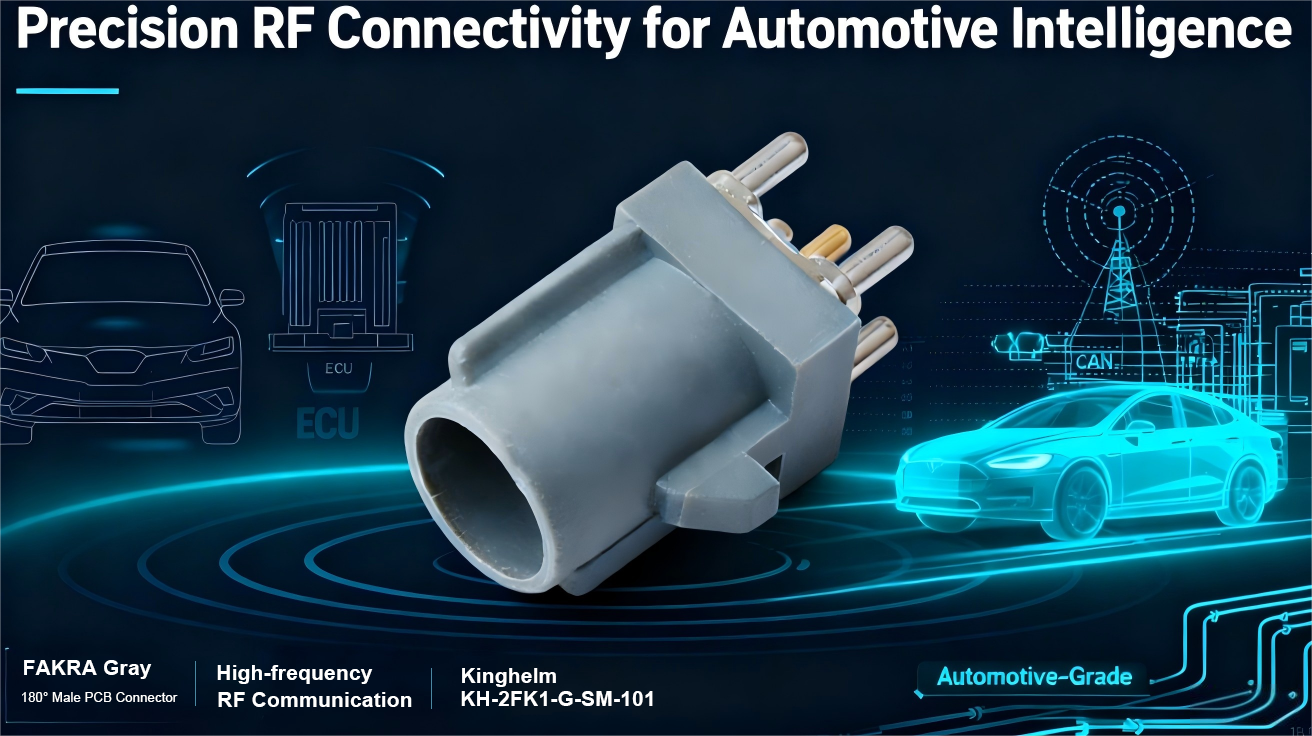
The primary significance of signal integrity testing is to verify whether a connector can accurately transmit signals without introducing excessive distortion, attenuation, reflection, delay, or electromagnetic interference. During high-speed data transmission, even small impedance mismatches or structural inconsistencies inside a connector may cause signal reflections, crosstalk, insertion loss, or return loss. These issues can reduce transmission quality, create data errors, or even lead to complete system failure.
Signal integrity testing helps engineers identify these problems during the product design and validation stages. Common test parameters include insertion loss, return loss, crosstalk, impedance matching, eye diagram analysis, and propagation delay. By analyzing these indicators, manufacturers can optimize connector structures, terminal layouts, shielding designs, and material selection to improve overall transmission efficiency and reliability.
In high-frequency environments, connectors are often exposed to electromagnetic interference (EMI). Signal integrity testing also evaluates the shielding effectiveness and anti-interference capability of connectors, ensuring stable communication even in electrically noisy environments. This is especially important for automotive radar systems, industrial control equipment, and high-speed networking devices where signal accuracy directly affects operational safety and performance.
Another important significance of signal integrity testing is compatibility with international standards and industry requirements. Many industries require connectors to comply with standards such as USB, HDMI, PCIe, Ethernet, or automotive specifications. Comprehensive signal integrity testing helps manufacturers verify compliance and improve product competitiveness in the global market.
In addition, signal integrity testing contributes to long-term product reliability. Connectors may experience temperature changes, vibration, humidity, and repeated mating cycles during operation. Testing can reveal how these environmental factors influence signal performance over time, allowing engineers to enhance durability and maintain stable signal transmission throughout the connector’s service life.
Overall, signal integrity testing is essential for ensuring connector performance, improving system stability, reducing transmission errors, and supporting the development of modern high-speed electronic devices. It provides a scientific basis for connector optimization and guarantees reliable signal transmission in increasingly complex electronic applications.
Related Recommendations