






















Service Hotline
Perspectives

Perspectives

Huaqiangbei in the Trade War: Which Companies Can Hold Their Own?
2026-10-26
1051
The trade war between China and the United States is intensifying by the day, and neither side is giving ground. Huaqiangbei, the famous electronic components market, is on the front line of the trade war, and the conflict has severely affected the businesses of the women who deal in second-hand goods. "You want to fleece China, do you, you golden-haired rascal — then we sisters will pull that golden hair out and leave you as bald as Brother Bo and Old Song of Kinghelm." But however angry the women are, what is to be done about business? On big matters, it is still the bosses who have to make the decisions.
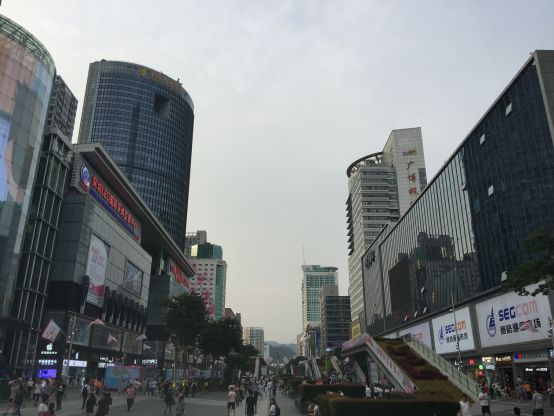
Huaqiangbei, the electronic components market closest to the trade war
Where should Huaqiangbei go from here, and how should its companies respond? What adjustments and transformations are needed? Sharpening the axe does not hold up the woodcutting, so I, Old Song of Kinghelm — the street-stall economist best known for talking nonsense in Huaqiangbei — will first offer an analysis, partly to bring a little traffic to our 1688 shop, and then we can see what is to be done.
The Functions of the Huaqiangbei Electronics Market
1. Product display and information exchange
Formerly, when both information and transport were poor, many companies that made their goods behind the shop, and others from out of town, displayed and sold their products here, and that is the basic function of the counters and stalls of Huaqiangbei. The big companies keep their image stores or flagship stores here: in the past Sharp, Philips, Aiwa, Sony and Siemens, and in recent years Xiaomi, Apple, OPPO and other household names have all come to square off in the same ring.
Now that companies have their own websites, their shops on Alibaba and JD.com, and industry-specific e-commerce platforms, a customer can learn almost everything without leaving the house — only the experience and the feel of the place are missing — and this function of Huaqiangbei is gradually fading.
2. Business matchmaking
Once a customer has found a suitable product in Huaqiangbei, the next step is to talk terms with the women behind the counters: price, lead time, credit period and delivery. With QQ and WeChat, and with product listings and specifications that can be viewed remotely in real time, the engineers who do component selection, the maintenance people, the enthusiasts and the buyers no longer have to sweat their way through a trip to Huaqiangbei. The e-commerce platforms keep getting better, and mobile communications have pushed online transactions to a peak. All of this saves time and raises efficiency, and it has also cut down the footfall in Huaqiangbei.
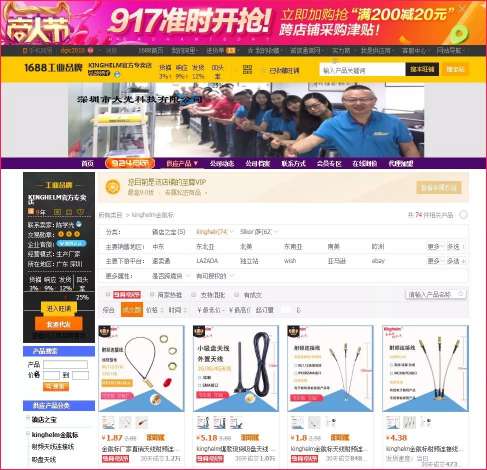
Kinghelm products on 1688
3. Stock and delivery
Electronic components are high in value and take up little space, so every counter in Huaqiangbei can hold stock worth a great deal of money, and the larger traders keep warehouses near Huaqiangbei from which a young delivery worker can bring goods over at a moment's notice. Huaqiangbei is, so to speak, one enormous warehouse of electronic parts: when supplies are cut off it serves as an effective buffer and as a reservoir, so that customers can still be served quickly. Huaqiangbei has the densest network of bank branches anywhere in China, and at its peak the daily cash turnover came close to RMB 1 billion. The lads hauling flat-bed trolleys piled with goods a head taller than themselves, and the mountains of cargo at the logistics depots in the evening, are the signature sights of Huaqiangbei.
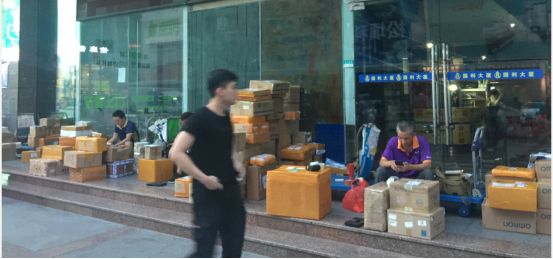
The "signature" courier of Huaqiangbei
4. The electronic hardware ecosystem
Behind Huaqiangbei lies one of the world's most comprehensive and mature electronic hardware supply chains. In Huaqiangbei, a few hundred yuan and half a day are enough to assemble an iPhone; the newest flagship handset can be had two days before it goes on public sale; within three days a copy of the latest digital product from anywhere in the world can be found; and even the X86 and other chips needed to repair older equipment are available here. This is Huaqiangbei's core competitiveness, and it is one of the reasons why enthusiasts from all over China, and even from abroad, come hunting for chips of every model, and why the crowds keep flowing.
Huaqiangbei is a key node in that ecosystem: touch one part and the whole body moves. Dongguan, Shenzhen's closest companion, is the filling station for Huaqiangbei's bosses, and its standardised industrial management and assembly-line operations serve the traders of Huaqiangbei.
5. After-sales service and maintenance
This is an indispensable part of the service for electronic and electrical products, and brands large and small keep service and repair points here, which is convenient and brings in custom. A classmate of mine was once the head of the pager repair department at Runxun Communications and later moved into ZTE handset repair, but his premises have always been in the SEG Science and Technology Park in Huaqiangbei. Most of the service windows and repair points of the foreign and the big brands are clustered here as well.
6. A commercial district in its own right
Quite apart from all of the above, Huaqiangbei has other commercial amenities: Vanguard Department Store, Maoye Mall, the Jiahua Foreign Trade Market, Sundan, Women's World, Suning, the snack street, Qunxing Disco and more. They bring their own stream of customers, and they make it easy for a visitor to bring family and friends along and, once the business is done and the shops have been walked, to eat, drink and play on the spot and leave every last coin in their pockets behind. This too is part of Huaqiangbei's charm. Huaqiangbei was at one time a place of pilgrimage for the electronics industry and a tourist highlight of Shenzhen.
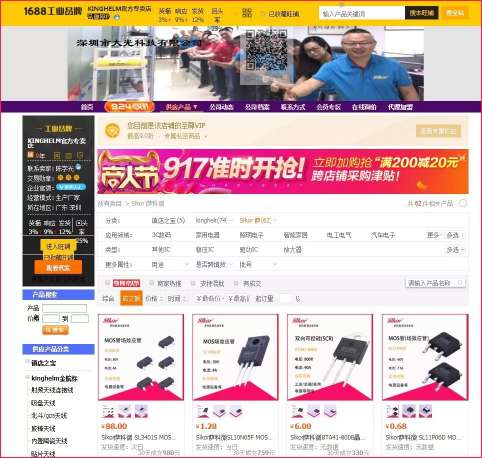
Slkor products on 1688
The model of the Huaqiangbei electronics market is a product of the great international industrial migration of those years, of the vigorous and diversified demand for electronic components thrown up by China's extensive pattern of economic growth, and of the property-rights arrangements that the people of Shenzhen devised. The small counters of the Huaqiang, SEG and New Asia electronics markets all grew out of that, and they helped Huaqiangbei develop into an effective market that emerged organically, as well as a commercial district famous in Shenzhen and well beyond. But although the infrastructure of Huaqiangbei is ever more complete and the transport ever more convenient, the changes in the commercial factors described above have brought one crisis after another, and without innovation and change the district cannot go on.
The electronics distribution model of Huaqiangbei has a low barrier to entry and no core competitiveness, so newcomers keep arriving — people with a technical background from an original manufacturer, with channel experience from an agent, or with the products of a solution house — and this puts the traditional distributors under great pressure. With B2B websites and similar models, market information has become far more symmetrical and the exchange of information between original manufacturers, agents and customers far more frequent; distributors, used to an ecosystem in which they were the ones holding the information, find it very hard to react in time, and that makes life harder still.
With the trade war between China and the United States in full swing, the decline of Huaqiangbei's old model has been accelerated, but the district's transformation and development have been pushed forward as well. Some years ago I set out in detail the business models, the profit drivers and the development paths of Huaqiangbei in a series of articles in the "BeiDou Expert" public account, which you are welcome to look up.
My circle of contacts has changed a great deal over the past few years, and many of the women who used to run shops in Huaqiangbei have moved into the second-hand trade. Some now sell insurance, red wine or tea; some have gone into WeChat micro-business, selling face masks, lipstick and sunscreen; and two have taken up live streaming — one of them I blocked, because she powdered her face so heavily, and the other had not even spread the powder evenly. They sigh that beauty fades, husbands run off, transformation is hard to pull off, and you do not even know who your competitors are. It is a genuinely dispiriting position to be in.
There are also bosses and shop owners in Huaqiangbei who see where the opportunities lie, keep pace with the times, and iterate and transform quickly, and whose products and businesses go from strength to strength. They are the mainstream of Huaqiangbei and they represent the future of China's private enterprises. Here are the development models I have sorted out, for your reference.
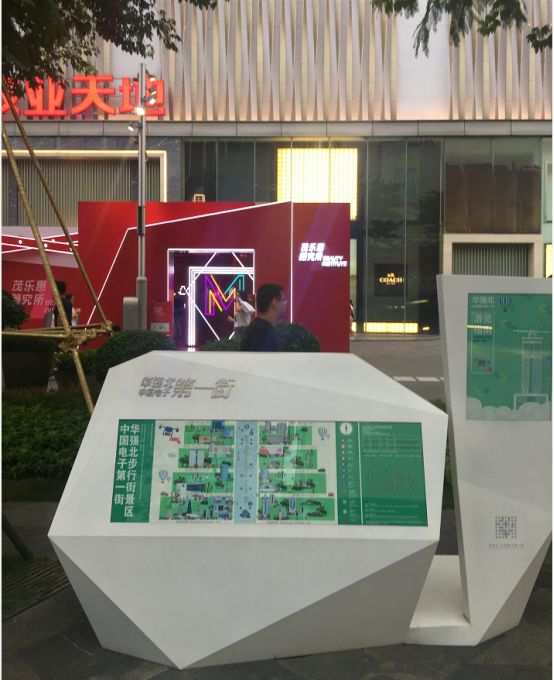
The First Street of Huaqiangbei: the pedestrian district and its street map
1. Moving Upstream from Distributor to Original Manufacturer
1. Huaguan (HGSEMI) Semiconductors — Lin Zhouming
Boss Lin, known in Huaqiangbei as Brother Ming, is a forthright man and a famous hard drinker who used to get me drunk on Moutai. He was once the top salesman for National Semiconductor, where he was already called the star of the floor. Once he had made his first real money he sank most of his fortune into founding Guangdong Huaguan Semiconductor. Huaguan began with the packaging and testing of components, and with the hard-working spirit of Chaozhou people and an unyielding, disciplined will it is now flourishing.
2. Meilong (SUP) Electronics — Chen Haisheng
Boss Chen started out in trading at SEG Plaza, and since he founded the business in 1998 he has been scrupulous and meticulous; the influence and the business of the SUP Meilong brand have grown steadily. Meilong has mature lead-free technology and a sound quality management system, and from R&D and design through to production and transport every stage strictly follows high quality standards, so as to guarantee the consistency and durability of the products and the promptness and reliability of the service. The company's goal is to become a leading Chinese supplier of resistors and capacitors.
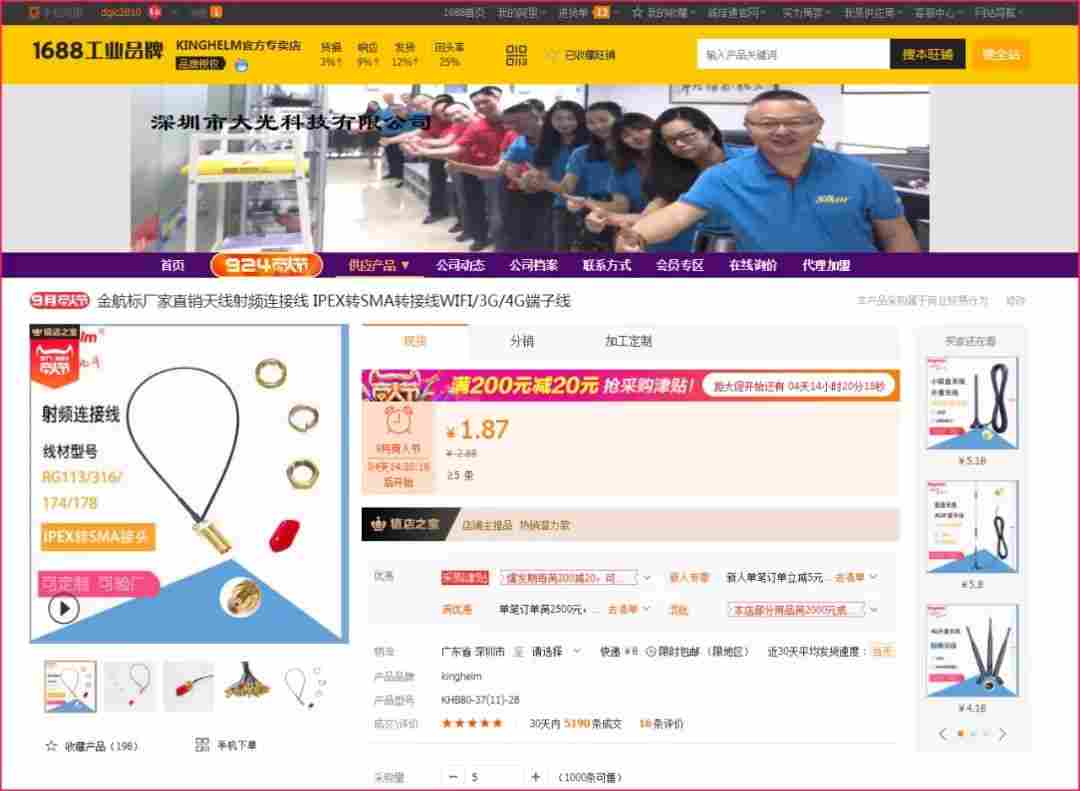
Kinghelm products on 1688
To deepen his moat, Boss Chen has built a large logistics and warehousing base of his own, and he also runs Youganwang (youganw.com), an e-commerce platform focused on resistors, capacitors and inductors. It sets out to serve small and medium-sized buyers well, offering genuine factory goods, technical advice and extremely fast shipping, and to build a healthy ecosystem. A word of praise in particular: Boss Chen's products are as sound as his character, and he is excellent in building his family and educating his children — he is a model for the rest of us to learn from.
3. KEXIN Electronics — the Ke brothers
KEXIN Electronics was founded in 1987 by the brothers Ke Yandong and Ke Yanzhou. Starting out from Huaqiangbei, it has grown into a national high-tech enterprise that combines research, manufacturing and sales, with a provincial-level R&D engineering centre and five wholly owned subsidiaries. The KEXIN industrial park covers more than 50,000 square metres and employs over 300 people; it was among the first in the industry to bring in advanced semiconductor packaging and testing equipment from Japan, it runs 29 production lines, and it mainly makes power devices such as MOSFETs, contributing to the breaking of foreign monopolies in the semiconductor industry.
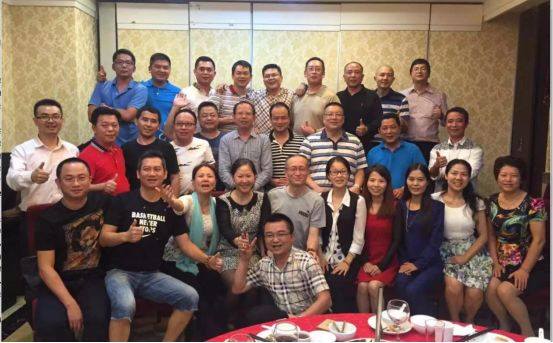
A group photograph at a gathering in the Huaqiangbei components industry
4. Hangshun Electronics — Liu Jiping
Boss Liu came to Huaqiangbei from Shanghai in 2013, concluded from his analysis that its trading model might not last, and decided to develop 32-bit MCUs with friends and build a brand of his own, Hangshun. It now mass-produces 32-bit MCUs built on ARM cores in M0, M3 and M4 versions, whose software and hardware are fully compatible with, and can fully replace, foreign brands. An aviation-industry investment fund has completed its Series A strategic investment, with a Guangzhou-based fund following on. Hangshun's slogan is: rock-solid quality, and Chinese chips for Chinese users.
The first three of these, the representatives of the Chaozhou business community, follow an asset-heavy model: they start with packaging and testing and then gradually move into IP design and application solutions. So do Jin Dapeng, Heketai, Jinyu, Foster and other companies, all of which are doing very well, and Yangxing Technology, which makes crystal oscillators, has taken the same road. Boss Liu of Hangshun follows the fashionable asset-light fabless model — its own development with outsourced production — but it is still far from easy to build a brand, an ecosystem and channels. I have watched Boss Liu advertising and chasing customers day and night as if he were running on adrenaline, and it is hard work, so I am blowing his trumpet for him; entrepreneurs have to support one another.
2. Micro-Innovation and Cross-Boundary Development
In the past the business of Huaqiangbei was a single thing: buying cheap and selling dear. Today some of its companies are exploring and developing in several directions at once. Some have gone onto the cultural front and run their own media accounts, some have built further outward on the foundation of the internet, and some provide solutions and value-added services.
1. The media account "Chip Master" and Jason Fan
Jason Fan (Fan Yi) is the owner of Anda Technology in Singapore, the big brother of Huaqiangbei who is always happiest to pick up the bill, and I am the young brother he looks after most kindly. Anda Technology sources and trades in components that are scarce anywhere in the world, and its reach is very wide. "Chip Master" was meant at first simply to be a place where the brothers of Huaqiangbei could amuse themselves, and the jokes I wrote when I was younger were all published there. But whatever Jason turns his hand to he likes to do to the highest pitch, so the accounts he runs, such as "Today's Chip News", are very influential, and the advertising orders have come in faster than he can take them.
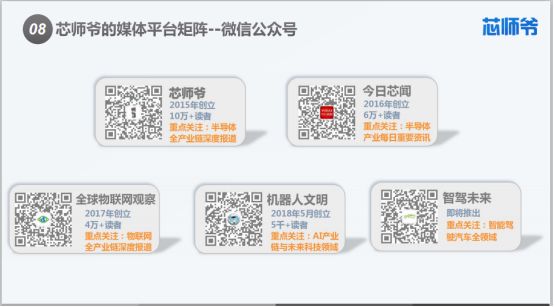
The Chip Master media matrix and its WeChat public accounts
2. The media account "ittbank" and Wu Shaowen
"ittbank" is known as the database of Huaqiangbei. My friend Old Wu is a keen photographer and a bit of a ladies' man, and he is one of the first generation of electronics enthusiasts in Huaqiangbei. Information in Huaqiangbei is scattered, varied and chaotic, and ittbank has gathered and organised almost all of the industry data there is; its rankings cover a great many niche sectors and serve as a yardstick. The information Old Wu provides on better ways to optimise designs has offered factories new solutions and new lines of thinking for dealing with slow-moving stock and surplus inventory.
3. "Huaqiang Cloud Warehouse" and the Huaqiang Net team
Huaqiang Net has been the leading B2B e-commerce platform for electronic components for many years. Now Boss Liu and the Huaqiang Net team, drawing on the ecosystem that the Huaqiang Group and Huaqiang Net have established in the electronics industry, have started a new project called Huaqiang Cloud Warehouse. From what I understand so far, it is likely to operate on a membership basis, combining held stock with fast delivery, and then to bring in the enormous traffic of Huaqiang Net and the Huaqiang flagship store; it looks set to become a classic case of micro-innovation. The general-purpose electronic components of our own Slkor will be among the first to go on the shelves, so watch this space.
4. Weike Information Technology and Wu Guangsong
Shenzhen Weike Information Technology Co., Ltd. focuses on satellite positioning and the Internet of Things and is a national high-tech enterprise. Its leader, Wu Guangsong, is a customer popular with Huaqiangbei's female traders and very much the man of the moment. Boss Wu traded in Huaqiangbei in the early days, and over ten years of development he has opened a factory, carried out hardware and software R&D and built up his intellectual property, growing the business into a one-stop provider of IoT system solutions, and passing through several major turning points and transformations, each one a matter of painstaking search, thought and innovation. Although it is already doing well in the Beidou and GPS industry, the Weike team remains cautious and alert, and keeps asking itself: what kind of company will we be ten years from now?
The products of Weike and those of Kinghelm complement each other and serve similar customers, and the two companies have always supported each other with great understanding.
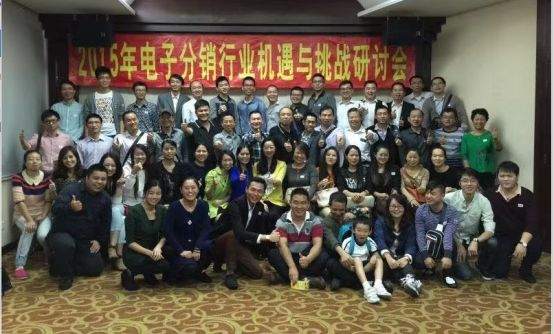
A group photograph from the 2015 seminar on opportunities and challenges in the electronics distribution industry
3. The Agent Model
Compared with the traditional trading model of Huaqiangbei, the model that lets a business grow big and strong quickly is the agency model, but it matters greatly to find a big tree to lean on. According to the China Semiconductor Industry Association, in the first half of 2019 China's integrated circuit industry recorded sales of RMB 304.82 billion, up 11.8 per cent year on year; IC exports were worth USD 45.75 billion, up 17.1 per cent; and imports were worth USD 137.62 billion, down 6.9 per cent. From these figures it is clear that the localisation of integrated circuits is benefiting from strong policy and market tailwinds. Little Ma of Jinshuowei rode the broader trend of domestic production, and Boss Jiang of Ruicai Electronic Technology seized the opportunity offered by mobile communications and the Internet of Things; both have grown at remarkable speed.
1. Jinshuowei Technology — "Little Ma" of Huaqiangbei
Since Shenzhen Jinshuowei Technology Co., Ltd. was founded its turnover has multiplied year after year. Little Ma, Ma Yingfeng, is a leading figure among the second generation of Chaozhou businessmen in Huaqiangbei, and Jinshuowei is a highly competitive company with great growth ahead of it: it holds sales agency rights for such well-known enterprises as Samsung, Uniohm, Walter and O-Film, and it strives to supply its customers from a single source. Jinshuowei has built an efficient bridge between original manufacturers and customers and grows alongside those customers.
2. Ruicai Electronic Technology and Jiang Xiangyang
After more than ten years of development, Ruicai Electronics has become a provider of mobile terminal products, cloud connectivity and mobile communications system solutions. It seized the opportunity: as agent for the IoT modules of a major domestic semiconductor brand and of Quectel, and for the Beidou and GPS antennas of Kinghelm, its business has grown like a river in flood, and this has become the key fulcrum for Boss Jiang's push into communications and the Internet of Things. Ruicai Electronics also helped us introduce Kinghelm's 4G antennas to CRRC, where small-batch trial production has now begun.
As the old saying goes, whether a man is loyal is shown by his deeds. Old Song holds that whether a company is any good can be judged by whether its boss is willing to stand the bill. Little Ma's success has something to do with his liking for inviting me and Jason Fan out for tea, and Boss Jiang's flourishing business is the result of his having treated Brother Bo to Wuliangye more than once.
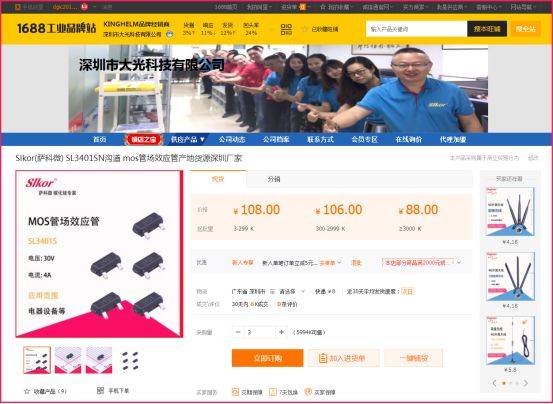
Slkor products on 1688
4. E-Commerce, the Challenger to Traditional Business
For many companies the choice is stark: those who take up e-commerce live, and those who do not perish. To do it or not to do it — that is the big question. E-commerce platforms are a powerful tailwind, and they have drawn in capital of every kind. The B2B platforms of a few years ago did succeed in matching information and resources, but they could not solve the problems of channel, quality, delivery and supporting services, and so they have gradually declined; I will not go into them here. Today's platforms have moved on from B2B to a whole range of platforms and models such as B2M, F2B and M2B, from asset-light to asset-heavy, and from comprehensive layout to the deep cultivation of niche markets. Let us first look at a few of the comprehensive e-commerce platforms around us.
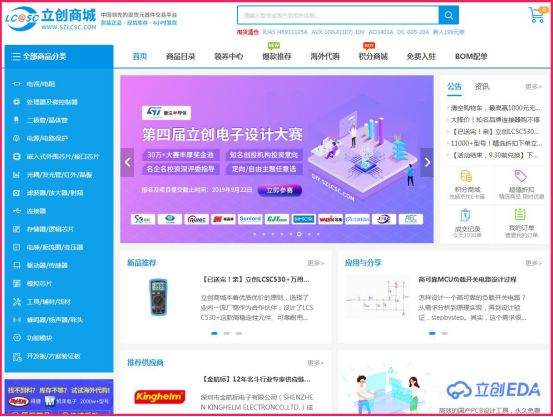
1. LCSC (www.szlcsc.com) and Yang Linjie
LCSC was founded in 2011 to provide customers with one-stop online purchasing of electronic components, with lightning delivery within four hours. LCSC has a modern component warehouse of more than 10,000 square metres and holds more than 200,000 lines of stock. The group's self-operated services across the whole electronics industry chain cover online EDA (LCEDA), industry-leading PCB prototyping and small-to-medium batch production, a component mall, stencil manufacture, SMT assembly, and electronic design education and solutions. All of LCSC's components are purchased from original manufacturers or through agency channels, which guarantees genuine goods and solves the pain point of sample and small-batch purchasing for engineers and buyers alike. Its logistics base, covering several hundred mu of land, solves the problem of fast delivery; it is an asset-heavy arrangement modelled on JD.com, and it is a core competitive strength.
Under Boss Yang's leadership and with Zhang Yinying at his side, LCSC has advanced steadily and surely, and with the arrival of the well-known writer Wu Bo, the specialist Zhang Ji and others it has, as the accountant Jia liked to put it, "chemically reacted its ecosystem", becoming a strong team with a down-to-earth style and a talent for hard fights. After receiving a cash injection of RMB 250 million from Sequoia Capital and others in the first half of the year, it has developed rapidly: delivery speed, SKU count, turnover and other indicators have all risen fast, and its momentum looks unstoppable.
Between them, Kinghelm and Slkor now have more than 130 product SKUs on LCSC, and sales there keep climbing. We have simply got aboard their big ship and grown with the help of their momentum, and we are grateful for it.
2. Ichunt (www.ichunt.com) and Chang Jiang
Ichunt is an industry-leading one-stop global purchasing mall for electronic components, developed and operated by Shenzhen Liexin Technology Co., Ltd. Its leading figures are Chang Jiang and Liang Yao. Ichunt went live in July 2015 and has received several rounds of investment from such well-known venture capital firms as Matrix Partners China, Wuyue Huanuo, the strategic investment arm of JD.com and Haitong Securities, and it is a well-known domestic components e-commerce company. By integrating resources upstream and downstream, it offers a fully closed one-stop service covering the whole transaction chain: an open platform, joint operation, self-operated sales, quick-turn PCB, SMT assembly and global delivery.
What most people do not know is that in those days Old Song and my old classmate Chang used to tease the women of the second-hand trade in Huaqiangbei, playing off each other with perfect timing and pulling off any number of classic pieces of mischief, and we had a reputation as a golden partnership. These days his partner is Brother Liang, one of them looking after business outside the company and the other within, and they are doing very well indeed.
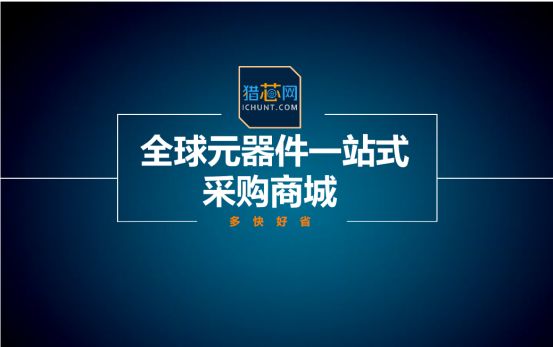
Ichunt: a one-stop global purchasing mall for electronic components, fast, complete and economical
3. ICKEY (www.ickey.cn) and Zeng Ye
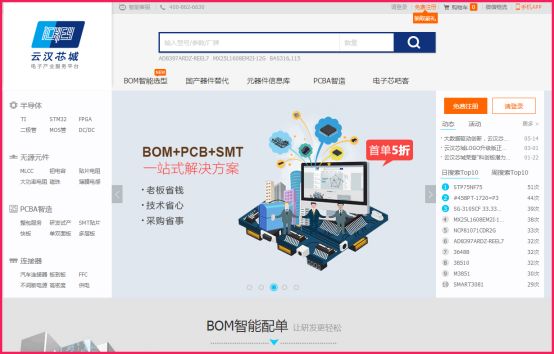
Yunhan, "the Milky Way", is a very poetic and spacious name, and ICKEY is likewise a leading company in the industry: in 2018 it was recognised by Shanghai's Songjiang District as an "Enterprise Technology Centre" and as a unicorn of China's industrial internet. Thanks to years of accumulation on its platform, its data volume and coverage are far ahead of its peers: its database holds more than 86 million SKUs, and it can broadly meet the manufacturing industry's varied needs during R&D and trial production for parameter selection, intelligent search and one-stop purchasing. It has more than 300,000 registered corporate users and more than 200 authorised service partners, and in 2018 its sales exceeded RMB 1 billion.
Zeng Ye is my brother in Shanghai, and his deputy Li Jianfeng is my disciple, learning from me the art of telling jokes; his modest ambition is to spend the rest of his life using jokes to entertain the old ladies of Shanghai's shikumen lanes. Zeng Ye tells me that ICKEY's new business uses a self-developed artificial intelligence engine and technologies such as IDPE and ISPE to provide R&D staff in electronics manufacturing with intelligent BOM selection, domestic component substitution and other technical services, working to raise the efficiency of R&D and innovation, to drive the electronics industry chain and to speed the development of domestic components.
4. HXChip (www.hxbuy.com) and Lai Zelian
Founded in August 2016, HXChip currently concentrates on selling general-purpose power components for consumer electronics. Boss Lai is a man of great enterprise; drawing on many years of connections and product advantages rooted in Huaqiangbei, he entered from the sales end of the semiconductor industry and has laid out the entire chain in depth. From channel, R&D, production and quality control to warehousing and smart logistics, and from offline to online, he keeps everything firmly in hand and serves his customers to the full.
HXChip is working to build an F2B model that brings together the design, R&D, production and sale of components and modules with supply chain services, to become a benchmark enterprise for the internet model in the semiconductor industry and to provide customers in every dimension with the one-stop service for which Huaqiangbei is known.
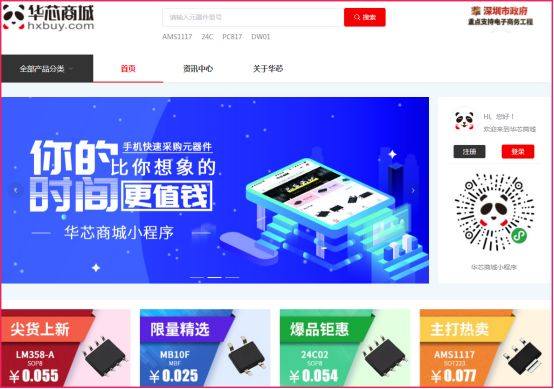
The HXChip home page
For reasons of space I will not introduce one by one the e-commerce platforms run by the likes of Yousoft Mall under Yitoa Intelligent Control, or Caixin Net under Song Junwei: each has its own features and its own strengths. If you walk the streets of Huaqiangbei you will also find many small shops that are doing e-commerce too.
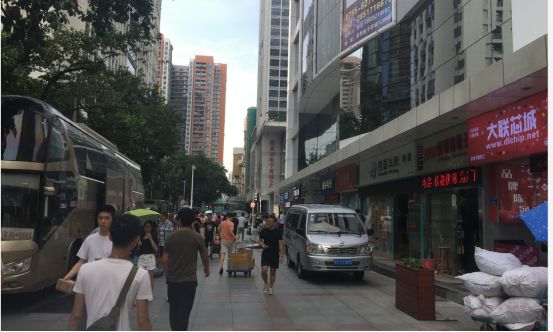
A street in Huaqiangbei
As I was writing this article, the e-commerce division of Jiuzhou Electronics telephoned our company, Kinghelm, to invite the Beidou antennas and other products of the Kinghelm brand onto their e-commerce platform Dianzi Zhijia (www.jzic.com). Brother Long of Longwei ERP software in Huaqiangbei has also built integrated platform systems for his customers: IC Momo (www.icmomo.com) and IC Soso (www.icsoso.com), for instance, are both sales-and-management platforms that Longwei ERP built for them.
With information flowing quickly and transport so convenient, more and more original manufacturers are selling directly, and companies such as TI have cut many of their agents. Original manufacturers and the major agents are all moving onto big platforms such as Alibaba and JD.com, or opening their own online shops to sell directly to customers.
Who says that the state-backed players grow slowly? China Electronics Port, under the leadership of its aptly named chairman Bi Fenglei, has quickly opened its own independent e-commerce platform, iCEasy (www.iceasy.com), laying out a Tmall flagship store within the Alibaba ecosystem and a presence in the WeChat ecosystem — Shenzhen speed in the truest sense. Kinghelm and Slkor products have moved in, and iCEasy's very first order was a sale of Slkor's SL3401S MOSFET. In the course of dealing with China Electronics Port I have found that its staff, charming as they are, are of high calibre, quick to respond and good at service — perhaps it has something to do with their office having moved to Dongguan.
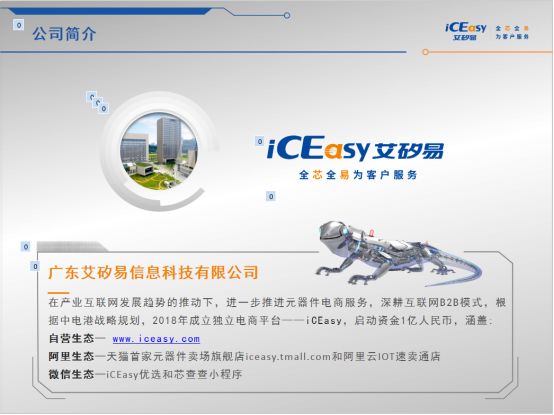
The company profile of iCEasy
The brothers of Huaqiangbei have also embraced e-commerce enthusiastically. A few days ago Wu Di of Baidu Microelectronics took me out to dinner and told me that their 1688 shop is selling well and has become another growth point for the company. Yuxiangda Electronics has opened a super store on 1688 and can take several dozen orders a day. Boss Yang says that opening an online shop simply means investing a little more energy and resources at the start, and that once things are in order all is well. Hongtu Weiye, Shilianxin and others have opened malls on Alibaba too.
Daguang Technology, an agent of Kinghelm, has also opened a shop on 1688, and within only two months the Kinghelm brand has been upgraded to an Alibaba Industrial Brand — growth at a remarkable speed. An article by the operations manager, young Jia, on using positioning and big-data thinking to do e-commerce for the Kinghelm brand was picked up by the Alibaba headlines. We are serious about e-commerce too: customers who want Beidou and GPS antennas and other products need only search for Kinghelm or for antenna cables in our 1688 shop or on the 1688 Industrial Brand site.
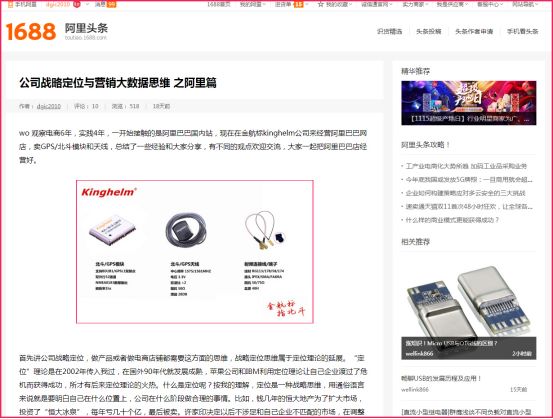
The Alibaba headline article on corporate strategic positioning and big-data marketing thinking
There is also a platform whose name I will not give, whose business is not bad — but its owner spends with such abandon that in two minutes he will spend tens of billions, and I no longer dare to do business with him.
The only unchanging thing in the world is change, and Huaqiangbei is no exception. To be left at a loss and yet forced to adapt with all our might — perhaps that is our fate. A thousand sails go by, the tide rises and falls: where does the road of Huaqiangbei lead, and which companies will brave the waves and stand at the crest? The examples I have given are a single leaf that tells of autumn, a glimpse of the leopard through a tube; let time answer us slowly.
Introduction to Mr. Song Shiqiang
Mr. Song Shiqiang is the general manager of both Slkor and Kinghelm. He is a member of the expert pool of the Chinese Institute of Electronics, an expert on the business of Huaqiangbei in Shenzhen, and a columnist and popular-science writer. Song Shiqiang began his career as a front-line technician and has served as the CEO of an internationally listed real estate company. He has wide experience in technical management and business operation, and he combines macroeconomic theory with the practical realities of running a business, leading his companies to rapid growth.
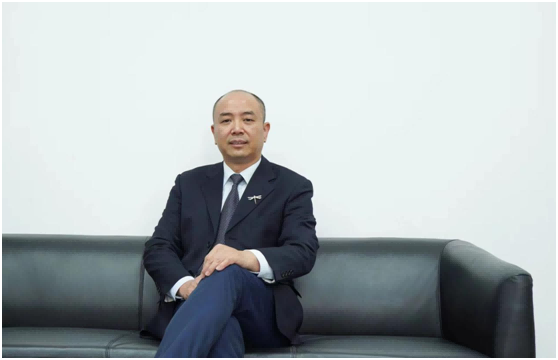
Slkor and Kinghelm, the two companies in which Mr. Song Shiqiang has invested, are headquartered in Shenzhen, China, and both are national high-tech enterprises. The Slkor brand (www.slkoric.com) and the Kinghelm brand (www.kinghelm.net) enjoy international recognition and reputation, and their market share continues to expand. Shenzhen Slkor focuses on the development of new materials, new processes and new products; its technical team comes from Yonsei University in Korea and Tsinghua University, and it was among the first to master silicon carbide MOSFET technology. Slkor has grown from a fabless design house into a comprehensive company covering design and development, manufacturing, total solutions and sales service.
Related Recommendations