





















Service Hotline
Perspectives

Perspectives

The Transformation Path of Huaqiangbei Distributors (Part I)
2026-10-21
191
Are you OK? Hello again, old friends. This is Old Song from Kinghelm, and here we are, meeting once more at the Huaqiang Grand Lecture Hall. In the past the only English I knew was "I don't know"; this year I learned one more line from Lei Jun: "Are you OK?" Last year I spoke here on the commercialization of BeiDou, and today my subject is the transformation path of Huaqiangbei's electronics distributors.
Huaqiangbei is the number one electronics street in China, the kind of place where a sign on the wall earns you the right to brag, and everyone around us is in the distribution business. But distributors have run into serious trouble. Our IC products are sold only after matching a brand to a part number. There are more than a million part numbers, and information asymmetry still leaves room for profit, yet everyone feels the business getting harder and the margins getting thinner. A couple of nights ago, when the guys got together to drink and boast, they all said the same thing: business is tough, and they are worried. Someone joked, "How much sorrow can a man bear?" Fat Old Xie shot back, "About as much as a teetotaller at a wine tasting." You want to act but you cannot, can you? The idea is there in your head, but you have no means in your hand to carry it out.
What I want to share with you today are some of the ideas and methods Kinghelm has developed over the past two years of its own transformation. I have also drawn on the experience and wisdom of many peers in the trade, in the hope that it may offer you some inspiration and help. If anything I say is wrong, please point it out so that we can discuss it together; that will do the industry more good. My earlier career was in real estate, an industry people like to joke is driven as much by appetite as by analysis, and I, too, have faced the need to transform. Our company used to be a small trading firm, a distributor in other words, and if we had gone on the old way, we would have no future.
The first thing you notice is our company logo: Kinghelm. Kinghelm means the helm of a king, or the direction of a king, and we read it as "the company of the kingly way." We have another brand in Shenzhen, Kingway, as in Kingway Beer, whose name means the road of the king. That is technique; what we want is the Way itself, which stands for values, something that touches the heart rather than stabbing it. When I am not out in Huaqiangbei chatting with the shop owners, I like to talk about the Chinese classics. I admire Xunzi's ideal of being "inwardly a sage, outwardly a king." My logo carries the same idea: I hope our company can reach a state where things are harmonious inside and secure outside. That is our kingly way. We have registered the Kinghelm trademark and can now use the (R) symbol. Correspondingly, our company website (www.kinghelm.cn) was registered to match the trademark, which also follows international practice: the trademark and the domain should correspond. Xiaomi, for example, used to be at www.xiaomi.com; after it made money, how much did it pay for www.mi.com? The answer is 3.6 million US dollars, as Li Wanqiang, one of Xiaomi's co-founders, revealed in his book Participation. JD.com is another case: its old address was longer, and I hear it cost tens of millions to change to today's www.jd.com. Kinghelm is nowhere near their level, but our thinking is on the right track. Overlapping the trademark and the domain makes promotion and communication much easier in the internet age. We also came up with the slogan "Kinghelm points to BeiDou," which fits well with the principles of communication.
I study Buddhism and believe in karma and reincarnation, so you must plant plenty of good causes if you want good fruit. I founded Kinghelm in 2007 and registered the Kinghelm trademark right away. Back then there was not a whisper about BeiDou; who would have guessed that I would later go into BeiDou almost by accident? It fits my company's name perfectly.
As the host, Xu Huimin, "Fat Brother of Huaqiangbei," said when he introduced me, what our company has been building these two years is a BeiDou ecosystem. We now sell Kinghelm BeiDou modules and matching antennas, and our ultimate goal is to open up the whole vertical chain of the BeiDou industry, driving it forward through the combination of BeiDou smart hardware and intelligent BeiDou logistics information.
1. Traditional Chinese Business Models
A few days ago the guys told me, "You can't just talk about serious subjects like business models. We would rather hear your jokes, especially the ones about the Four Great Beauties. If you weave the beauties into your talk, it will probably land better." So I have taken their suggestion: today I will combine my material with the Four Great Beauties of Chinese history, which should make it more memorable.
Let us start with how our ancestors did business: balancing surplus and shortage, judging cheap from dear, and weighing distance. I will take them one by one.
First, judging cheap from dear.
This is a basic skill and a form of foresight every merchant needs: you have to read a commodity's potential value. Dear and cheap shift with changes in time, place, and circumstances. In the Northeast, cabbages are worthless in summer and worth money in winter; lychees from our south fetch a good price in the north, because they are strictly seasonal and very awkward to ship and store. Now for the beauties, and first up is Yang Guifei. Du Mu of the Tang dynasty wrote: "A rider gallops through the red dust and the concubine smiles; no one knows it is the lychees that have arrived." Ordinary lychees from Guangdong were rushed to the palace, today's Xi'an, by the fastest post horses, and several horses probably died of exhaustion along the way just so that Yang Guifei could eat one. Was she so lovely that an emperor would go to such lengths for her? Think about it: back then only the most beautiful and most admired women got to eat lychees. How precious they were. So lychees in that era could become expensive simply because of distance. Merchants who mastered these points could spot commercial value.
Second, balancing surplus and shortage.
Surplus and shortage refer to goods being in excess or in short supply. The American economist Galbraith argued that in an affluent society many goods are oversupplied and overproduced, and what guides their sale is marketing and advertising. In ancient times, by contrast, productivity was low and goods were scarce, so everything was in short supply. My own summary is this: transport on foot, communication by shouting, security by dog, labor by hand; whoever could solve the storage and transport of goods made money. That was the work of the old peddlers and porters. Fan Li, known as Lord Tao Zhu, in the "Biographies of the Money-makers" in the Records of the Grand Historian, made balancing surplus and shortage one of his operating principles. He began as a general fighting alongside King Goujian of Yue; when he judged that Goujian was not a man to share prosperity with, he left and went into business, and his fortune rivalled that of a state. What I admire most is that the great beauty Xi Shi was at his side. Impressive! See how I keep slipping back to the beauties. Legend has it that after his success he lived very comfortably, having himself rowed on Lake Tai with a cup of Longjing tea, small steamed buns from Wangxingji, and the "three whites" of Lake Tai, with the great beauty Xi Shi seated beside him. How pleasant. Yang Guifei and Xi Shi had both been married before, and even so, winning the affection of a woman like that is no small achievement.
Third, weighing distance.
In ancient times, transport and communication were inconvenient, whereas today the internet lets us publish information and communicate freely, so time and geography are no longer obstacles. Once, time and space acted as a shield, protecting a great deal of economic value within a certain window and a certain territory. But now a price quoted in Beijing is known in Shenzhen two minutes later, and sourcing information from the United States reaches China five minutes after that. The internet has erased distance in the spread of information, and with high-speed rail, airplanes, and express delivery, the distance in moving goods has largely been erased too. Growing southern vegetables in greenhouses up north belongs to this same category.
From the perspective of business strategy, there is another kind of "distance" to consider: you need long-term plans and intentions, which means putting down roots now and doing the preparatory work for later, so that things can accumulate. Kinghelm's work on BeiDou is an example. We have not made money on it these two years, and we have spent more than a million on advertising alone. This year we may just break even, the next year or two we hope for initial returns, and only in three to five years will we make real money. That is what "weighing distance" means for our company. I have already introduced two famous beauties; now let us take up another well-known figure, Pan Jinlian. Would you like to hear about her? I would rank her as the fifth great beauty of Chinese history: famous, with a name that carries. Here, "weighing distance" has another reading. In The Plum in the Golden Vase, her third husband, Ximen Qing, is a master investor and speculator who understood it well. Besides running a chain of herbal shops, Ximen Qing had another line of business: financing men who had passed the imperial examinations and earned a degree but had not yet been given office. Such men had the qualifications to become officials but had not yet taken up a post, and they needed money to smooth the way with people in officialdom before they could get even a minor position and begin to prosper. Today we would call them "potential stocks." These men had no money but liked to put on airs, and once they passed the examinations they had to be packaged properly: at the very least a horse to ride, a page boy for chores, a maid for the wife, or a concubine. All of that cost money. So they first borrowed at high interest from Master Ximen, and once they took up their posts they repaid him double. This, too, is a question of weighing distance. Ximen Qing was extremely shrewd with money.
The same logic applies when a Huaqiangbei electronics company commits to buying American-brand goods with a long lead time.
Fourth, being clear about righteousness and profit.
This fourth one I added myself, but it also relates to business. Society badly needs to understand these things, or everything falls into disorder. Trade in goods maximizes the use value of social wealth and drives social development and a higher standard of living. But without a bottom line on righteousness and profit, you get incidents like the melamine scandal, and the harm is enormous. Huaqiangbei is the number one electronics street, yet some still make dishonest money in the shadows, which has turned Huaqiangbei into a byword for fakes and knockoffs and left its business environment deteriorating year by year. As the lyrics by Li Zongsheng put it, "Put morality to one side and the word profit in the middle." In communication terms, you get recognition without reputation. Think of the boxer Mike Tyson: he was excellent in the ring and extremely well known, but because of ugly episodes such as biting off part of an opponent's ear and a serious criminal case, he never earned a cent from advertising. As an old hand in Huaqiangbei, I hope the brothers and sisters here will do well on this front, because it will open a new future for us and for Huaqiangbei.
I had only prepared a few beauties to share with you, and I got carried away and told three already. There are too many of us and clearly not enough beauties to go round. In a moment I will bring out Zhang Ziyi, Fan Bingbing and others, and you can make do with savouring those.
2. The Old Playbook of Huaqiangbei
To be honest, selling components in Huaqiangbei is just matching brands and part numbers. Some shop owners joke that all they need is the 24 letters and the 10 Arabic numerals, though the designer bags on their shoulders were certainly not bought at the Luohu Commercial City. Listed below, straight from the source, are their old tricks.
First, competing on inventory.
Some long-established Chaozhou firms carry large inventories, source through very complicated channels, and tie up a great deal of capital. As long as you are big enough, this model gives you strong bargaining power upstream and a margin downstream. Many trading companies used to work this way, but information is far more transparent now, more parts can be substituted, and products are replaced faster, so the model no longer fits the market. Concepts such as capital turnover and inventory turnover were hardly on their radar at all.
Second, competing on channels.
Some companies do much better here. Usually they came out of a foreign manufacturer or a major distributor, or they are good at working relationships. Charles Lee, for instance, specialized in NXP transistors at WPG; his company Weineng does the same thing now and has a real edge in small transistors. Anxin Mall has wider channels and calls itself an international sourcing specialist; its purchasing department has a broad geographic and ecosystem footprint, with twenty or thirty buyers scattered around the world. Mr. Peng of Nanhua Jinmao has a strong channel advantage in ON Semiconductor parts.
Third, competing on price.
Competing on price is an old and eternal subject. Some commodity components are worse than ever. The other day my friend Iven at Lianjiahua told me, "Some commodity parts now carry a margin of only 0.5 percent. If you cannot move goods quickly, you are basically better off putting your money in the bank." So competing on price is getting harder and harder.
Fourth, competing on payment terms.
This mostly shows up when doing business with end customers. Many friends in Huaqiangbei run on credit; many of the Chaozhou crowd will extend a week, half a month, or a month, and this creates cutthroat competition among end customers. ICs used to be cash only; now everything runs on terms, from a week to half a year, which badly hurts smaller competitors with limited capital.
Fifth, competing on social ease.
I say this partly to amuse everyone, and to put it more plainly: in sales, a great deal depends on how well you get on with people and how you carry yourself on social occasions, where a good head for drink certainly helps. Brother Cole, for instance, closed a lot of big orders with very high margins, which certainly had something to do with his good manners, his nerve and his easy way with people. He was often the one sent to call on the purchasing managers, and he almost never came back empty-handed. Joking aside, Old Chen from Teshengkang looks about ready to doze off, so give him a laugh. In this high-pressure society our entertainment has to be upgraded to version 4.0, or we will collapse.
Sixth, competing on information.
The Huaqiangbei market makes its money on information asymmetry. When the big earthquake hit Japan a few years ago, plenty of people hoarded stock and made money; the information you needed was which brands and part numbers would go out of production, and then you simply stockpiled them. In the 2011 floods in Thailand, people selling mobile hard drives hoarded them and cornered the market, and made a great deal of money. "One order, one building" is no joke. At the time our company, Kinghelm, had a monopoly on a Sanyo transistor, the 2SC2078E, used in walkie-talkies; we were the only ones in the world who had it. I made some money, but that kind of thing is not sustainable, and it still cannot make a company big and strong.
The article above is based on Song Shiqiang's speech at the Huaqiang Grand Lecture Hall in 2015, with cuts.
Introduction to Mr. Song Shiqiang
Mr. Song Shiqiang, general manager of both Slkor Micro Semicon and Kinghelm Electronics, is a member of the Expert Database of the Chinese Institute of Electronics, a research expert on the commerce of Shenzhen Huaqiangbei, and a popular science columnist. Mr. Song started out as a grassroots technician and once served as the CEO of a listed international real estate company. With rich experience in technical management and business operations, he combines macroeconomic theory with real-world business management and has led the two companies to rapid growth.
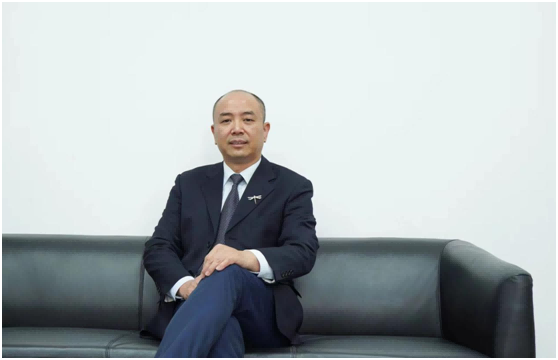
The two companies Mr. Song Shiqiang has invested in, Slkor Micro Semicon and Kinghelm Electronics, are headquartered in Shenzhen, China, and both are national high-tech enterprises. Their brands "SLKOR" (www.slkoric.com) and "Kinghelm" (www.kinghelm.net) enjoy international visibility and reputation, and their market share is steadily expanding. Shenzhen Slkor Micro Semicon Co., Ltd. focuses on the research and development of new materials, new processes and new products; its technical team comes from Yonsei University in South Korea and Tsinghua University, and it is among the first to master silicon carbide (SiC) MOSFET technology. Slkor has developed from a fabless design house into a comprehensive enterprise integrating design and R&D, manufacturing, total solutions, and sales and service.
Related Recommendations