






















Service Hotline
Perspectives

Perspectives

The Transformation Path of Huaqiangbei Distributors: (Part II)
2026-10-22
184
3. Huaqiangbei's Strengths and Opportunities
For the past twenty or thirty years, Huaqiangbei's distributors have largely followed the same traditional business practices. They do still hold certain strengths and opportunities — otherwise they would long ago have been encircled by the agents and the original manufacturers. Analysed through the SWOT framework, these are the strengths and the opportunities. They are as follows.
1. Speed of response
When an end customer asks an original manufacturer or an authorised agent for a quotation, the reply takes a week at best and a month or longer at worst. The enquiry has to pass through a junior product manager, then a senior product manager, and in some cases an overseas approval process, with emails forwarded one layer at a time before an answer comes back. There is no immediacy in it. Huaqiangbei's response speed is startling: everyone is on QQ and online at all hours, and a reply can come back within minutes. Original manufacturers and agents rarely hold stock and quote on lead time instead, usually a month or more. Huaqiangbei, by contrast, is one enormous electronic warehouse with an extraordinary range of parts, much of it on the shelf. And if Huaqiangbei does not have a part, Zhongguancun in Beijing may; and if it cannot be found there either, Chendian or Guiyu may have parts pulled from scrapped boards.
2. Flexible ways of doing business
Start with delivery. Approach an agent or an original manufacturer and you go through their process: the paperwork is cumbersome, and tax handling, delivery method and payment terms are all standardised. Huaqiangbei's distributors are far more flexible. They will deliver to your door, or arrange handover in Hong Kong — some shop owners will even close the deal over an evening drink when a rebate is being discussed. Payment is flexible too: US dollars are not obligatory, and cheques, post-dated cheques and monthly settlement are all accepted.
3. Serving big and small alike
A distributor can look after a large number of small customers. Agents essentially lock in on the top players and the major accounts in each sector, and are unwilling to develop or serve small and medium customers. The Pearl River Delta and the Yangtze River Delta are full of small start-up companies, and they are the best source of profit growth: higher gross margins, and they pay in cash. A distributor that serves large and small alike is doing what the agents will not, and that is our core competitiveness.
Original manufacturers and agents will not ship below a minimum pack or a minimum order value. A minimum pack is usually 2,000 to 5,000 pieces, whereas a distributor can ship 200, 500, or even a small sample order of 10. Solving a customer's pain point is where the real opportunity lies.
4. One-stop service
A distributor can assemble a whole order in one stop. Not only the ICs on the bill of materials, but the transistors, diodes, capacitors and resistors that go with them, can all be sourced at the same time. For the purchasing staff and engineers of a small company, this is a service that saves both trouble and worry. It lets Huaqiangbei's shop owners earn a little more, and it adds to a distributor's influence and bargaining power.
4. The Pain Points Facing Huaqiangbei's Distributors
Now to the pain points — the weaknesses and the threats in the middle of the SWOT. In the language of the internet age, a business only has a chance to make money and to grow once it understands and solves the pain points of its industry. Of the pain points in our trade, I believe the two most important are the absence of a brand and the absence of technical capability. There are eight smaller problems in all.
1. No brand
This is an affluent society with serious overcapacity, so advertising and marketing are essential to promote and guide product sales, and brand selling is the best approach. I would say a brand has four characteristics: awareness, reputation, customer loyalty, and customers' willingness to pay a premium for it. The purpose of building a brand is not only to make the product easy to sell — marketing — but to sell it well. A brand stands for taste, for quality, for a category, and for prestige and cultural depth. Let me speak about branding from my own experience. Nike and Adidas, for instance, are of very good quality.
I remember buying a pair of Nike Air Max trainers in 2001. They looked striking and the air-cushioned sole was extremely comfortable — my hormones were delighted. Once, wandering through a shopping mall in Shenyang, I noticed a young woman staring straight at me. At first I flattered myself that my charms had caught her attention, and I felt rather pleased. Then I looked more carefully: her eyes were fixed on the Nike shoes on my feet. There is also Cole Han, a very handsome man here in Huaqiangbei, who likes wearing CK. It sets off his taste and his cultivation. He told me that ever since he started wearing CK, the cost of dating had gone down, the number of dates had gone up, and the acne on his face had disappeared completely. At the start of the film Titanic, the Louis Vuitton trunk salvaged from the wreck had been buried in the silt on the seabed for more than a hundred years and was still intact, with the photograph of the heroine still inside. Mr Louis Vuitton was able to make a trunk of world-class quality, and that is what gave the story its power. As for Quanjude in Beijing, the roast duck tastes ordinary enough to me, yet the place is always packed — because of the heritage of history and of time. A good brand has a story, a history and a culture. So if Huaqiangbei's companies want to develop further, they must have quality, and use quality to polish their brand. Kinghelm aims to become a benchmark for companies originating in Huaqiangbei and to help promote the BeiDou industry. Huaqiangbei, let us push on.
2. No technical depth
Many distributors understand a product only by its part number and cannot even read a datasheet. Their technical knowledge is often extremely limited, so anyone who understands the technical parameters is regarded as an expert. A distributor with a little technical grounding can make money from this gap. Take Maxim's MAX485, a serial-port chip selling for a little over five yuan each. Sipex's SP485 can replace it completely and costs only a little over one yuan. Distributors in Huaqiangbei who knew the trick would grind the markings off the SP485, re-mark it as MAX485, and make a great deal of money.
In Huaqiangbei we say these people make their money from the gutter, and they have damaged the district's reputation. Matching part numbers is itself a small step forward and can help distributors earn more, but it is a distorted form of progress. How I wish we could turn Huaqiangbei into a shopping paradise.
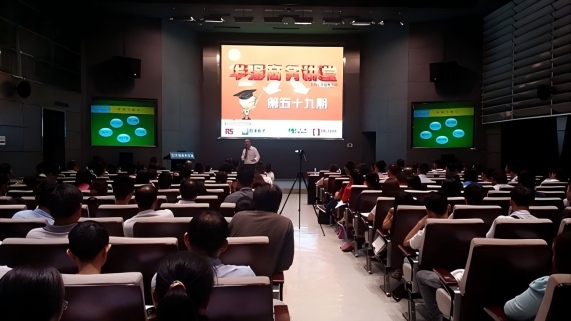
The 59th session of the Huaqiang Business Lecture series
3. No team
Most of the small counters in Huaqiangbei are husband-and-wife operations: the husband does the purchasing and the wife is the best salesperson in the shop. They have the time, and they sometimes work in opposite directions. But they have no team, and organising and dividing work within a team is what raises professionalism and labour efficiency. According to the argument attributed to Adam Smith in The Wealth of Nations, cooperation can make labour far more efficient than individual effort, potentially by as much as 290 times. In Steve Jobs's telling, an ordinary worker who performs 30 per cent better than his peers — a porter, a lorry driver — is already outstanding. But salespeople, technicians and creative people, when they perform at their best, can raise efficiency by 150 per cent, or even by 150 times.
When the French emperor Napoleon went to war, there was a tribe in North Africa called the Mamluks. They were professional mercenaries and every soldier was brave and skilled. But the French soldiers were well trained and worked well together. Napoleon concluded that in single combat one Mamluk could take on one and a half French soldiers; 500 Mamluks against 500 French soldiers would be an even match; but 1,000 French soldiers could deal with 1,500 Mamluks. Why? Because the French soldiers supported one another, with a very high degree of coordination, and a team brings out the best in each person. So we need both individual heroism and team spirit, and building a team around each person's ability, character and strengths, with a clear division of labour, is crucial. The Kinghelm and Slkor teams are also built on modern management principles, and over the past two years, they have been the fastest-growing companies — not merely among the fastest, but the fastest.
4. No distinguishing features
Which means no core competitiveness. A Huaqiangbei business owner claims to be able to do anything — but can he really? I think being able to do anything means being able to do nothing, and having an advantage in nothing at all. I once asked a designer in Huaqiangbei to design a print advertisement for Slkor. He said, cockily, "Boss, I will have it done for you in two minutes." He pasted our Slkor logo straight onto a template, without even changing the NXP and TI marks belonging to other companies that were still on it. I told him that was not what I wanted. He retorted indignantly: "Why do you not want this? Everyone in Huaqiangbei uses this template. Why are you the only one who is different?" He revised it several times and still did not match what I had in mind, so I had to pay someone else. You can see how severe the homogenisation among Huaqiangbei's distributors is. Without a distinguishing feature there is no core competitiveness. There are, of course, those who speculate by holding stock, but none of them has pricing power or influence, and none has come close to the core value of this industry. I will come back to that another time.
5. No scruples
Some of the women who run shops in Huaqiangbei, including those in the second-hand trade, are so bold, thick-skinned and flirtatious that they will perch on a customer's purchasing manager's knee and coo, "Come on, big brother, if you do not give me the order I am not getting off your lap." The manager, leering, replies, "That is fine by me — then do not get off." And the deal is as good as done. He said a friend of his does this and makes tens of millions a year. There are far more women willing to lower their standards these days than there are purchasing managers to go round. Frankly, I cannot earn that kind of money, and I do not envy those who do; everyone has their own way. The point of doing business, for me, is to live freely, independently and at ease, and to let myself go a little along the way. Dignity, ethics and scruples have been sold off together with the ICs. I see no need for it.
6. No scale
There are few companies of any scale in Huaqiangbei. Companies with more than 30 people are rare; at 50 people you are essentially a giant; and not many turn over more than 100 million yuan. Without scale there is no voice and no influence, and no bargaining power when you negotiate prices and other support with suppliers. Many owners, of course, do not yet have the ability to manage a medium-sized company. A few days ago I read a report saying that Toyota's earnings are at their highest in nearly a decade — Toyota's scale is large enough, is it not? Galanz, which makes microwave ovens, was already large from the start, which allowed it to push costs down and carry industry influence; otherwise it would long ago have been swallowed up by big brothers like Midea. Midea now has 110,000 employees and BYD has over a hundred thousand. A few capable people cannot get everything done. Under the current thinking of venture capital and private equity, only the top three or the top five in an industry attract investment. The leading companies can gather the industry's best resources, and that is what builds overall competitiveness.
7. No planning
In the past, you could take goods from one counter in Huaqiangbei to another and make a few thousand or a few tens of thousands of yuan in a single move, because information was asymmetric. Everyone grew up that way, so naturally there was no habit of planning. But to grow now, to move up a level and to face stronger competition, a company must plan properly — you could call it strategic goals. Without planning, we cannot know what we will be able to achieve in the future or how we should act now. Nor can we plan staffing, build up reserves or address other operational needs effectively.
8. No rules
By this, I mean companies that lack clear internal rules and management systems for matters such as company seals, contracts and risk control. A company still needs strict rules and regulations to protect its development. Many companies in Huaqiangbei do not sign labour contracts with their employees or pay for their insurance, and wages and commissions are often withheld. That is a serious failure of discipline. At Kinghelm, employees who have left still come back from time to time to take our colleagues out to dinner or for tea, and we are delighted — even though I end up paying the bill. That is the result of keeping to the rules. There are also plenty of companies selling counterfeit goods and fake invoices, and when a customer comes back to return the goods or to argue the case, they do not feel in the wrong at all; they turn violent. That is not merely a failure of discipline, it is utterly shameless, and it is these people making money from the gutter who have left Huaqiangbei's name in the mud.
5. How to Break Through (Part One)
The industry has developed to this point, and we need to find ways to break through. These are the approaches I have worked out for myself, and I offer them here to share and discuss.
1. Learning
Learn, and learn again. We have to get our thinking straight about learning. If we do not take it seriously and do not recognise the problems we now face, neither our own companies nor Huaqiangbei can develop. I personally took charge of Kinghelm's management in 2010, and after two years of study and deep thought I worked out a few approaches to growth. There are many ways to learn: over a meal, a drink or a conversation, or by going out to training courses, brainstorming sessions and the like. It is a process of steady accumulation, from quantitative change to qualitative change. Take the money tree on my desk: watching it every day, it seems not to change at all, but after half a month away on business I come back and suddenly notice how much taller it has grown. Learning is the same. Accumulate a little each day, and one day there will be a leap.
2. Adjusting your knowledge base
Our peers in the trade do business by part number, and essentially all their work proceeds from that. Once the part number does not match, they have no way of thinking about alternatives, and no way of offering customers any other value-added service — adjusting or optimising a design, for example, or supplying complementary products and information, which is what increases customer stickiness and allows a premium. So if friends in Huaqiangbei want to grow, they need not only to learn but to keep adjusting the knowledge base they had before — data engineering, knowledge engineering and the rest, which I will not go into here.
Take Mr Wu of ITTBANK, who started out in solution design. He has solutions that make use of old part numbers the market had written off, so nothing is wasted and the economic results are good.
3. Moving with the times
In the internet age, business models and ways of thinking change constantly, and anyone who cannot keep up is eliminated. Didi and Uber, for example, own not a single taxi; they use idle private cars and internet data to match supply and demand seamlessly, serving customers with minimal investment and maximum returns. In the past, when transport was inconvenient and information did not circulate, the more taxis a company owned, the greater its commercial standing and its privileged resources. In the internet age, whoever connects and converts information best is the winner. So if you do not move with the times, you will not merely fail to grow — you may be eliminated. Follow the pace of the times and the road will run further and wider. Electronic component part numbers are completely standardised, which makes them easy for the internet to identify and connect, and there are real opportunities for anyone who does it well.
4. Stepping outside
There are two levels to this. The first is that your feet must step outside. As the saying goes, travelling ten thousand miles teaches you more than reading ten thousand books. I often take people out for a meal or for tea in Huaqiangbei and sit down to discuss and exchange ideas with them; that is how you accumulate good resources and experience. Those who can should also go to Beijing, or even to Germany or the United States, and learn from their advanced experience. The second is that your heart must step outside. If your feet go out but your heart does not open, you have not really stepped outside — you have simply been a tourist. Once your mind is open, you can embrace new friendships and discover new opportunities, and you can raise your own soft power. Opportunity lies in the faint and the barely there; it depends on how you grasp it.
5. Building a brand
A brand is of course not just a registered trademark, and not just advertising. It needs awareness and reputation first, and then trust and customer loyalty. When your peers and your customers recognise who you are, recognise your company and recognise your products, your sales and your profit are assured. That is what building a brand means. Companies such as Anda in Singapore and Longwei Software have done well at building brands for themselves and their products. Anda picked up another award from ESM China a few days ago; congratulations to them — and privately, it means I can scrounge a drink off them again.
6. Building circles
The "circles" I am talking about are composite ecosystems. Some time ago I organised a salon with Jason Fan, Brother Bo and others at the Northern Hotel, on the theme of building a composite circle. Look at what Dale Carnegie, the great teacher of success, says in How to Win Friends and Influence People. First, there are 250 people who will matter in your life; handle your relationships with those 250 well and you will be a successful person. Second, only 15 per cent of success comes from your professional knowledge; the other 85 per cent comes from your relationships. That is a view of relationships from a traditional society. What does it look like in the internet age? Marx said that the human essence is the ensemble of social relations.
According to organisational behaviour and sociology, social ties fall into two broad kinds: strong ties and weak ties. Strong ties are a man's close friendships and drinking companions, often formed through shared backgrounds such as school, national service, hometown connections or work. Their influence on one another runs through daily life — showing off, playing cards, lending money, drinking, and romance. For women it is sisters and close friends, the ones who shop together, gossip, complain about their mothers-in-law, buy counterfeit designer labels and look for a well-off partner; their influence reaches into every corner of life, and has nothing to do with ideals. Weak ties are the looser layer: in a room full of people, those who can immediately recognise one another and address each other by name — though names I can produce do not really count, do they? — or someone who will sit down opposite you in a nightclub, share a drink, and casually pat the shoulder of the girl beside you. Strong ties are too familiar, the information too transparent, and there is little to exchange. There is no easy way to turn that kind of intimacy into business, and no economic return in it; try selling them pyramid schemes or WeChat micro-business products and they will curse you. Weak ties, by contrast, bring cooperation and very clear economic returns. The number of weak ties that will generate economic value for you over a lifetime is around 140.
Brother Bo, Charles and Old Chen and I, here in Huaqiangbei, are strong ties: we are always drinking tea together, eating together, discussing problems. Because we know each other too well, much of what we have overlaps, and no new momentum or information comes out of it. Someone in a weak tie, by contrast, can give you new information, new intelligence and new resources. The old Chinese saying — your honey is his arsenic — is about exactly this. That is why I stress building composite ecosystems of this kind.
There are many rather exclusive circles in China too. Zhisland, for instance, is currently the high-end social platform for Chinese entrepreneurs, with figures such as Liu Chuanzhi and Ma Weihua in its ranks. They are building a composite ecosystem. I hear the average net worth of Zhisland's members is 100 million yuan, and they have completed a great many projects and deals inside the circle — at one point, apparently, an order for 100 Teslas. Impressive. A composite, high-end circle like that brings people new thinking and a jolt of new information, and from that comes substantial economic benefit. There are even more exclusive ones: the Taishan Club, the private clubs of certain owners, and the peer advisory boards that are fashionable now. But the ones that use such circles for sex and for trading money for influence are not models to copy.
7. Finding a godfather
In plain terms, finding a backer. It is a little vulgar, but without the vulgar where would the refined come from? Refinement is the son, or the grandson, of vulgarity. Finding a godfather, put simply, means latching onto a powerful leg: you use their resources to grow quickly. My brother Charles Lee, for example, found his "godfather" in NXP — they are an NXP agent, and very strong on transistors. Last year he was already driving a 12-cylinder Audi Q7. Impressive, is it not? So finding the right godfather matters.
8. Huddling together for warmth
Huaqiangbei is made up of small companies — small, medium and micro enterprises. To grow big and strong they have to huddle together for warmth, integrate and optimise resources, and specialise the division of labour. Only then can costs come down, efficiency go up and returns be maximised. A small company buys through a single channel and has few customers, so its risk is not spread. Training and management are difficult to standardise and systematise, while maintaining support functions such as finance, warehousing and administration is also a challenge; supply chain, advertising and management costs are hard to amortise. Scale up, and the picture reverses completely — faster, better, cheaper.
Introduction to Mr. Song Shiqiang
Mr Song Shiqiang is the general manager of both Slkor Micro Semiconductors and Kinghelm Electronics. He is a member of the expert pool of the Chinese Institute of Electronics, a specialist researcher on the Huaqiangbei business district in Shenzhen, and a popular-science columnist. Mr Song began his career as a technician at the grassroots level and has served as the CEO of an internationally listed real estate company. He has deep experience in technical management and business operations, and combines macroeconomic theory with day-to-day management practice to drive his companies' rapid growth.
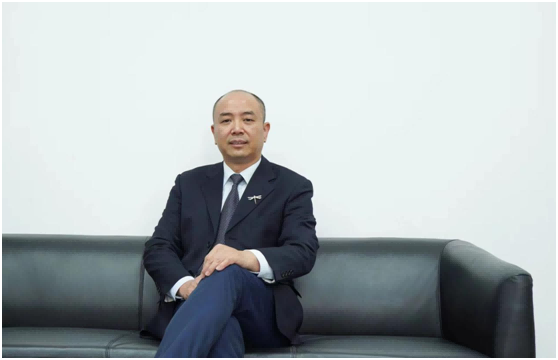
Mr Song Shiqiang has invested in Slkor Micro Semiconductors and Kinghelm Electronics, both headquartered in Shenzhen and both national high-tech enterprises. Their brands, Slkor (www.slkoric.com) and Kinghelm (www.kinghelm.net), enjoy international recognition and reputation, and their market share continues to expand. Shenzhen Slkor Micro Semiconductors Co., Ltd. focuses on the research and development of new materials, new processes and new products; its technical team comes from Yonsei University in South Korea and Tsinghua University, and it was among the first to master silicon carbide MOSFET technology. Slkor has grown from a fabless design house into a comprehensive company covering design and development, manufacturing, total solutions and sales service.
Related Recommendations