






















Service Hotline
News

News

Huaqiangbei Anti-Fraud: Exposing the "Cash on Delivery Scam"
2026-10-27
56
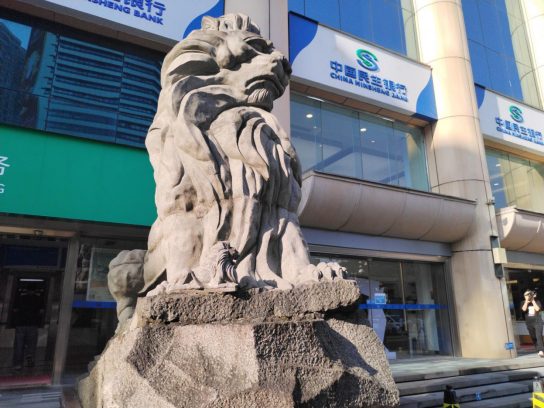 Many chip traders use this agreed phrase: "Delivery at the stone lions at Jiahe; cash on delivery."
Uncle Song of Huaqiangbei tells everyone, "If you often wander the jianghu, how can you avoid a knife?" Fraud happens from time to time when doing business in Huaqiangbei. Our Huaqiangbei Mini Encyclopedia column has compiled this information, hoping to purify the business environment of Huaqiangbei, so that practitioners can operate with integrity and be less likely to be scammed. The Huaqiangbei electronic components "cash on delivery scam" uses the transaction promise of "in-person inspection on delivery; if unsatisfied, do not accept it" to lower buyers' vigilance. It relies on the underlying industry loophole that electronic components "cannot be distinguished as original, ground, refurbished, or pulled parts with the naked eye or in a short time," combined with process loopholes in courier COD collection and private-account settlement. Then, through information isolation between buyer and seller and non-escrow payment channels that block post-transaction rights-protection paths, it achieves profit-making or payment-interception fraud.
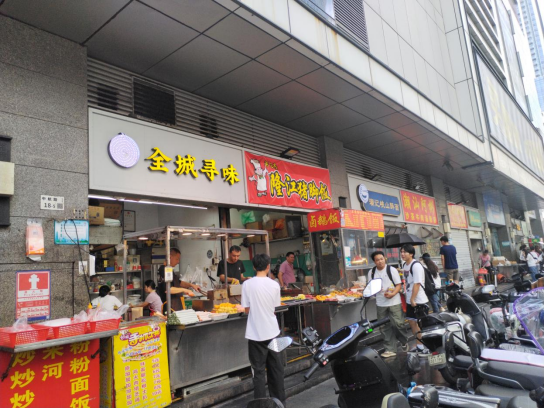 The everyday bustle of Huaqiangbei, with endless braised pork trotter rice.
The mainstream routines and derivative variants of the Huaqiangbei electronic components "cash on delivery scam" include:
1. COD collection with visually similar inferior or counterfeit goods (the most common; small purchasers and small factory buyers frequently fall into this trap)
Scammers use social software and industry groups to send customers attractive real photos and original-packaging photos, quote prices significantly lower than the market price, and use scripts such as "original stock, COD supported, open-box inspection in person, reject directly if unsatisfied, no deposit required" to attract traffic. This is actually also one of the common transaction modes in Huaqiangbei. After buyers take the bait, scammers use courier COD collection. Because component "inspection" has two layers: appearance inspection, which couriers can do, and electrical parameter/function testing, which requires instruments and cannot be done in a courier scenario, scammers exploit the information gap between these two layers to substitute "appearance is fine" for "goods are qualified." Buyers generally can only quickly count and look at packaging, with no time to power up, test parameters, check silkscreen markings, or trace origin. Once they scan and pay, or transfer money to the delivery person or collection agent, it is equivalent to "accepting the goods as qualified." But after taking the goods back to the factory for SMT placement and machine installation, they find the goods do not match: refurbished or pulled parts, ground and re-marked codes, counterfeit goods, short quantities, ground and re-silkscreened parts, pulled old parts or mixed good and bad parts, aged inventory parts, domestically printed counterfeits passed off as imported genuine goods, and re-reeled refurbished parts. By then the COD funds have already been settled to the sender, the scammer, and the scammer directly disappears or refuses to acknowledge it and shifts blame, saying, "Signing for receipt means confirmation; burning out after installation is human damage and not covered by warranty." There are also cases where, due to a missing evidence chain, they falsely accuse the buyer of swapping the goods, then directly block the buyer. Couriers and platforms do not accept disputes over the electrical quality of components, and the buyer passively bears the loss. A few days ago, I saw that a female boss in Huaqiangbei bought a cut-down version of Xilinx FPGA products, with the price differing from the original by 10 times, and is still in litigation.
Variant: the courier COD and on-site delivery mixed-material scam. A reel of parts looks normal on the outside, or a small amount of bad parts is mixed in. A small sample check may pass, but after large-volume SMT placement, failures occur in a concentrated fashion, even burning PCB boards, amplifying customer losses.
The White Pigeon scam is similar to this scam: it artificially isolates the real buyer and the real supplier and manipulates things in the middle to defraud money. There is also a goods-fraud model: scammers impersonate buyers and trick suppliers into delivering goods to a designated location. After signing for receipt, they find an excuse to run away and resell the goods, leaving the supplier unpaid.
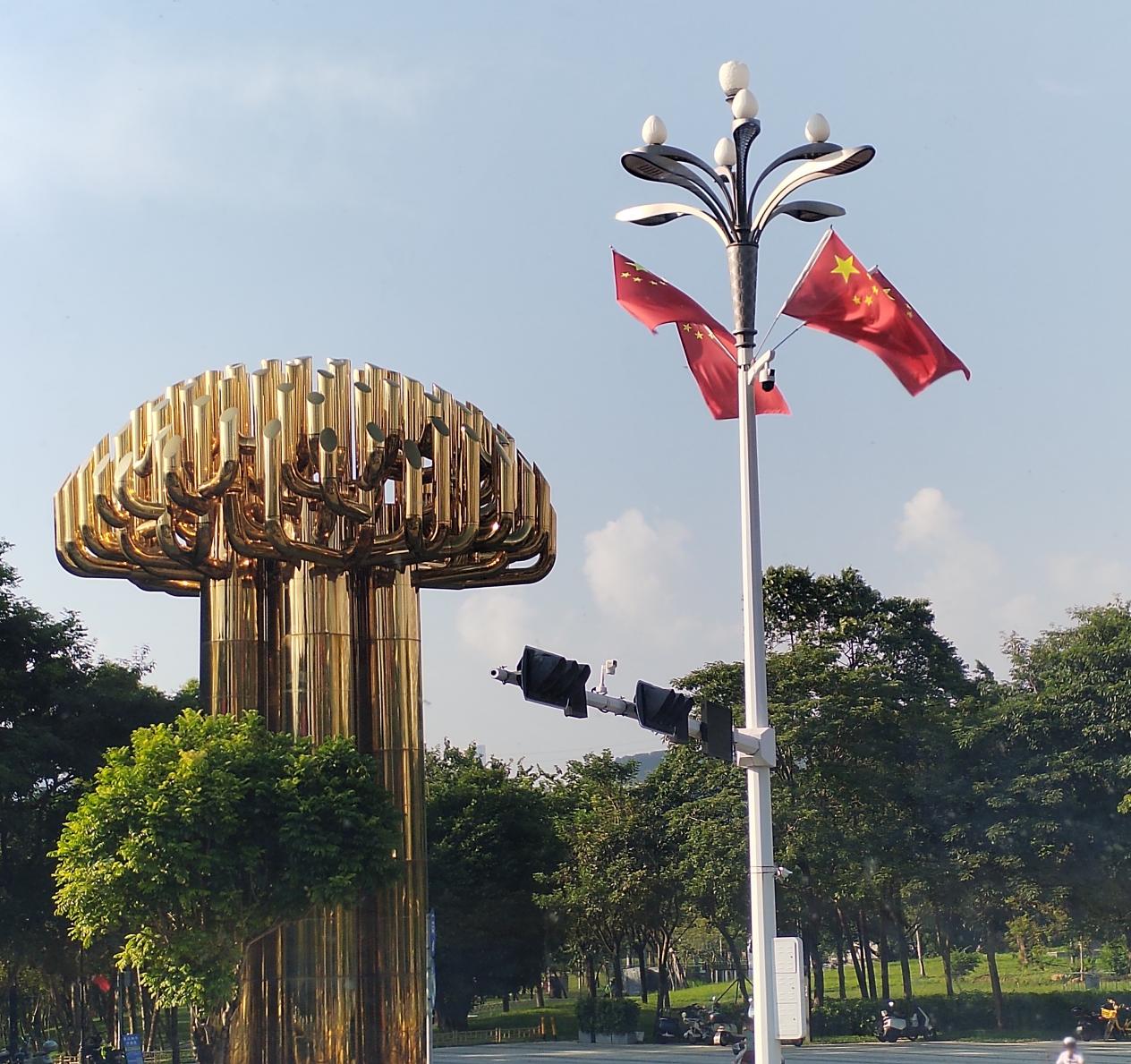
The "Golden Mushroom Head" in Huaqiangbei is also a high-frequency meeting place for goods.
There are two situations. 1) Buyer-side swapping: the seller sends goods by COD; the buyer opens the box in front of the courier and quickly swaps them, preparing an empty reel or bad parts with the same appearance in advance, then says the goods do not match and requests rejection. When the courier returns the goods, the merchant finds that their goods have been swapped. The payment cannot be collected, and the genuine parts are gone. 2) Seller-side swapping: the sample is good, but the bulk goods are replaced with bad parts. After the buyer receives the goods, rights protection is difficult.
Reverse version: the buyer places an order, receives the goods, and then uses "needs testing" as an excuse to stall the seller, after which they request partial refunds or return swapped goods for various reasons.
Scammers first collect a small deposit to lower the buyer's vigilance and promise that the balance will be paid by courier COD. When shipping, they directly send inferior parts, short-quantity parts, or empty reels. Even if the buyer rejects the package, the deposit is directly swallowed by the scammer.
Scammers lure orders with extremely low prices, promise COD, and make the package weight close to that of a genuine parts reel. The buyer signs and pays, opens the package, and finds an empty reel, a scrap reel, or only a few sample parts inside, with a serious quantity mismatch, but the scammer has already disappeared.
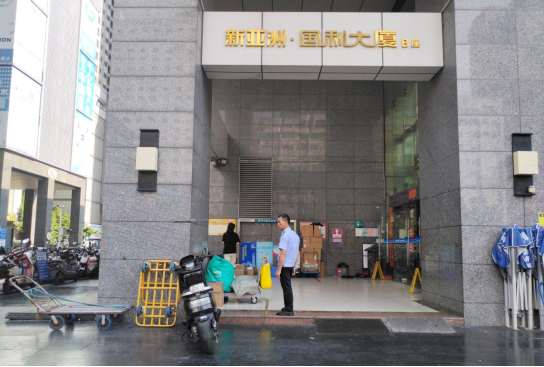 Tower B, Guoli Building, New Asia. Photo by a Kinghelm (www.kinghelm.net) reporter.
High-incidence reasons for the Huaqiangbei "cash on delivery scam":
1.Transaction model flaws (the core): COD requires full payment on the spot, which treats payment as acceptance of the goods and puts the quality verification obligation after payment. Many small and medium-sized traders are accustomed to inquiring and ordering online via social software, delivering offline or by courier, and collecting payment via private cards, without platform escrow, corporate accounts, or rigorous contracts. Scammers artificially separate buyers from real suppliers, defrauding both sides and intercepting payment.
2.Psychological loopholes on both sides: buyers mistakenly believe COD is zero-risk and relax risk control when encountering urgent orders or low-priced spot goods. Sellers, the real suppliers, want to close deals, accept the condition of "deliver first, collect payment later," trust intermediaries' promises, and do not verify directly with the end buyer.
3.Loose market format: scammers do not operate at fixed businesses in the market; they only borrow market merchants' information and business-license photos to commit fraud, making it difficult for market managers to identify them in advance. Many backpackers and temporary middlemen are highly mobile, collection accounts can be changed at any time, and real-name information is easily impersonated or rented, making tracing difficult.
4.Ambiguous industry terminology: there is no unified standard for pulled parts, pulled old parts, and similar terms. Sellers use oral expressions to create information gaps and pass off inferior goods as good ones.
5.Complex spot-goods speculation chain: ownership is difficult to clarify, materials change hands many times, and pulled parts, refurbished parts, loose new parts, and original parts are mixed in the circulation pool of the Huaqiangbei electronics market. The boundaries themselves are blurred, leaving room for scammers to "pass off inferior goods as good ones."
6.Relatively low cost of illegality: one set of scripts, multiple social accounts, and rented bank cards or collection accounts enable low-cost crime. After success, scammers quickly cancel accounts and change identities, and funds are easily split and laundered, making arrest and loss recovery difficult.
7.High threshold for evidence and rights protection: grinding chips and changing silkscreen text are professional counterfeiting, and ordinary people can hardly retain effective evidence. Chip authenticity and quality require professional testing, which is costly. Disputes are easily classified as commercial disputes and difficult to file as fraud cases.
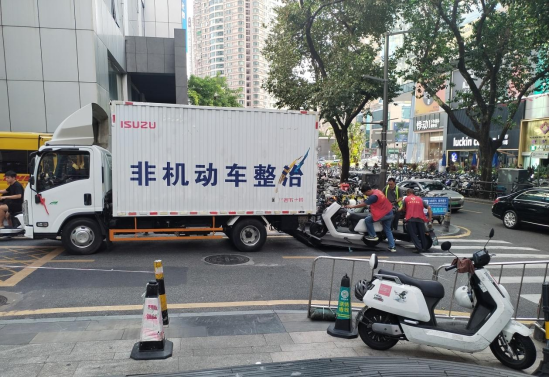 Non-motor vehicle rectification, photographed on a street in Huaqiangbei.
Huaqiangbei "cash on delivery scam" avoidance guide:
The scam's COD arrangement treats "cannot power up and test on site" as an established rule, deliberately cuts off direct communication between buyer and seller, and a price far below market, scarce parts claimed to be in stock, and acceptance only of private-account or courier COD full payment are all high-risk signals. To prevent fraud, do the following:
1.For COD, try to agree on "allowing on-site inspection, supporting platform escrow, supporting corporate transfer, and agreeing that the buyer may bring simple testing tools for on-site testing," as well as "at the receiving site, only count quantity and check appearance, and pay only a small advance payment; seal and retain samples of the goods and take them back; pay the balance after power-on testing passes; if unqualified, return in full and the seller bears shipping." At the same time, agree on a clear testing period, generally 3 to 5 working days, complete power-on and function testing within the period, and keep test reports.
2.Prohibit intermediaries from isolating buyer and seller. Buyer and seller must directly verify identity and collection accounts by phone and video. Prefer fixed stalls, ask for real photos of the stall and business license, and prioritize platform escrow transactions and corporate transfers.
3.Record the entire receiving process. The buyer should video the unpacking, counting, silkscreen, appearance, and sealing and packing of samples. Individually sealed samples should be labeled and confirmed by both buyer and seller, because prevention is far more important than post-event rights protection.
4.If defective goods appear, such as ground silkscreen, changed codes, refurbished goods passed off as original, or pulled old mixed materials passed off as tested good products, the buyer should immediately send photo, text, and video evidence and first negotiate with the seller. Do not delete chat records, and do not make a second payment directly after private negotiation. If negotiation fails, the buyer should preserve evidence and complain to 12315 and the market management office. If the amount is large, the other party disappears, or there is deliberate counterfeiting and payment interception, organize a full set of evidence and report to the police.
Note: The data and materials in this article refer to authoritative reports and materials. If there is any infringement or inaccuracy, please contact us.
Related Recommendations