



















Service Hotline
Perspectives

Perspectives

The Transformation Path of Huaqiangbei Distributors (Part III)
2026-10-23
95
6. How to Break Through (Part Two)
Let me carry on with the second half of my thoughts on how Huaqiangbei can break through and transform.
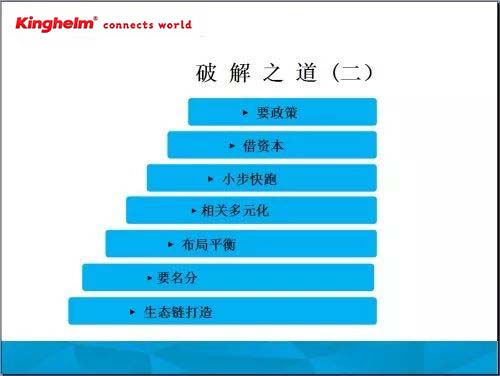
1. Asking for policy
Once our companies have reached a certain scale, we can approach the local authorities for preferential policies — fiscal subsidies, tax rebates, land and so on. Take TCL in Huizhou: the appliance division of TCL barely makes money, yet it still keeps a large body of workers on the payroll and carries social responsibility for them, and that is where public subsidies come in. The local authorities also give them resources. I hear that for every university graduate BYD hires, the authorities pay BYD a subsidy of RMB 100,000 for the first two years. A newly graduated student earns an annual salary of about RMB 30,000 to 40,000. That amounts to the authorities hiring three or four graduates for BYD free of charge — very comfortable indeed. And over the past two years BYD has drawn a good deal more in subsidies for new energy vehicles.
To encourage the development of software companies, there is a tax rebate for enterprises certified under the dual-software policy. Kinghelm is a national high-tech enterprise, and the Longhua New District authority in Shenzhen can grant us a subsidy of RMB 200,000. For the development of our IoT platform that is what Cantonese calls "wet, wet water" — a small matter — but it still shows the support and the care that the authorities give to small enterprises like ours. Of course, there are a great many companies and intermediaries in society whose only business is to chase that money, and that is not a good thing.
2. Borrowing capital
A company that wants to grow big and strong, and to grow fast, cannot do it without the support of capital. In the past, running a business meant slow accumulation from scratch, scraping money together from relatives and friends, or even borrowing from private lenders at loan-shark rates. It is different now. Once a company has a brand, a team and a good development model, and then a strong leader who can pitch a story and work a PowerPoint deck, its chances of finding capital to invest are much greater. From my own study of the question, there are several aspects to it.
a. The leader has to be formidable. Formidable first of all means capable and skilled, and it also means being able to blow your own trumpet and sell a story. A good pitch can magnify your worth many times over, and it can bring in a great many potential resources. Swindlers do not count, of course. Take Jack Ma in his day: it was said that the light from his small eyes moved the investor Masayoshi Son. I am sure that was invented — getting a venture capital or private equity firm to part with its money is never as simple as that. But the personal charisma and the leadership ability of the person at the top are still the most important things. Otherwise, how would you lead a company forward? My face and my eyes are a good deal better looking than Jack Ma's, and I am waiting to see when my eyes will shine brightly enough to move the god of wealth.
b. A good team. Like the teams at the strongest technology companies — coordinated, disciplined, with a wolf's instinct — and only then can you win every battle and take every objective. In the market you are snatching food from the tiger's jaws, and in business there is blood and fire everywhere. Without a good team you cannot get anything done. Kinghelm has always paid attention to this side of things, and our team today is thoroughly down to earth and has real fighting power.
c. The business model and the prospects of the industry. I will not say much about this one. Roughly speaking, it comes down to whether you can make money, how much money you can make, and how long you can keep making it. Kinghelm's position in smart hardware for BeiDou automotive applications and in intelligent IoT platforms should not be the wrong one.
Once these questions have been thought through and got right, a great many investment institutions will smell the money and come looking for us, as meek as lambs. Even with our eyes shut they will say that our small eyes shine, will they not? In its drone business, DJI can now hold a tender and pick which investor to take. That is the example we study.
3. Small steps, fast pace
Once a company has settled its development model and its thinking, it must act in small moves at a high frequency in order to grow quickly. Take too big a step and you will do yourself an injury — meaning that this way you can spot and avoid serious mistakes early in the process, correct and adjust quickly, and keep the cost of trial and error, and the risk, low. The hardest person to know is yourself. Most of us rate ourselves a notch higher than we ought. Too big a step means more uncontrollable factors and much greater risk. My advice is still to run in small steps, quickly, one footprint at a time.
4. Related diversification
Related diversification comes in many forms, but it must always be in something connected to your own line of business. If you used to sell cups, moving into bowls is fine, and moving into chopsticks is easy. In our own company almost all of the business is related, and that is what allows us to lower risk and tighten control effectively.
When I was young and working at Vanke, people often suggested to the leadership that the company set up its own decoration and construction companies, because Vanke was spending a great deal of money on building and fitting out its developments, and it would be so comfortable to keep all of that money in-house. In the end all of those proposals were rejected. The benefit looked obvious on the surface, but it was not workable in practice: there was no related resource base or accumulated experience, no relevant qualifications and no pool of talent. Today the division of labour in society is ever more specialised, and only specialised people and specialised companies can earn the specialised money.
5. A balanced layout
This means that a company must have a sound strategic layout as it grows, so that it can achieve compound growth. Ideally it holds two or three business projects that can each be a growth point, with the timing of their returns planned and coordinated. Then if the market turns, if a core technical person walks out on you, or if national policy changes, the company will not collapse at a single blow — it will have something to stand on. Otherwise the risk is far too great. A great many large companies today run venture incubation internally and make investments externally, and that is the same idea.
6. Getting official status
What I mean by status is what business calls a franchise. In our industry, an authorised distributor is one that holds the franchise from the original manufacturer that develops and makes electronic products — it is the one with the licence. Manufacturers operate a customer registration system with their distributors, who receive technical and financial support within a given territory and industry segment, and whose customers also receive a degree of protection against unhealthy and improper competition. Many of Huaqiangbei's distributors today do not have that qualification, and as a result they are not readily recognised by end customers. This is an area we need to strengthen. With distributor qualification in hand, there is a better prospect for development.
The other side of status is having a name within the industry. Once you have a name, talking to customers, getting things done outside the company and recruiting staff all become much easier. Years ago I went to a magazine in the BeiDou industry to place advertising for Kinghelm. I said: "Give me a cover feature in your magazine. Kinghelm is going to be the top company in the BeiDou industry — is a hundred thousand yuan enough? Let us get some name recognition out there first." Their editor-in-chief asked me, puzzled, why it had to be the top. Being the top, he said, is exhausting. But he did not understand. In the internet age, only the number one, number two and number three in an industry can hold their ground. Number four is basically no different from number forty, and the end result is either closure or acquisition. The industry's best resources all gather in the end around the company that is on top. I have since spent any number of hundreds of thousands on advertising, and Kinghelm in the BeiDou industry is gradually closing in on the top.
7. Building an ecosystem
I, Old Song, take the view that an ecosystem is the tangled network of relationships and interests within an industry. The industry chain in BeiDou is broadly made up of these parts: first, the research, development and manufacture of chips, and their further processing into modules; second, hardware and software development and terminal integration — that is, BeiDou product applications; third, platform operations built around the BeiDou concept, mainly in intelligent transport and smart cities. I will not go on about the other markets here, and there will be breakthroughs in consumer products too.
At every node, all kinds of relationships, interests and information come together. Some watch with hungry eyes; some feign madness and play the fool; some wait to snatch the prize from the mantis that has caught the cicada; some dig pits and lay traps; some plan and manoeuvre. What Kinghelm is doing now is to stay on good terms with everyone in the industry, to make our own products well, to fight for the bill at dinner and drinks, to do a little more work and take a little less of the money — and in time people come to accept us. Then, as the industry develops, we integrate resources and move into the complete BeiDou ecosystem, and take it gradually from there. That, too, is Kinghelm's long-term strategy.
7. The Pain of Transformation
Transformation is not such an easy thing. In my home province of Sichuan we say that a change of trade brings no profit, and that is the truth of it. I came out of the housing business myself, and switching over to electronics was a grind for several years. Only now am I beginning to get the hang of it.
1. Following the crowd
There is far too much information in the world today, and it leaves a great many people unable to keep their footing — whatever is fashionable, they pile into. A woman who owns a shop in Huaqiangbei talked to Brother Bo and me about big data and said that she was going to invest in the sector. By my eye, her skill with make-up is at junior-college level and her skill at taking orders is at doctorate level, while her actual education stops somewhere in the middle of the fourth grade and she knows twenty-four letters of the alphabet. She probably does not know what big data is at all, so I smiled and let it go.
Last year an acquaintance said to me: "Brother, smart wearables are really strong now, you might think about getting into that." I said that what other people can do does not mean that I can do it; what suits us is what is best. Following the crowd carries very serious problems and very serious risk. If you run after the tide you will never outrun it — all you get is a place at the back, out of breath. And you may well do yourself an injury again.
2. Too big a step
We have talked about this problem above. Here it means a leap into an industry too far away, and with some of them the new business has no connection to the old at all. A friend of mine in Huaqiangbei suddenly announced that he was going into drones, saying that it was a good theme. He is a trader, with no technology and no industry background — he had never even heard of materials, aerodynamics and other basic knowledge of the kind — and his team was no good either. How, do you suppose, was he going to do it? I am sorry to tell you all that he has since fled. He was a thoroughly decent man, and one careless move cost him. What a pity.
A friend of mine in Beijing, Zou Qingsong, talked at length about the emotional journey of his own transformation into industrial tablets. He put it very wittily: "I used to sell ICs. I thought that all I had to do for a tablet was sort out the software. Once the software was sorted, I looked and found that the hardware had problems. I sorted the hardware, and found that the appearance was not good either. I finished the appearance, and found that the market had changed." Everyone laughed. To my mind it is a question of the structure of one's knowledge, of industry accumulation, of industry background and of systematised professional knowledge. It takes time to solve. But he persisted for several years, and he is doing quite well now.
3. Too many footholds
This is what I said earlier about a lack of focus: wanting to seize everything, and in the end seizing nothing. A while ago I wrote on WeChat: "When the mind is concentrated on one thing, nothing can break it." What I meant is that Kinghelm will put down roots in BeiDou in earnest, and spend the rest of its days developing in this industry. Gather all your resources and all your attention onto a single point, and nothing can break you. Do the opposite — use your limited resources to push along a great many things — and you will certainly end up with ten pots and only five lids, frantic and with no time for anything.
4. Not enough soft power
So-called soft power does not depend on how much money you have or how many staff. Why have so many of Huaqiangbei's bosses vanished en masse? Because their soft power was not sufficient. They made money by luck and by dealing in counterfeit goods, and they did it without knowing how they had made it. They knew what had happened but not why, and once they had a little more money the result was a sad one. If only they had studied the laws by which the industry develops once they had money, and built the company up big and strong — how good that would have been. Instead, when they were lost and swollen with success they anaesthetised themselves with drink, bragging and womanising, and they grew and made money by lending at loan-shark rates. That is a dead end for certain. Whether there is a big picture, whether there is management ability, whether there is the ability and the will to learn, whether there is a willingness to share — all of these are extremely important.
5. Underestimating the difficulties
People today are blindly self-confident. Everyone thinks that he is formidable, and young people especially. At home, the parents have decided that their child is a treasure; step out into society and he discovers that he is the lowliest blade of grass underfoot. Society has always been an age in which the strong survive; winner takes all, and the survivor is king — that is the rule of the jungle. You need ability in order to survive. Many people underestimate the difficulties. One slap on the head, one slap on the backside, one slap on the thigh, and off they go — and three months later they still do not know whether the wages can be paid. So what are you going to do?
Today a great many people want to set themselves up as makers, and there is all this talk of mass entrepreneurship. I am still not optimistic about it. Someone said that even the authorities have told us to do it. I say that what they want is a matter at the macro level; you have to look at whether you are cut out for it specifically. If you end up jumping off a building, the authorities will not even know. At the level of national policy, the idea is to sow over a wide area and to harvest on a low probability — if a BAT should come out of it, so much the better. What they want is for a few companies to succeed, and the benefit to society is enormous. But how many die along the way? For you personally, dying is the high-probability outcome. So you must have both the mental preparation and the financial reserves.
8. A Bright Future
Finally, let us talk about the bright future that follows a successful transformation. First, take a look at this chart. It shows the routes out that I am able to see at present. If anything is missing, you are all welcome to add to it.
1. The hybrid distributor
The concept of the hybrid distributor was first put forward by Wang Laobao, a heavyweight of Huaqiangbei, and it is a good model. For distributors like us today it holds the most realistic lessons. On the one hand, keep good relations with the agents of the big international manufacturers and take a share of the goods to sell, because their agency rights are so hard to obtain. A friend's company wanted to take on the ON line, and I hear that the brand deposit alone was USD 20 million. You can also begin by taking on some brands that are second-tier internationally and first-tier domestically. There are also plenty of brands from South Korea, China's Taiwan Province and the Chinese mainland. They do well in the low-end and segmented markets and have development potential, and their terms are more or less acceptable to us.
2. Professional distribution
This road is a fairly simple one and I will not say much about it. It is a route whose development everyone can see.
3. PCBA and solution providers
PCBA means doing some of the design and the processing, mostly of semi-finished goods, and then opening up the suppliers around you and up and down the chain. That is what is called a turnkey project. This leaves a fairly large margin, and it also lets you build a firewall and dig a moat between yourself and the distributors who do not understand the technology or these methods, which increases the company's competitiveness.
On the PCBA road, the solution houses in Huaqiangbei that used to make shanzhai mobile phones — mainly feature phones — basically all took this route, and in the old days they made a great deal of money. Today only some niche markets are still workable. Old Zhao of Baolai Electronics writes his own programmes into the chips he sells, which raises the barrier a little, and he sells extremely well in his own industry as a result.
4. Moving upstream
Becoming an original manufacturer, moving into the core of the industry value chain, or running your own brand and channels — the choice is divided between asset-heavy and asset-light operation.
I have an elder brother in the industry, Lin Zhouming of Huaguan Semiconductor. He spent a good deal of money setting up a packaging plant and launched a brand called Huaguan, and after several years of hard grinding it is now flourishing. This is an example of the related diversification I mentioned earlier. Ming is working very hard these days, but I am optimistic about the route, and I hope that Ming's Huaguan will be still more successful.
There is also the option of finding good channels and technical quality monitoring and running your own brand. This is the Nike and Adidas model — asset-light, brand-heavy and research-heavy — sitting at the two ends of the business smile curve. That model is better still: low risk and fast growth. Brand packaging requires two capabilities. The first is the ability to promote the brand, and to be at the front end and the high end of the market. Real Madrid and Cristiano Ronaldo represent Adidas, Michael Jordan represents Nike, and they also sponsor large, high-end events such as the Olympic Games, standing at the very highest and the very front of the value chain and of communication. The other capability is controlling the quality of the product, with a complete quality management system to guarantee the performance and the consistency of the product. If a quality problem arises with our electronic products, the losses multiply several times over — you will lose everything.
5. Being acquired at a premium
Once a company has reached a certain level it has a chance of being acquired at a premium. The stock market is fairly hot at the moment, and valuations run many times higher than before. There are a great many such examples, and I will start with the ones around us. We have a colleague in the trade, Hou Hongliang, whose company is called Dingxin Wuxian and who is a principal distributor for a major semiconductor brand, and they are very strong on the sales side. Kinghelm used to buy goods from them. In 2014 they were acquired by the listed company Wuhan P&S Information Technology for more than RMB 200 million. When they held their event they brought in Fan Bingbing at a cost of about RMB 1.2 million, and Chairman Hou even got to hold Fan Bingbing's hand. As Song Dandan would say, they made a really big spectacle of it — drums and gongs, crowds everywhere, red banners flying. It is a classic case in our industry.
Another case: Huaqiang Group spent RMB 1 billion to acquire Xianghai Electronics and more than RMB 300 million to buy Jieyang Xunke. The main requirements of a company that is being acquired are, first, a good business model; second, a leader with drive; third, a reasonably good team with fighting power; fourth, the expectation of long-term profit; and fifth, a certain scale. That is roughly all of it. For the boss, it means he is basically on dry land.

Introduction to Mr. Song Shiqiang
Mr Song Shiqiang has invested in Slkor Micro Semiconductors and Kinghelm Electronics, both headquartered in Shenzhen, China, and both national high-tech enterprises. The Slkor and Kinghelm brands enjoy international recognition and reputation, and their market share continues to expand. Shenzhen Slkor Micro Semiconductors Co., Ltd. focuses on the research and development of new materials, new processes and new products; its technical team comes from Yonsei University in South Korea and Tsinghua University, and it commands internationally leading silicon carbide MOSFET technology. Slkor has grown from a fabless design house into a company that combines design and development, manufacturing, product sales and technical services, and it is a member of the Shenzhen Electronic Chamber of Commerce.
Related Recommendations